Atlanta needs federal funding to make its light rail and bus service dreams a reality, but it already has $2.5 billion in sales tax revenue to work with.


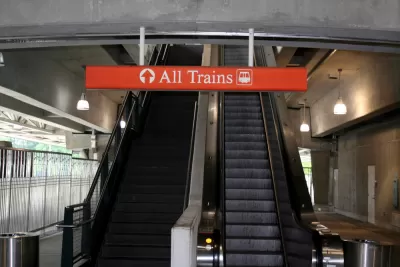
Thomas Wheatley reports from Atlanta, where MARTA officials recently presented their vision for spending the $2.5 billion in funding approved by voters in 2016 through a .5 percent sales tax.
The largest investment in Atlanta transit since MARTA was built more than 40 years ago would add light rail, express buses to some of the city’s most congested corridors, and at least two “transit centers,” potentially shaping the development of the auto-oriented city for generations to come.
For more detail on the light rail portion of that vision, Wheatley adds:
According to a work session presentation obtained by Atlanta magazine, the MARTA tax funding would be spent on light rail lines along a portion of the segments of the Atlanta BeltLine in both southwest and northeast Atlanta. Light rail would also connect the Lindbergh station to Emory University, providing people another way to access the Clifton Corridor, one of the region’s largest job centers that is not near an interstate or currently served by rail transit. Two east-west light rail lines would also connect to the downtown streetcar, effectively linking the south and north segments of the BeltLine with transit. Finally, Greenbriar Mall in far southwest Atlanta would connect to MARTA’s Oakland City rail station via a light rail line.
The article includes maps of the proposed light rail lines, early details on proposed improvements to bus routes and the proposed transit centers, and one big glass of cold water: the vision described during the working session would require matching funds from the federal government.

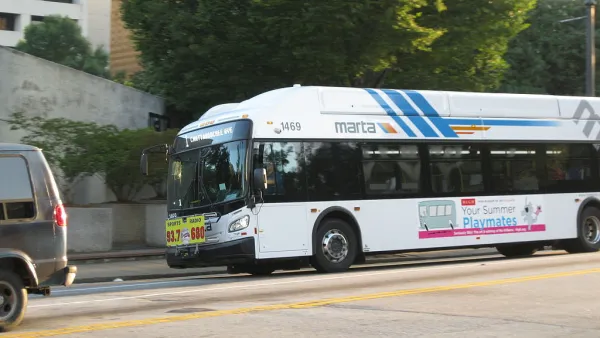
Light Rail Plans Could Become Bus Rapid Transit Plans in Atlanta
Light rail on the Clifton Corridor was once a centerpiece of a $2.7 billion, 40-year transit expansion plans funded by a voter-approved sales tax. Now MARTA is considering using bus rapid transit on the corridor instead.
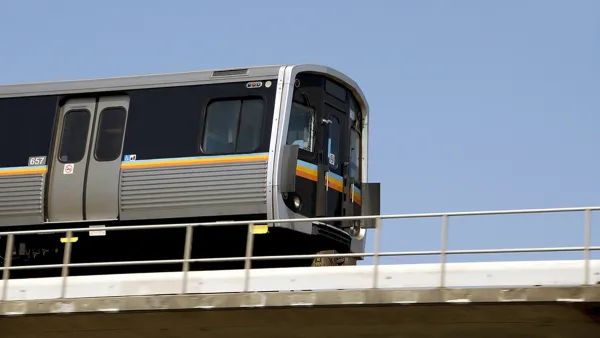
The More MARTA Plan Has a Plan
After a public engagement process and a political process played out in 2018, MARTA and the city of Atlanta can now focus on what gets built, when, according to the $2.7 billion More MARTA capital investment plan.
Update: Atlanta's $8 Billion Transit Plan Moving Forward
A once-in-a-generation moment for transit is taking shape in Atlanta.

The state-sanctioned urbicide of Austin
People don’t kill cities. Freeways do.

US to reduce Colorado River water deliveries to Mexico
A new Colorado Treaty amendment reduces Mexico’s Colorado River water allocation by 250,000 acre feet.

New Jersey’s second-largest city bans standalone data centers
Jersey City will continue to allow co-location facilities, such as those meant for research institutions that store their own data.

Amtrak not solely to blame for New Jersey commuter rail's unreliability, report finds
A new study from the Garden State Initiative found that NJ Transit’s budget grew 20% across a 4 year period, but reliability declined significantly over the same period.

EPA erases limits on planet-warming pollution from power plants
Under Monday’s plan, power plants would still have some limits on how much mercury, arsenic and other contaminants they can emit.

Phoenix announces new on-demand transit service, more frequent RAPID buses
Both new services will launch in October, and are part of Phoenix's Project Effective Access Solutions for Easing Congestion.

FREE Course: Walkable City 1: Why Walkability?
After describing his path towards focusing on walkability as the essence of good planning, Jeff Speck marches through his five principal reasons for making more walkable places.
Reinventing Malls: Planning Alchemy—Turning Gray Fields Into Gold
The course focuses on the opportunities and imperatives that shape reinvention of mall sites.

Eagle County Government
Harvard University Graduate School of Design
Nashville Planning Department
The Architects Foundation
University of Cincinnati Online
The Pocatello Development Authority
The Urban Renewal Agency of the City of Pocatello
Journal of the American Planning Association