TransitCenter's Steven Higashide argues that despite all the hype around self-driving vehicles, traditional high-capacity transit still has some distinct advantages. As long, that is, as transit agencies are willing to recognize them.


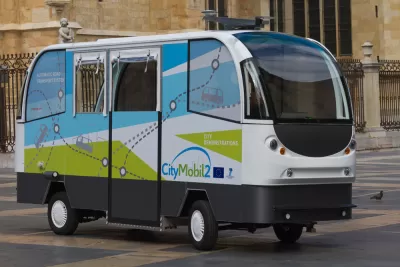
In a post adapted from remarks made by Steven Higashide, its director of research, TransitCenter outlines several things transit agencies should keep in mind as self-driving vehicles loom large in the public mind. "The threat that automated vehicles pose to public transit," he argues, "is a political threat."
Higashide's points include the following:
- High-capacity transit makes more efficient use of urban space than smaller vehicles, even when they're automated and/or shared.
- It'll be a while until automated vehicles can safely navigate busy urban cores and residential neighborhoods, even if they can be made functional on highways.
- Despite the high-tech veneer of public partnerships with transportation startups, "testing new technology for global motor vehicle markets for its own sake is a job for universities, research agencies, and private R&D."
- Transit systems need to become more competitive for current riders, and not simply hold out for potential tech-enabled solutions down the line.
FULL STORY: 4 Things For Transit Agencies to Remember in a World of Driverless Car Hype

Transportation in 2018: Three Predictions
Paul Lewis of the Eno Center gives his forecast of how next year will play out. Prospects for new technologies are good, but come with caveats.

IKEA's Autonomous Vehicle Concept Abandons Sleekness for Boxy Functionality
The furnishing giant's concept imagines an app-summoned fleet of "living rooms on wheels" delivering everything from groceries to health services.
Why Change Can Be Hard for Transit Agencies
Jarrett Walker discusses some reasons why transit authorities can be resistant to change. It all comes down to considering their point of view.

Planetizen Federal Action Tracker
A weekly monitor of how Trump’s orders and actions are impacting planners and planning in America.

The state-sanctioned urbicide of Austin
People don’t kill cities. Freeways do.

US to reduce Colorado River water deliveries to Mexico
A new Colorado Treaty amendment reduces Mexico’s Colorado River water allocation by 250,000 acre feet.

5 New England states march closer to 800 megawatt wind energy project
Securing federal approval for the project may be complicated under the Trump administration, which has historically been hostile towards domestic wind power.

Baltimore to break ground on $50 million Transit Priority Project
The project will bring faster bus trips, safer streets and better bike connections to Baltimore.

Airbnb launches $250 million 'last-dollar financing' housing accelerator, makes first investment in Austin
The company will put $6.4 million towards affordable housing development in Texas’ capital.

FREE Course: Walkable City 1: Why Walkability?
After describing his path towards focusing on walkability as the essence of good planning, Jeff Speck marches through his five principal reasons for making more walkable places.
Reinventing Malls: Planning Alchemy—Turning Gray Fields Into Gold
The course focuses on the opportunities and imperatives that shape reinvention of mall sites.

Eagle County Government
Harvard University Graduate School of Design
Nashville Planning Department
The Architects Foundation
University of Cincinnati Online
The Pocatello Development Authority
The Urban Renewal Agency of the City of Pocatello
Journal of the American Planning Association