U.S. PIRG wants states to use funding from multi-billion dollar Volkswagen settlements to convert the nation's school bus fleet, 95% of which is diesel-powered, to zero-emission buses to reduce children's exposure to toxic air pollution.


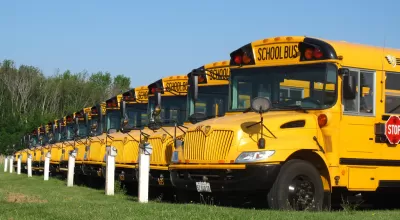
The campaign, launched May 3 by the United States Public Interest Research Group (U.S. PIRG), touts the public health and environmental benefits of converting the nation's 480,000 school vehicles to zero-emission buses. It coincides with the release of a new report, “Electric Buses: Clean Transportation for Healthier Neighborhoods and Cleaner Air" [pdf], by the U.S. PIRG Education Fund, Environment America Research & Policy Center, and the Frontier Group.
Approximately 95 percent of U.S. school buses run on diesel, even though numerous studies have shown that inhaling diesel exhaust can cause respiratory diseases and worsen existing conditions such as asthma. The negative effects are especially pronounced in children.
The good news is that all-electric buses are available and ready to roll, and they’re cleaner, healthier and often cheaper for school districts and bus contractors to run in the long-term. And with zero tailpipe emissions, electric school buses can significantly reduce our kids’ exposure to toxic fumes.
Figure ES-1. Estimated Annual Operating Costs of Transit Buses, by Fuel Type
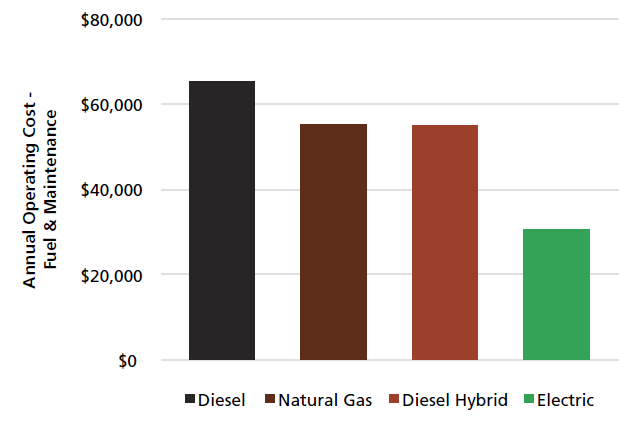
Courtesy of U.S. PIRG
Currently there are pilot programs run by California (Los Angeles County and Gilroy), Massachusetts and Minnesota to test zero-emission school buses. They may involve the conversion of diesel buses as well as purchasing new ones.
One source of funding stems from the $14.7 billion settlement, as well as subsequent settlements in the Volkswagen diesel emissions scandal, first exposed in September 2015 by West Virginia University researchers.
"The VW Environmental Mitigation Trust [stemming from the Volkswagen Clean Air Act Civil Settlement] will provide states with a total of $2.9 billion for projects to cut nitrogen oxide from large vehicles, including school buses," reports Thomas McMahon for the School Bus Fleet blog on April 25. However, school districts will have lots of competition for these funds from transit buses, trucks and other commercial applications ranging from forklifts to port cargo handling equipment.
The report also looked at the environmental benefits of converting the nation's 70,000 transit buses to battery-electric. More than 60 percent run on diesel, 18 percent on natural gas, while just 0.2 percent of buses are all-electric.
Hat tip to AASHTO Journal.
FULL STORY: Electric Buses: Clean Transportation for Healthier Neighborhoods and Cleaner Air

California to Invest $1 Billion in Electric Trucks, Buses, Charging Infrastructure
The investment comes not from the state legislature but from two regulatory bodies, the Air Resources Board and the Public Utilities Commission, authorizing the expenditure of VW settlement funds and utility ratepayer funds, respectively.
Inadequate Diesel Vehicle Testing Results in 38,000 Global Fatalities Annually
While the study stems from research that found Volkswagen diesel cars had used 'defeat devices' to pass emissions tests, the new study points to inadequacies in the tests themselves, resulting in 50 percent higher pollution than testing permits.

Driving Equity and Clean Air: California Invests in Greener School Transportation
California has awarded $500 million to fund 1,000 zero-emission school buses and chargers for educational agencies as part of its effort to reduce pollution, improve student health, and accelerate the transition to clean transportation.

Planetizen Federal Action Tracker
A weekly monitor of how Trump’s orders and actions are impacting planners and planning in America.

The state-sanctioned urbicide of Austin
People don’t kill cities. Freeways do.

US to reduce Colorado River water deliveries to Mexico
A new Colorado Treaty amendment reduces Mexico’s Colorado River water allocation by 250,000 acre feet.

Mamdani overhauls NYC's Vision Zero plan with 100 new policy goals
The overhaul aims to reduce traffic deaths and make streets safer for pedestrians, cyclists and drivers through lower speed limits, new safety infrastructure and more.

Amtrak not solely to blame for New Jersey commuter rail's unreliability, report finds
A new study from the Garden State Initiative found that NJ Transit’s budget grew 20% across a 4 year period, but reliability declined significantly over the same period.

EPA erases limits on planet-warming pollution from power plants
Under Monday’s plan, power plants would still have some limits on how much mercury, arsenic and other contaminants they can emit.

FREE Course: Walkable City 1: Why Walkability?
After describing his path towards focusing on walkability as the essence of good planning, Jeff Speck marches through his five principal reasons for making more walkable places.
Reinventing Malls: Planning Alchemy—Turning Gray Fields Into Gold
The course focuses on the opportunities and imperatives that shape reinvention of mall sites.

Eagle County Government
Harvard University Graduate School of Design
Nashville Planning Department
The Architects Foundation
University of Cincinnati Online
The Pocatello Development Authority
The Urban Renewal Agency of the City of Pocatello
Journal of the American Planning Association