According a recent article in the Riverfront Times, perceptions of the Mississippi River among St. Louis residents are poor, but a collection of "river evangelists" and patient business owners are working to change that reality.


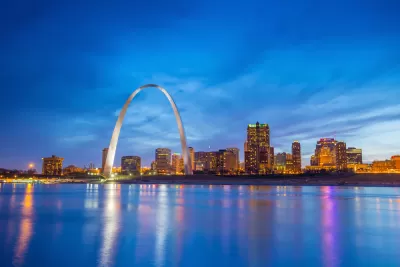
According to Doyle Murphy, a growing number of people in St. Louis are "taking a second look at the much-maligned [Mississippi River] and seeing new possibilities."
"After years of ceding the waterfront almost entirely to industry, there are renewed efforts on a variety of fronts to bring city dwellers and tourists back to the water," according to Murphy. "New investment. Multi-million dollar projects."
The article shares anecdotes from some of the people working to bring people onto the water, not just the waterfront, and details a history of the city's "love-hate relationship" with the river. The stakes for the story are raised in context of the $350 million renovation of the Gateway Arch, set for a final opening in July. The Arch's original opening was surrounded by controversy and voter fraud, according to Murphy, and never succeeded as the economic driver or draw to the waterfront that was promised.
The article also digs into the specifics of redevelopment projects hoping to take advantage of the eventual completion of the Gateway Arch construction project. Details about the eventual finished project at the Gateway Arch are also included. Finally there are the stories of the community advocates and the river rats working to improve the river as a destination and a place that inspires a sense of pride in St. Louis residents.
FULL STORY: Take Me to the River

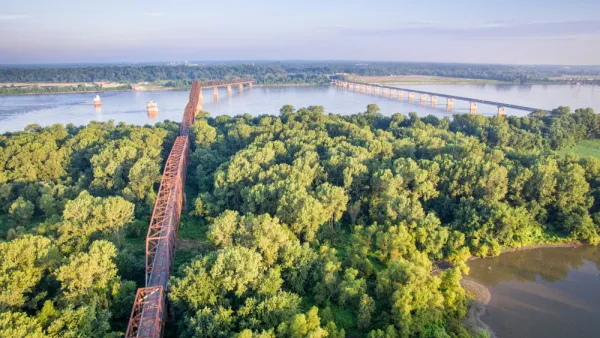
$323 Million Waterfront Project Cruising Along in St. Louis
Lighthouse Point, a $323 million marina and waterfront development proposed for the banks of the Mississippi River, has already been granted a special district, tax abatements, and sales tax exemptions.
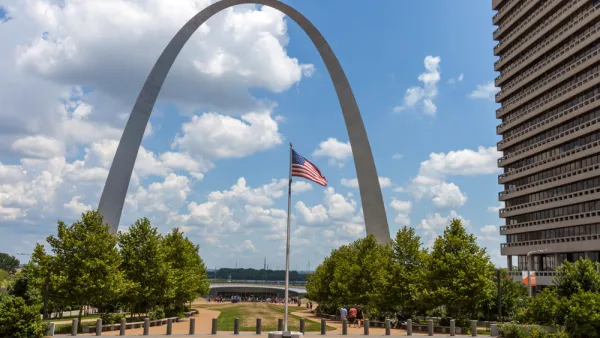
Newly Minted St. Louis Gateway Arch National Park Reviewed
The recently revitalized and designated as a National Park St. Louis Gateway Arch National Park is described by park planner Clement Lau.
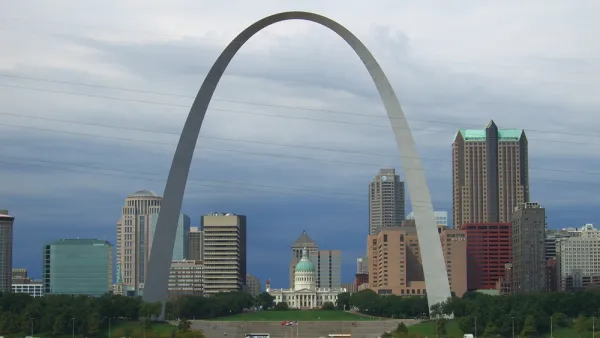
Design Review: Revamped Gateway Arch an Urban Success
Pulitzer Prize-winning critic Blair Kamin assesses the remodeled Gateway Arch in St. Louis, prior to its big public opening on July 3.

The state-sanctioned urbicide of Austin
People don’t kill cities. Freeways do.

US to reduce Colorado River water deliveries to Mexico
A new Colorado Treaty amendment reduces Mexico’s Colorado River water allocation by 250,000 acre feet.

New Jersey’s second-largest city bans standalone data centers
Jersey City will continue to allow co-location facilities, such as those meant for research institutions that store their own data.

Amtrak not solely to blame for New Jersey commuter rail's unreliability, report finds
A new study from the Garden State Initiative found that NJ Transit’s budget grew 20% across a 4 year period, but reliability declined significantly over the same period.

EPA erases limits on planet-warming pollution from power plants
Under Monday’s plan, power plants would still have some limits on how much mercury, arsenic and other contaminants they can emit.

Phoenix announces new on-demand transit service, more frequent RAPID buses
Both new services will launch in October, and are part of Phoenix's Project Effective Access Solutions for Easing Congestion.

FREE Course: Walkable City 1: Why Walkability?
After describing his path towards focusing on walkability as the essence of good planning, Jeff Speck marches through his five principal reasons for making more walkable places.
Reinventing Malls: Planning Alchemy—Turning Gray Fields Into Gold
The course focuses on the opportunities and imperatives that shape reinvention of mall sites.

Eagle County Government
Harvard University Graduate School of Design
Nashville Planning Department
The Architects Foundation
University of Cincinnati Online
The Pocatello Development Authority
The Urban Renewal Agency of the City of Pocatello
Journal of the American Planning Association