The recently revitalized and designated as a National Park St. Louis Gateway Arch National Park is described by park planner Clement Lau.


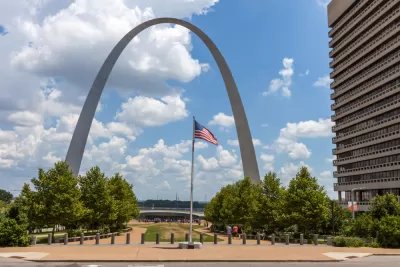
On July 3, 2018, the 91 acre St. Louis Gateway Arch Park was dedicated as a National Park. It had been a National Memorial since 1935. Leading up to the designation, the park underwent a $380 million renovation, which included a freeway cap park over the I-44. The park also includes the 631 tall Gateway Arch (including a tram to a viewing room at the top), a museum and gift shop covering the westward expansion;,the old courthouse (where the Dred Scott trials took place), and surrounding park open space along the Mississippi River. Clement Lau, a California domiciled park planner, toured the park and notes:
The park is historically significant and was created to commemorate: the Louisiana Purchase, and the subsequent westward movement of American explorers and pioneers; the first civil government west of the Mississippi River; and the debate over slavery raised by theDred Scott case.
More detail about the newly renovated park, along with photos, can be found in the source article by Lau.
Read the full story: Gateway Arch National Park: A Visual Tour


Design Review: Revamped Gateway Arch an Urban Success
Pulitzer Prize-winning critic Blair Kamin assesses the remodeled Gateway Arch in St. Louis, prior to its big public opening on July 3.
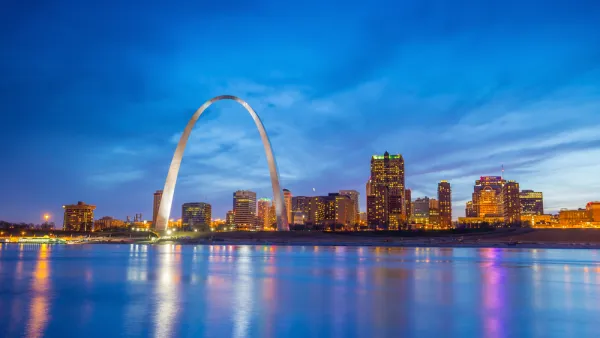
Reconnecting St. Louis to its River
According a recent article in the Riverfront Times, perceptions of the Mississippi River among St. Louis residents are poor, but a collection of "river evangelists" and patient business owners are working to change that reality.

Gateway Arch Finally Connects to Downtown St. Louis
A $380 million project bridges a freeway and connects the Gateway Arch to downtown St. Louis.

Planetizen Federal Action Tracker
A weekly monitor of how Trump’s orders and actions are impacting planners and planning in America.

California plans to bury El Niño’s downpour
If the state plays its cards right, it may be able to store a billion acre-feet of El Niño’s water in aquifers.

Chicago breaks ground on $3 billion megadevelopment
The new neighborhood, titled Foundry Park, will one day host 3,700 residences.

California High-Speed Rail Authority CEO resigns after $600,000 scandal
Under Ian Choudri, the authority used taxpayer dollars to fund first class flights and trips to nightclubs.

Want to study the Missouri River? Soon, you may need unanimous approval from 10 states
Legislation would require 10 governors’ permission to study or build projects moving water outside the basin.

Desperate measures: Advocates weigh draining Lake Powell to fill Colorado River
Draining the reservoir could reduce evaporation losses by a couple hundred thousand acre-feet.

FREE Course: Walkable City 1: Why Walkability?
After describing his path towards focusing on walkability as the essence of good planning, Jeff Speck marches through his five principal reasons for making more walkable places.
Reinventing Malls: Planning Alchemy—Turning Gray Fields Into Gold
The course focuses on the opportunities and imperatives that shape reinvention of mall sites.

City of Rosemead
Rutgers University, Edward J. Bloustein School of Planning and Public Policy
One Hundred Miles
Hunter College, City University of New York (CUNY)
The Architects Foundation
University of Cincinnati Online
City of Cambridge
Montrose County
The Pocatello Development Authority