Instead of focusing on the potential of new forms of for-hire personal transportation to level the mobility playing field, every article about scooters and dockless bikeshare seems to go something like this: "Deadly Scooter Craze Scoots On."


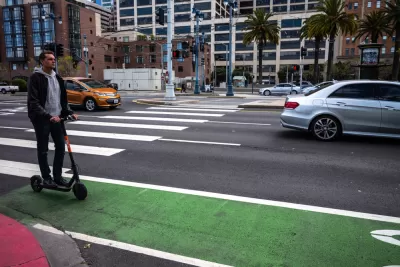
There's no debating the growth of dockless bike and e-scooter companies in the United States. What is hotly debated is whether or not the development is a good thing. "For the uninitiated, these e-scooters and e-bikes can be rented for $1 to start and are not tethered to one location, so they can be moved around to meet or create demand and theoretically be picked up and dropped off anywhere," Johana Bhuiyan writes for Recode.
Much of the media coverage devoted to these transportation innovations has focused on the possible danger of these modes of transit and their use of public spaces, but they also present an opportunity. These modes of transit are often much cheaper than ride hailing services and in some cases even public transit. For communities that are too far from transit, the vehicles can provide a crucial link or replace transit completely. "In lower-income communities, that lack of access can in turn cause a significant obstacle for access to economic opportunity," Bhuiyan writes. This cheap, portable form of transit changes the way people get around.
FULL STORY: Here’s what’s missing in the conversation about dockless e-scooters and bikes

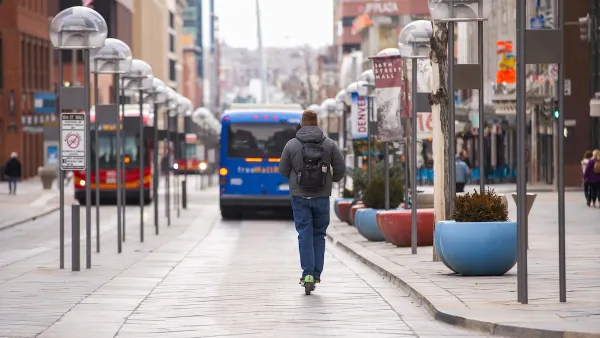
Denver Transit Agency Will Subsidize First Mile of Shared Scooter Trips
A pilot program seeks to address the problem of transit access by paying for the first mile of trips to and from two light rail stations.
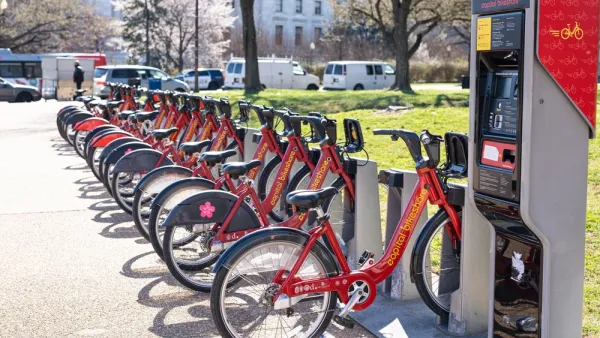
Bikeshare Ridership Up From Pre-Pandemic Levels
Shared micromobility, particularly docked bikeshare systems, are seeing record growth, but ‘scooter inflation’ may cool riders’ enthusiasm.
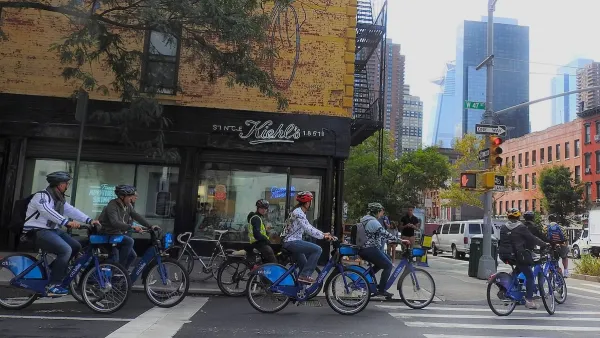
Report: Bike and Scooter Shares are up Again, This Time by 31%. Has the Future Arrived?
The new micromobility report is out, and despite rising costs and tight regulations, it is bigger than ever, and still growing. After nearly a decade of adjustment, cities’ mobility systems may be changed for good.

Planetizen Federal Action Tracker
A weekly monitor of how Trump’s orders and actions are impacting planners and planning in America.

The state-sanctioned urbicide of Austin
People don’t kill cities. Freeways do.

US to reduce Colorado River water deliveries to Mexico
A new Colorado Treaty amendment reduces Mexico’s Colorado River water allocation by 250,000 acre feet.

Mamdani overhauls NYC's Vision Zero plan with 100 new policy goals
The overhaul aims to reduce traffic deaths and make streets safer for pedestrians, cyclists and drivers through lower speed limits, new safety infrastructure and more.

Amtrak not solely to blame for New Jersey commuter rail's unreliability, report finds
A new study from the Garden State Initiative found that NJ Transit’s budget grew 20% across a 4 year period, but reliability declined significantly over the same period.

EPA erases limits on planet-warming pollution from power plants
Under Monday’s plan, power plants would still have some limits on how much mercury, arsenic and other contaminants they can emit.

FREE Course: Walkable City 1: Why Walkability?
After describing his path towards focusing on walkability as the essence of good planning, Jeff Speck marches through his five principal reasons for making more walkable places.
Reinventing Malls: Planning Alchemy—Turning Gray Fields Into Gold
The course focuses on the opportunities and imperatives that shape reinvention of mall sites.

Eagle County Government
Harvard University Graduate School of Design
Nashville Planning Department
The Architects Foundation
University of Cincinnati Online
The Pocatello Development Authority
The Urban Renewal Agency of the City of Pocatello
Journal of the American Planning Association