Five decades after the Fair Housing Act, racial inequality is still rampant in American cities. Trulia and the National Fair Housing Alliance collaborated on this report on four of them.


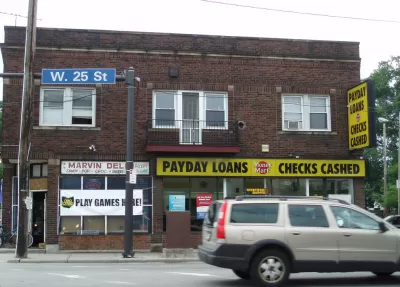
To commemorate the Fair Housing Act's fiftieth anniversary, Josh Green writes, "Trulia and NFHA honed in on four metros—Atlanta, Detroit, Houston, and Oakland, respectively—in an attempt to spotlight cities with a range of geographies and histories with segregation and fair housing."
The report notes that in the places studied, "features like banks, health institutions, full-service grocery stores, and parks are significantly less likely to be located in neighborhoods of color than in white communities. [...] And, equally notably, alternative banking establishments like check-cashing services and payday lenders are significantly more likely to be located in neighborhoods of color."
The disparities can be quite stark. "According to a Trulia rep, one data point in Atlanta was particularly glaring: majority-white tracts have 25.3 healthcare providers for every 10,000 people, versus just 9.8 in majority-black tracts."
Interestingly, this report found that access to healthy food in majority-white and majority-nonwhite areas was roughly on par.
FULL STORY: Report: 50 years after Fair Housing Act, inequality is rampant in Atlanta

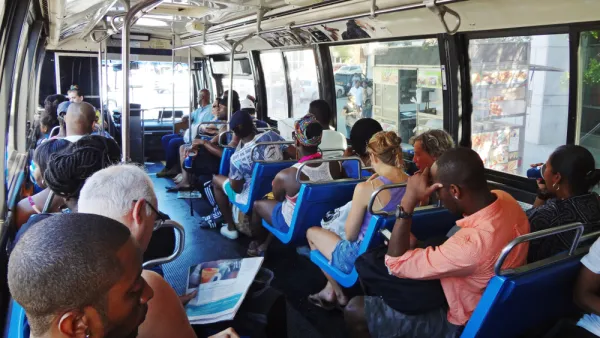
Racism Has Shaped Public Transit, and It’s Riddled with Inequities
Former Houston METRO Board Member Christof Spieler highlights the racism embedded even in the way transit agencies were created.

Racial Segregation in U.S. Neighborhoods
Despite the intentions of the nation's fair housing laws, neighborhoods in the United States continue to segregate by race.
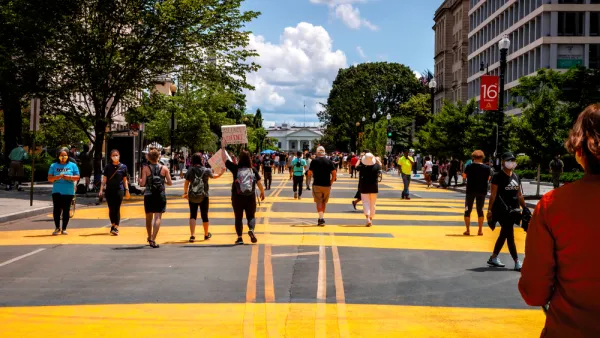
Biden Promises New Attention to Racial Inequality, Including Fair Housing
The Biden administration is announcing its intentions to overturn several controversial products of the Trump administration to weaken the the implementation of the Fair Housing Act of 1968 and the doctrine of disparate impact at its core.

The state-sanctioned urbicide of Austin
People don’t kill cities. Freeways do.

US to reduce Colorado River water deliveries to Mexico
A new Colorado Treaty amendment reduces Mexico’s Colorado River water allocation by 250,000 acre feet.

New Jersey’s second-largest city bans standalone data centers
Jersey City will continue to allow co-location facilities, such as those meant for research institutions that store their own data.

Amtrak not solely to blame for New Jersey commuter rail's unreliability, report finds
A new study from the Garden State Initiative found that NJ Transit’s budget grew 20% across a 4 year period, but reliability declined significantly over the same period.

EPA erases limits on planet-warming pollution from power plants
Under Monday’s plan, power plants would still have some limits on how much mercury, arsenic and other contaminants they can emit.

Phoenix announces new on-demand transit service, more frequent RAPID buses
Both new services will launch in October, and are part of Phoenix's Project Effective Access Solutions for Easing Congestion.

FREE Course: Walkable City 1: Why Walkability?
After describing his path towards focusing on walkability as the essence of good planning, Jeff Speck marches through his five principal reasons for making more walkable places.
Reinventing Malls: Planning Alchemy—Turning Gray Fields Into Gold
The course focuses on the opportunities and imperatives that shape reinvention of mall sites.

Eagle County Government
Harvard University Graduate School of Design
Nashville Planning Department
The Architects Foundation
University of Cincinnati Online
The Pocatello Development Authority
The Urban Renewal Agency of the City of Pocatello
Journal of the American Planning Association