Despite new construction, Miami homes remain stubbornly expensive. An opinion piece for Next City makes the case for community land trusts as a solution.


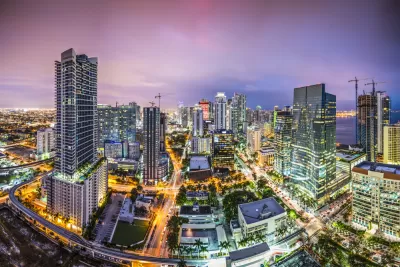
Miami has built a number of impressive skyscrapers, but the changing skyline and growing capacity has not translated into a lot of affordable housing. "According to data from the Florida International University Metropolitan Center’s Miami-Dade Prosperity Initiative study, 61 percent of Miami-Dade County renters and 42 percent of homeowners are paying more than 30 percent of their income on housing – making this one of the most unaffordable housing markets in the United States," writes Mandy Bartle. Miami's property market has a number of buyers from within and without the city limits. "Every year, we lose homes that were once affordable to working-class families as they are redeveloped as luxury homes or simply consumed by the surrounding market," Bartle contends.
Bartle's opinion piece argues that nonprofits and government agencies need to make sure they own land so that they can keep it affordable in perpetuity: "The community land trust model preserves permanent affordability by separating the ownership of land from the home that sits on it; the community retains ownership of the land, and homes are sold (or at times rented) to individuals at an affordable price."
FULL STORY: What Miami’s Skyline Could Mean for All of Miami’s Residents

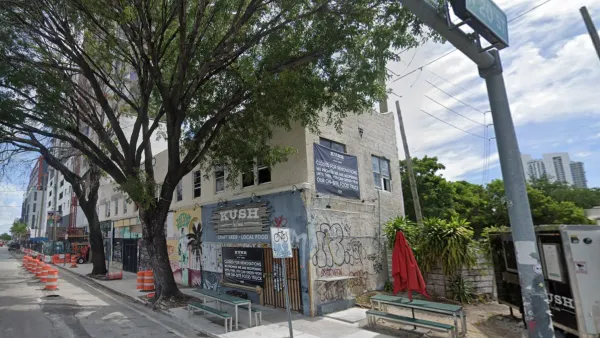
Miami Restaurant Rebuild Includes 10 Units of Affordable Workforce Housing
The restaurant’s owner worked with a local community redevelopment agency to preserve a historic building.
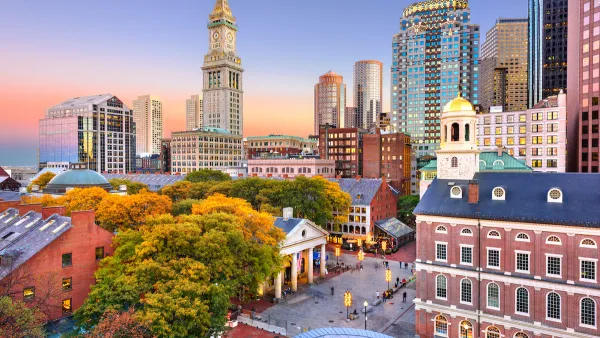
Land Trusts Preserve Affordability, but for Whom?
An analysis of buildings bought by the city for a community land trust in Boston reveals that many prior residents were evicted just before the sales.
Opinion: Local Governments Must Take Urgent Action on Affordable Housing Funds
Cities and states have until the end of the year to decide how to spend federal affordable housing dollars.

Planetizen Federal Action Tracker
A weekly monitor of how Trump’s orders and actions are impacting planners and planning in America.

The state-sanctioned urbicide of Austin
People don’t kill cities. Freeways do.

US to reduce Colorado River water deliveries to Mexico
A new Colorado Treaty amendment reduces Mexico’s Colorado River water allocation by 250,000 acre feet.

5 New England states march closer to 800 megawatt wind energy project
Securing federal approval for the project may be complicated under the Trump administration, which has historically been hostile towards domestic wind power.

Baltimore to break ground on $50 million Transit Priority Project
The project will bring faster bus trips, safer streets and better bike connections to Baltimore.

Airbnb launches $250 million 'last-dollar financing' housing accelerator, makes first investment in Austin
The company will put $6.4 million towards affordable housing development in Texas’ capital.

FREE Course: Walkable City 1: Why Walkability?
After describing his path towards focusing on walkability as the essence of good planning, Jeff Speck marches through his five principal reasons for making more walkable places.
Reinventing Malls: Planning Alchemy—Turning Gray Fields Into Gold
The course focuses on the opportunities and imperatives that shape reinvention of mall sites.

Eagle County Government
Harvard University Graduate School of Design
Nashville Planning Department
The Architects Foundation
University of Cincinnati Online
The Pocatello Development Authority
The Urban Renewal Agency of the City of Pocatello
Journal of the American Planning Association