The U.S. city with the best recent history of convincing commuters to ditch the auto commute is taking further steps to make the city a little less car-centric.


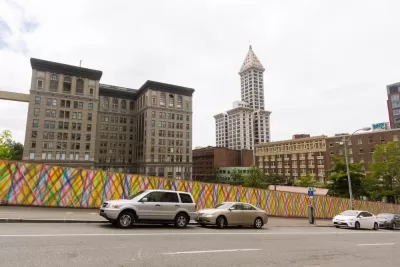
"Seattle council members on Monday approved changes to the parking code that they hope will ultimately tackle their carbon-free, pedestrian-and-bike-friendly, affordable vision for the city," reports Hayat Norimine.
Specifically, the city's new parking ordinance, "expands areas that fall under the definition of 'frequent transit service,' reduces the parking minimum for affordable housing projects, increases requirements for bicycle parking, allows underused private parking lots to be open to the public, and separates parking fees from rental leases."
Support for the new parking ordinance focused on the potential benefit to housing costs, not the potential environmental benefits of less driving.
A previous article by Norimine provides more explanation and background on the changes to Seattle's parking requirements.
FULL STORY: Seattle City Council Approves Changes to Reduce Parking Requirements


Phoenix Could Ease Parking Requirements to Support Transit, Affordable Housing
In addition to lower citywide parking requirements on residential properties, a proposed law in Phoenix would lower minimum parking requirements even further for affordable housing developments near the city’s light rail system.

Parking Reform Can Boost Homebuilding 40 to 70 Percent
More evidence that parking flexibility is key to housing abundance.

Parking Requirements Removed Near Cleveland Transit Stops
Transit oriented parking reform has arrived in Cleveland.

Planetizen Federal Action Tracker
A weekly monitor of how Trump’s orders and actions are impacting planners and planning in America.

The state-sanctioned urbicide of Austin
People don’t kill cities. Freeways do.

US to reduce Colorado River water deliveries to Mexico
A new Colorado Treaty amendment reduces Mexico’s Colorado River water allocation by 250,000 acre feet.

5 New England states march closer to 800 megawatt wind energy project
Securing federal approval for the project may be complicated under the Trump administration, which has historically been hostile towards domestic wind power.

Baltimore to break ground on $50 million Transit Priority Project
The project will bring faster bus trips, safer streets and better bike connections to Baltimore.

Airbnb launches $250 million 'last-dollar financing' housing accelerator, makes first investment in Austin
The company will put $6.4 million towards affordable housing development in Texas’ capital.

FREE Course: Walkable City 1: Why Walkability?
After describing his path towards focusing on walkability as the essence of good planning, Jeff Speck marches through his five principal reasons for making more walkable places.
Reinventing Malls: Planning Alchemy—Turning Gray Fields Into Gold
The course focuses on the opportunities and imperatives that shape reinvention of mall sites.

Eagle County Government
Harvard University Graduate School of Design
Nashville Planning Department
The Architects Foundation
University of Cincinnati Online
The Pocatello Development Authority
The Urban Renewal Agency of the City of Pocatello
Journal of the American Planning Association