Limebike and Bird are mobility companies currently offering ride share for electric scooters in Washington, D.C. and Los Angeles, respectively.



Stand-up electric scooters aren't a new idea, but some think that a bike sharing model will take them mainstream. These scooters, which sell for between $200-$600, are already available for dockless sharing in some American cities. "LimeBike, one of several firms operating docklessly in Washington, D.C., unleashed a fleet of electric-assist scooters in the nation’s capital this week, marking the scooter-share’s East Coast debut," Andrew Small reports for CityLab.
Small says that these scooters are reminiscent of the Razor Scooters of days past with some notable improvements. "This grown-up version boasts solid rubber tires, a kickstand, and—perhaps most importantly for adults—an electric-assist throttle on the handlebars, which allows riders to zip alongside their pedal-driven brethren at speeds of 10 to 15 mph," Small writes.
Why would anyone want to ride a scooter when they could just bike? "The electric glide’s stand-up stance is easier on business attire, compared to a traditional bicycle," Small argues. He goes on to suggest that while these may be open to some ridicule now, people made the same comments about bike share when it was introduced in the United States. Similar scooter optimism was on full display at the recent Shared Use Summit.
Read the full story: I Have Seen the Future of Urbanism and It's a Scooter
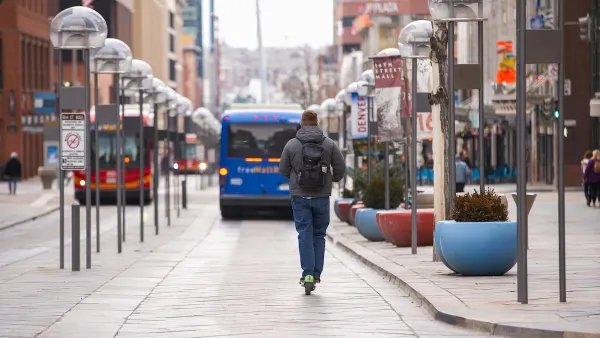
Denver Transit Agency Will Subsidize First Mile of Shared Scooter Trips
A pilot program seeks to address the problem of transit access by paying for the first mile of trips to and from two light rail stations.
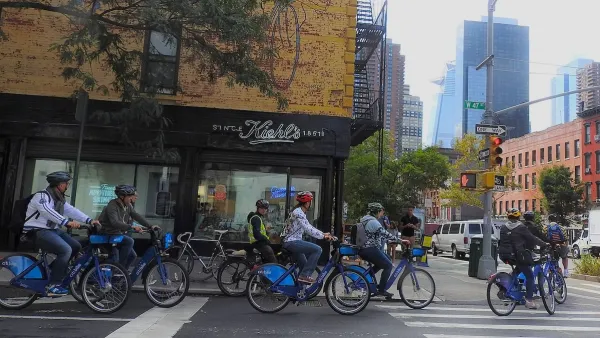
Report: Bike and Scooter Shares are up Again, This Time by 31%. Has the Future Arrived?
The new micromobility report is out, and despite rising costs and tight regulations, it is bigger than ever, and still growing. After nearly a decade of adjustment, cities’ mobility systems may be changed for good.
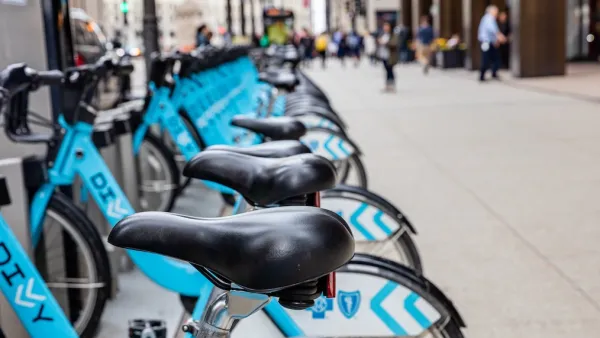
Chicago Sees Record Shared Bike, Scooter Use
Riders took over 11 million bike share and scooter trips in 2024.

Planetizen Federal Action Tracker
A weekly monitor of how Trump’s orders and actions are impacting planners and planning in America.

California plans to bury El Niño’s downpour
If the state plays its cards right, it may be able to store a billion acre-feet of El Niño’s water in aquifers.

Desperate measures: Advocates weigh draining Lake Powell to fill Colorado River
Draining the reservoir could reduce evaporation losses by a couple hundred thousand acre-feet.

In Texas, data centers are swallowing promised parkland
Residents who moved to Taylor, Texas for a rural community now have to contend with three data centers in their backyard.

How a Chicago-sized wind farm beat the odds and powered on
The project spanned five presidential administrations and a standoff with a U.S. military base.

MTA gives itself 30 days to transform pit into basketball court
The site has been under construction since 2022; the city originally estimated it would finish the court in 2024.

FREE Course: Walkable City 1: Why Walkability?
After describing his path towards focusing on walkability as the essence of good planning, Jeff Speck marches through his five principal reasons for making more walkable places.
Reinventing Malls: Planning Alchemy—Turning Gray Fields Into Gold
The course focuses on the opportunities and imperatives that shape reinvention of mall sites.

City of Rosemead
Rutgers University, Edward J. Bloustein School of Planning and Public Policy
One Hundred Miles
Hunter College, City University of New York (CUNY)
The Architects Foundation
University of Cincinnati Online
City of Cambridge
Montrose County
The Pocatello Development Authority