The Summerhill Bus Rapid Transit Project—on track to become the first bus rapid transit line in the state of Georgia—received a critical bath of funding from the federal government this week in the form of a $12.6 million TIGER grant.


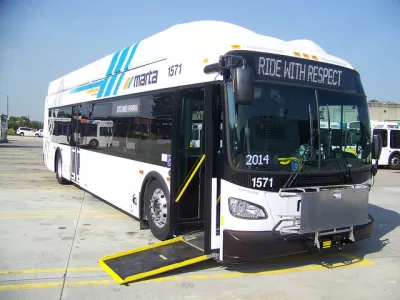
"The federal government will give MARTA $12.6 million for a new bus rapid transit line from downtown to midtown Atlanta," report David Wickert and J. Scott Trubey.
"The 9.4-mile Summerhill Bus Rapid Transit Project would connect the Summerhill neighborhood south of I-20 – anchored by Georgia State University – to MARTA’s Arts Center Station," add Wickert and Trubey. The federal funding, awarded through the Transportation Investment Generating Economic Recovery (TIGER) grant program, will contribute to the total $48.6 million price tag for the project. The project is also expected to drive redevelopment in Summerhill and other neighborhoods in South Atlanta.
The funding allocation is also a sure sign that the federal government is, in fact, still funding public transit projects, besides threats and fears that the Trump Administration is pushing to end funding for public transit projects.
Read the full story: Feds give MARTA $12.6 million for Atlanta bus rapid transit line

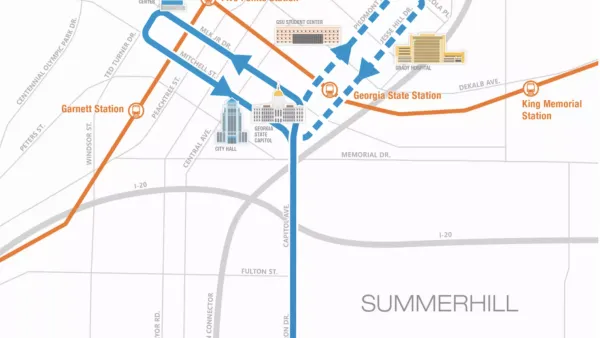
Atlanta Bus Rapid Transit Project, a First in Georgia, Moves Along
The first-ever Bus Rapid Transit system for the region surrounding Atlanta is making progress, and ready to hire consultants.
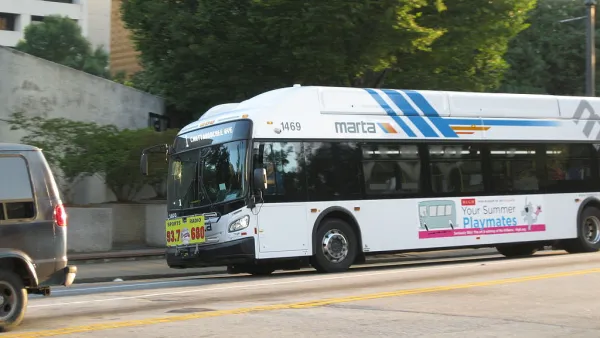
The Atlanta Region's First Bus Rapid Transit Line
The first bus rapid transit line planned in the Atlanta region relies on federal approval.
Atlanta Transit Officials Call for Traffic Cameras to Enforce Bus-Only Lanes
MARTA says bus-mounted cameras would be a more effective way to keep bus lanes clear and make upcoming bus rapid transit lines run smoothly and reliably.

Planetizen Federal Action Tracker
A weekly monitor of how Trump’s orders and actions are impacting planners and planning in America.

California plans to bury El Niño’s downpour
If the state plays its cards right, it may be able to store a billion acre-feet of El Niño’s water in aquifers.

Chicago breaks ground on $3 billion megadevelopment
The new neighborhood, titled Foundry Park, will one day host 3,700 residences.

Satanic place names
From streams and lakes to valleys and canyons, I mapped more than 1,000 places named after the Devil.

California High-Speed Rail Authority CEO resigns after $600,000 scandal
Under Ian Choudri, the authority used taxpayer dollars to fund first class flights and trips to nightclubs.

Want to study the Missouri River? Soon, you may need unanimous approval from 10 states
Legislation would require 10 governors’ permission to study or build projects moving water outside the basin.

FREE Course: Walkable City 1: Why Walkability?
After describing his path towards focusing on walkability as the essence of good planning, Jeff Speck marches through his five principal reasons for making more walkable places.
Reinventing Malls: Planning Alchemy—Turning Gray Fields Into Gold
The course focuses on the opportunities and imperatives that shape reinvention of mall sites.

City of Rosemead
Rutgers University, Edward J. Bloustein School of Planning and Public Policy
One Hundred Miles
Hunter College, City University of New York (CUNY)
The Architects Foundation
University of Cincinnati Online
City of Cambridge
Montrose County
The Pocatello Development Authority