Climate change and coastal development are combining to stamp out important ecological landscapes.


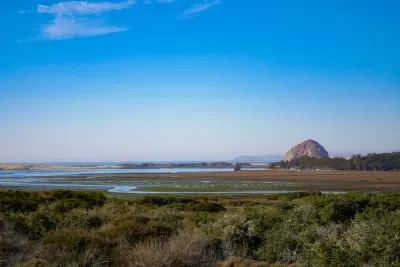
Ninety percent of California's wetlands have been lost to development, researchers say—and 100 percent of the marshes remaining could disappear by the end of the century if greenhouse gas emissions don't decrease.
The marshes would have a shot at survival if they could migrate inland, but coastal development patterns are boxing them in, a USGS researcher told KPCC. USGS and UCLA co-authored the new study that calculated the threat to California's coastal ecology.
Besides providing important habitats for millennia, marshes "serve key functions related to the health of the planet," KPCC's Jacob Margolis explains. Their decay could result in even more emissions, as well as erosion and water pollution.
They store carbon, which will be released as they begin to die off. They are barriers to storm surges that protect against erosion. They act as catches for debris that make their way down from the hills after wildfires. And they filter polluted water and sediment that flows from our cities towards the ocean, keeping our seas a bit cleaner.
Further explanation, and a picture slideshow, are included in the full story.
FULL STORY: California's coastal marshes could be washed out to sea by 2110

Bay Area Developments at Risk From Sea Level Rise
A controversial proposed housing development in Newark exemplifies the struggle between increasing housing supply and protecting vulnerable shoreline communities from flooding.
South Carolina Mapping Tool Tracks Marsh Migration From Sea Level Rise
The movement of South Carolina’s coastal salt marshes is an early harbinger of the path of future floods.
FEMA Flood Mitigation Assistance Grant to Fund Marsh Restoration
The grant to fund a marsh restoration project in coastal Louisiana is the first of its kind under FEMA’s Flood Mitigation Assistance program, which is typically used to elevate, acquire, or relocate homes or floodproof businesses.

Planetizen Federal Action Tracker
A weekly monitor of how Trump’s orders and actions are impacting planners and planning in America.

The state-sanctioned urbicide of Austin
People don’t kill cities. Freeways do.

US to reduce Colorado River water deliveries to Mexico
A new Colorado Treaty amendment reduces Mexico’s Colorado River water allocation by 250,000 acre feet.

5 New England states march closer to 800 megawatt wind energy project
Securing federal approval for the project may be complicated under the Trump administration, which has historically been hostile towards domestic wind power.

Baltimore to break ground on $50 million Transit Priority Project
The project will bring faster bus trips, safer streets and better bike connections to Baltimore.

Airbnb launches $250 million 'last-dollar financing' housing accelerator, makes first investment in Austin
The company will put $6.4 million towards affordable housing development in Texas’ capital.

FREE Course: Walkable City 1: Why Walkability?
After describing his path towards focusing on walkability as the essence of good planning, Jeff Speck marches through his five principal reasons for making more walkable places.
Reinventing Malls: Planning Alchemy—Turning Gray Fields Into Gold
The course focuses on the opportunities and imperatives that shape reinvention of mall sites.

Eagle County Government
Harvard University Graduate School of Design
Nashville Planning Department
The Architects Foundation
University of Cincinnati Online
The Pocatello Development Authority
The Urban Renewal Agency of the City of Pocatello
Journal of the American Planning Association