A new tool in Miami could use broader application in cities around the country (hint hint).


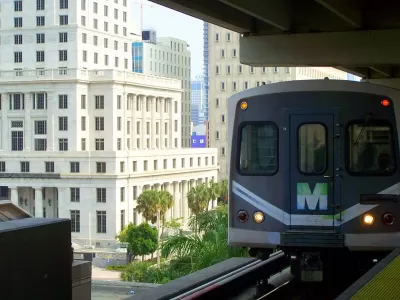
Douglas Hanks reports on a new real-time tracker of Metrorail trains in Miami, created by the advocacy group Transit Alliance. The tracker uses online data from the county to calculate the number of late trains, presenting their findings in a colorful and useable online display.
On the Metrorail Audit page, each train is represented by a dot with a color representing the arrival time. While the page shows today's trains in chronological order, it also offers a view of the previous day's trains grouped by their arrival performance. The site also lets us know that at the time of this writing there have been 235 on-time trains, 618 late or bunched trains, and 111 ghost trains in the past week.
Jarrett Walker picked up the news of the Transit Alliance tracker and gave it a stamp of approval, noting especially the tracker's focus on headways (wait times) rather than on-time performance. Walker concludes his post about the tracker with an appeal for an institute "to create a database of reliability info across many agencies, searchable many ways — and always based on this headway reliability rather than on-time performance."
Hat tip to Rachel Dovey for sharing news of the Transit Alliance tracker.
Read the full story: Will Metrorail get you there on time today? Now you can track late trains instantly.
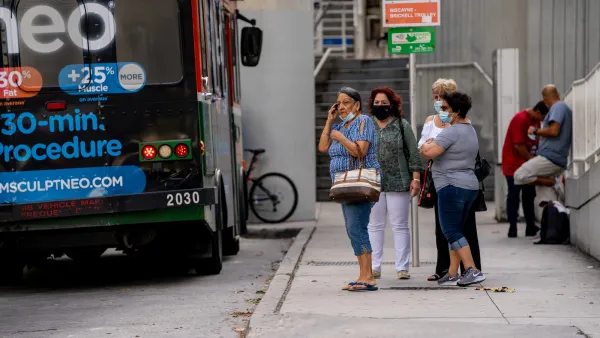
Miami promised a 'Better Bus Network.' Riders say it hasn't delivered.
Ridership on Miami-Dade Transit dropped by 2%-10% every month between October and December 2025.
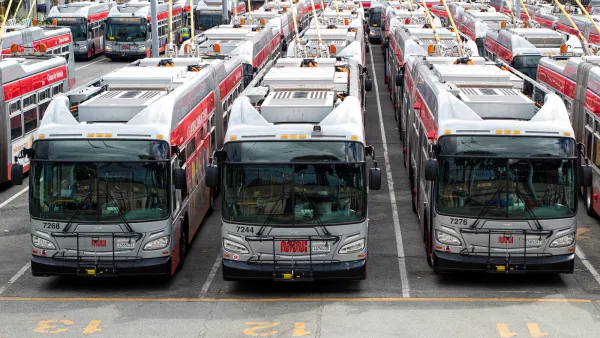
Report: USA Must Triple its Transit Vehicles to Offer ‘World-class’ Transit
To achieve the level of transit access that most global cities enjoy, the United States would need trillions more in funding… and a LOT of buses.
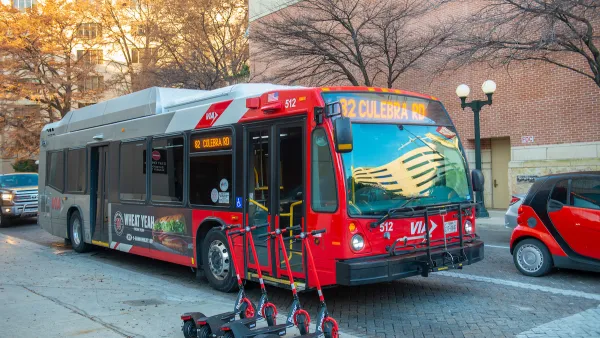
Mid-Size Cities Struggle to Provide Reliable Transit
Smaller transit agencies face some unique challenges.

Planetizen Federal Action Tracker
A weekly monitor of how Trump’s orders and actions are impacting planners and planning in America.

California plans to bury El Niño’s downpour
If the state plays its cards right, it may be able to store a billion acre-feet of El Niño’s water in aquifers.

Desperate measures: Advocates weigh draining Lake Powell to fill Colorado River
Draining the reservoir could reduce evaporation losses by a couple hundred thousand acre-feet.

Mamdani’s pied-à-terre tax survives legal challenge
A panel of judges found that the plaintiffs failed to demonstrate injury as a result of New York City's implementation of the tax.

Eastern Nebraska is running out of electricity
Data centers and electrification are straining eastern Nebraska’s grid, throttling economic development.

Seattle passes record-breaking transit services expansion
Proposition 1 will double the city’s transit tax to add 95,000 more bus trips and preserve 180,000 bus trips annually.

FREE Course: Walkable City 1: Why Walkability?
After describing his path towards focusing on walkability as the essence of good planning, Jeff Speck marches through his five principal reasons for making more walkable places.
Reinventing Malls: Planning Alchemy—Turning Gray Fields Into Gold
The course focuses on the opportunities and imperatives that shape reinvention of mall sites.


City of Rosemead
Rutgers University, Edward J. Bloustein School of Planning and Public Policy
One Hundred Miles
University of Michigan School for Environment and Sustainability (SEAS)
Hunter College, City University of New York (CUNY)
The Architects Foundation
City of Cambridge
Montrose County
The Pocatello Development Authority