Now that the Trump Administration has reopened the U.S. coastlines to oil and gas extraction, it's unclear whether anyone will take up the opportunity in the Pacific Northwest.


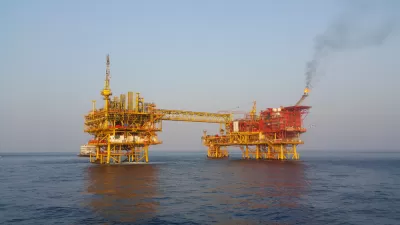
Cassandra Profita and Tony Schick follow up with the controversial decision by the Trump Administration to reopen offshore oil and gas drilling earlier in January, examining the policy for questions about when and if coastal residents should expect to see drilling operations go to work.
According to Profita and Schick, "with strong opposition and unproven oil and gas reserves, it’s unclear whether anyone will take that chance." The article focuses mostly on Oregon and Washington, where the Bureau of Ocean Energy management estimates that there is some 810 million barrels of "undiscovered technically recoverable" oil and gas. There's far more gas in the Gulf Of Mexico, according to the article. In effect, "drilling for oil and gas off the Pacific Northwest coast would be a much bigger gamble than drilling somewhere else…"
The article continues into more details about the leasing program the Trump Administration has offered to oil and gas companies, as well as the prospect of whether Oregon and Washington will have any ability to stop offshore drilling if a lease sale suddenly does materialize.
There's also still time to comment on the Bureau of Ocean Energy Management's National Outer Continental Shelf Oil and Gas Leasing Program. Public comments are open for 60 days, the public hearings around the country are gathering feedback.
Read the full story: Q&A: What Are The Chances Of Offshore Oil And Gas Drilling In The Northwest?

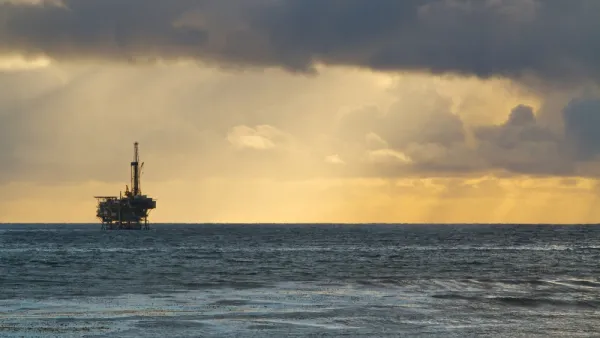
Despite Bipartisan Opposition, Trump Administration Opens Offshore Oil and Gas Drilling
In a major blow to former President Obama's restrictions on offshore drilling in sensitive areas, Interior Secretary Ryan Zinke announced that he would open the Outer Continental Shelf in four regions: Pacific, Arctic, Atlantic, and the Gulf Coast.
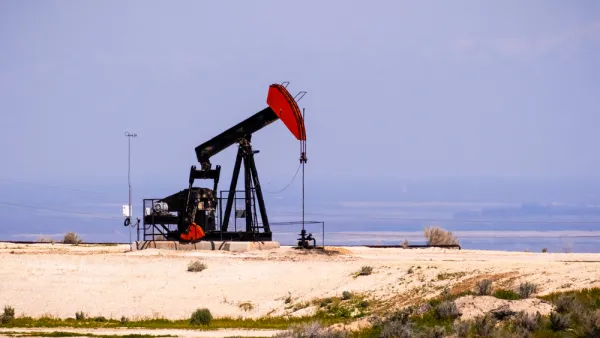
Department of Interior Plans to Open 1 Million Acres in California to Fracking
The Bakersfield Office of the Bureau of Land Management released an environmental study that is the basis for undoing a 2013 de facto moratorium on fracking on federal lands in California. The Supplemental EIS triggers a 45-day public comment period.
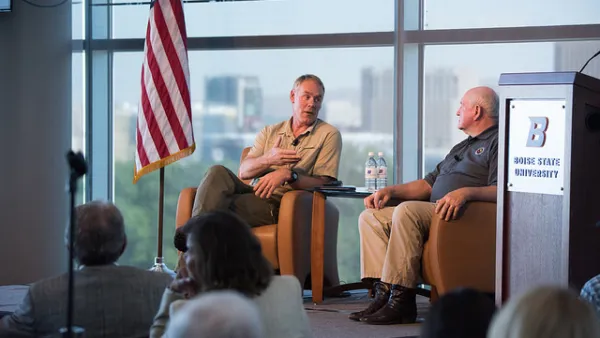
Under Zinke, Land in Montana Is Still Somehow Protected
Though he’s opened land all over the U.S. to industry, the Interior Secretary is actually pushing to conserve even more of his home state.

Planetizen Federal Action Tracker
A weekly monitor of how Trump’s orders and actions are impacting planners and planning in America.

The state-sanctioned urbicide of Austin
People don’t kill cities. Freeways do.

US to reduce Colorado River water deliveries to Mexico
A new Colorado Treaty amendment reduces Mexico’s Colorado River water allocation by 250,000 acre feet.

Nation's most wind-powered state turns to coal as data centers increase energy demand
For the first time in decades, Iowa has increased its generation of coal power.

NYC cools commuters with city's first rain garden above a bus stop
New York City officials say the plants in the rain garden can absorb 16 gallons of rainwater during heavy storms.

Brightline West’s future may rely on $6 billion federal loan
The company has until Nov. 2 to make a $400 million equity investment into its proposed high-speed rail line.

FREE Course: Walkable City 1: Why Walkability?
After describing his path towards focusing on walkability as the essence of good planning, Jeff Speck marches through his five principal reasons for making more walkable places.
Reinventing Malls: Planning Alchemy—Turning Gray Fields Into Gold
The course focuses on the opportunities and imperatives that shape reinvention of mall sites.

Greater Baltimore Committee
Eagle County Government
Harvard University Graduate School of Design
The Architects Foundation
University of Cincinnati Online
The Pocatello Development Authority
The Urban Renewal Agency of the City of Pocatello
Journal of the American Planning Association