When the Trump Administration scrapped the U.S. Department of Transportation's FASTLANE grant program, the state of Rhode Island decided to seek a public-private partnership for its I-95 bridge replacement project.


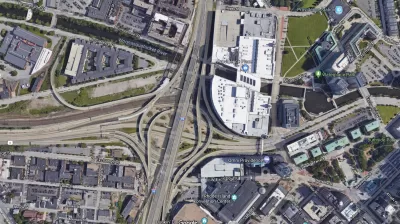
The estimated cost of replacing the decrepit Route 95 North bridges and interchange in the center of Providence is growing.
Patrick Anderson reports that the estimated cost of the project has ballooned from $226.1 million to $342.9 million.
The state last month applied for a $60-million grant from the U.S. Department of Transportation’s “INFRA” program for the reconstruction of the Route 95 Northbound Providence Viaduct, roughly the same project it sought a $59-million grant for a year ago under the Obama administration’s predecessor “FASTLANE” program.
But the estimated cost of the underlying project — replacing the decrepit Route 95 North bridges and interchange in the center of the city while adding new travel lanes — has grown from $226.1 million to $342.9 million, according to the respective grant applications from the Rhode Island Department of Transportation.
According to Anderson, much of the new cost for the project can be traced to a new financing structure for the project—one that would bring in a private investor and pay a 15 percent return. The new financing structure is designed to "take advantage of President Donald Trump’s preference for public-private infrastructure partnerships," reports Anderson. The article includes more on the planning and engineering details of the project, as well as the policy changes at the federal level that led the state to seek private financing.
FULL STORY: Cost of Route 95 viaduct project in Providence soars


Active Transportation Program Suffers as Truck Toll Revenue Falls Short
Delays in constructing an extensive truck-only toll system have caused a shortfall in toll revenue affecting the Rhode Island DOT budget. A promise to repair bridges repair means a big cut for bike and pedestrian funding.

Nation's First Truck-Only Toll Program Off to Auspicious Start
After the Rhode Island General Assembly passed controversial legislation in February 2016 spearheaded by Gov. Gina Raimondo (D), the first two of what will be 13 truck-only toll gantries became operational on June 11. Results are looking good.
GOP Tax Plan Eliminates Critical Infrastructure-Funding Bond Program
The Tax Cut and Jobs Act would have a deleterious effect on major infrastructure proposed by the private sector. The loss of Private Activity Bonds would hike borrowing rates for road, transit, stadium, and even affordable housing projects.

The state-sanctioned urbicide of Austin
People don’t kill cities. Freeways do.

US to reduce Colorado River water deliveries to Mexico
A new Colorado Treaty amendment reduces Mexico’s Colorado River water allocation by 250,000 acre feet.

New Jersey’s second-largest city bans standalone data centers
Jersey City will continue to allow co-location facilities, such as those meant for research institutions that store their own data.

Amtrak not solely to blame for New Jersey commuter rail's unreliability, report finds
A new study from the Garden State Initiative found that NJ Transit’s budget grew 20% across a 4 year period, but reliability declined significantly over the same period.

EPA erases limits on planet-warming pollution from power plants
Under Monday’s plan, power plants would still have some limits on how much mercury, arsenic and other contaminants they can emit.

Phoenix announces new on-demand transit service, more frequent RAPID buses
Both new services will launch in October, and are part of Phoenix's Project Effective Access Solutions for Easing Congestion.

FREE Course: Walkable City 1: Why Walkability?
After describing his path towards focusing on walkability as the essence of good planning, Jeff Speck marches through his five principal reasons for making more walkable places.
Reinventing Malls: Planning Alchemy—Turning Gray Fields Into Gold
The course focuses on the opportunities and imperatives that shape reinvention of mall sites.

Eagle County Government
Harvard University Graduate School of Design
Nashville Planning Department
The Architects Foundation
University of Cincinnati Online
The Pocatello Development Authority
The Urban Renewal Agency of the City of Pocatello
Journal of the American Planning Association