St. Louis seems to be a never-ending source of stadium financing controversy.


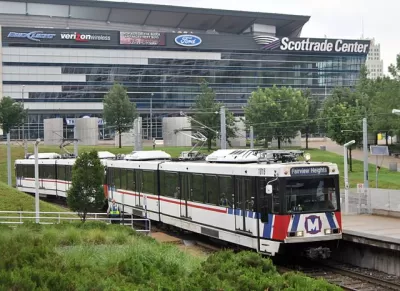
Sarah Fenske provides a post-mortem on a deal that allow taxpayer funding of a renovation of the Scottrade Center, home of the National Hockey League's St. Louis Blues.
"Faced with two principled stands against a giveaway of money for Scottrade Center that could cost St. Louis taxpayers $107 million, the Blues fought hard," writes Fenske.
Fenske's assessment of the situation is that development interests with aggressive lawyers run the city, and the article includes all the gory details of the lawsuits that overcame the opposition to deliver taxpayer funding to the project.
St. Louis has navigated a series of stadium proposal controversies in recent years. First there was the scramble to build a new NFL stadium in the failed effort to keep the National Football League's Rams in the city. Later, St. Louis voters rejected a soccer stadium proposal that would have relied in part on public financing. Still, some developers keep coming back to the well. In October, developers announced plans for a Ballpark Village that would rely on a $105 million bond offering by the St. Louis Industrial Development Authority.
FULL STORY: Scottrade Litigation Proves You Can't Fight City Hall — Even From Inside It

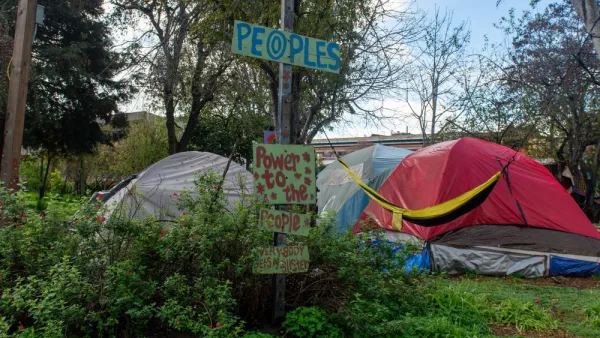
People’s Park—Symbol of Berkeley’s Storied Past—Temporarily Cleared and Fenced Off for Development
A few days after a judge’s ruling cleared three pending lawsuits blocking the development of People’s Park, the unhoused people living in the park were cleared and fence surrounds the site. Protestors took back the park within a day.
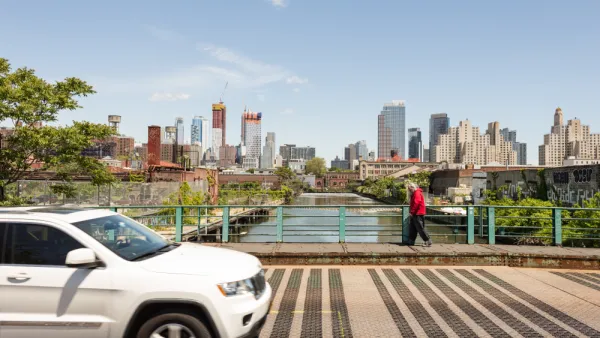
Gowanus Rezoning Clears Post-Approval Legal Hurdle
The saga of the Gowanus Neighborhood Planning Study, approved by New York City at the end of 2021, continues into the summer of 2022. Opponents claimed the Gowanus rezoning ran afoul of the state’s environment law. A county judge dismissed the case.
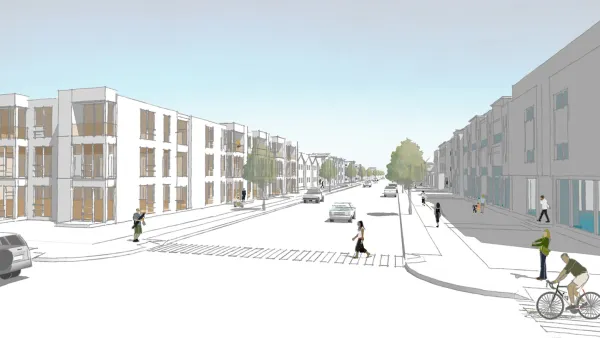
Minneapolis 2040 Implementation Allowed to Proceed … For Now
The same judge that blocked implementation of the landmark Minneapolis 2040 Comprehensive Plan in June 2022 has allowed a temporary reprieve for planning work in the city to proceed.

Planetizen Federal Action Tracker
A weekly monitor of how Trump’s orders and actions are impacting planners and planning in America.

The state-sanctioned urbicide of Austin
People don’t kill cities. Freeways do.

US to reduce Colorado River water deliveries to Mexico
A new Colorado Treaty amendment reduces Mexico’s Colorado River water allocation by 250,000 acre feet.

5 New England states march closer to 800 megawatt wind energy project
Securing federal approval for the project may be complicated under the Trump administration, which has historically been hostile towards domestic wind power.

Baltimore to break ground on $50 million Transit Priority Project
The project will bring faster bus trips, safer streets and better bike connections to Baltimore.

Airbnb launches $250 million 'last-dollar financing' housing accelerator, makes first investment in Austin
The company will put $6.4 million towards affordable housing development in Texas’ capital.

FREE Course: Walkable City 1: Why Walkability?
After describing his path towards focusing on walkability as the essence of good planning, Jeff Speck marches through his five principal reasons for making more walkable places.
Reinventing Malls: Planning Alchemy—Turning Gray Fields Into Gold
The course focuses on the opportunities and imperatives that shape reinvention of mall sites.


Eagle County Government
Harvard University Graduate School of Design
Nashville Planning Department
The Architects Foundation
University of Cincinnati Online
The Pocatello Development Authority
The Urban Renewal Agency of the City of Pocatello
Journal of the American Planning Association