Climate change is real, and happening now — but exactly what that means for coastal cities is surprisingly uncertain. Engineers at Princeton’s Form Finding Lab choose flexibility over fortification to protect coastal cities from flooding.


We associate inflatable structures with ludic landscapes like the bounce castle and hippie hangout. Impractical technoutopias all. But for engineer Sigrid Adriaenssens and her Form Finding Lab, inflatables could offer a very practical response to the growing threat of storm surge flooding and the uncertainty of climate change. More air bag than pleasure dome, inflatable sea walls could be an affordable and flexible solution to protect coastal cities from rising tides. Adriaenssens and her collaborator Steven Strauss make the case below. Whether building a sea wall or replacing a neighborhood with a swale, soft and hard infrastructures both come with high costs and take a long time to put in place. Ready in three years and deployable in three hours, inflatable rubber barriers present a different direction for life on the water.
Read the full story: Blow-Up Bulwark

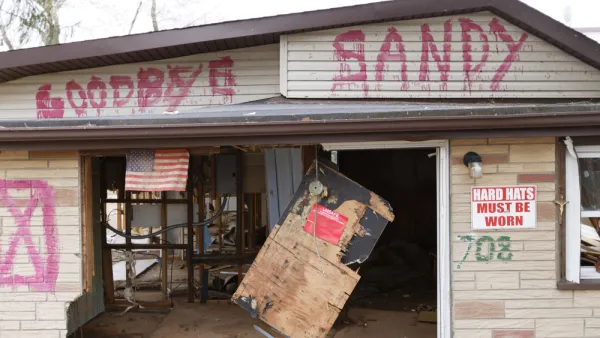
Watch: Sea Walls and the Future of Resilience
Vox and Curbed provide multi-media coverage of a Staten Island sea wall project as an example of the necessity of resilient infrastructure, and the shortcomings of our ability to predict the needs of the built environments in changed climates.

In a Warmer, Wetter and More Disaster-prone World: “Nature is the Greatest Designer”
A conversation with the American Society of Landscape Architects’ CEO Torey Carter-Conneen and board president Kona Gray.
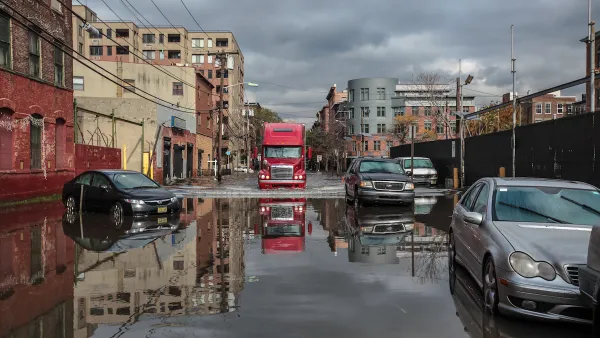
FEMA Resilience Program Cuts Grant Funding
The Building Resilient Infrastructure and Communities program funded projects from flood prevention to power station upgrades.

‘Going backwards:’ Baltimore mayor, students rally against state's transit funding plan
Maryland's proposed six-year plan provides no funding for Baltimore’s BMORE bus program and reduces its road maintenance funding.

Detroit to transform waterfront with $2.2 billion investment
Developers will convert about 18 acres of unused parking lot space into civic spaces.

HUD modernizes 50-year-old manufactured housing framework
The Next Generation Manufactured Housing Action Plan establishes new energy-efficiency standards for manufactured homes, and new guidelines for anchoring them.

After $600,000 wasted, CA high-speed rail board limits CEO’s power
Ian Choudri will no longer be able to sign, change or manage contracts.

Lithium mines leech water from surrounding communities. Soon, they’ll run dry
Researchers concluded that most lithium mines won't have enough water to meet industry demands by 2050.

El Niño takes lives, infrastructure as U.S. storm systems prove ill-prepared
About two-thirds of America's culverts are in states with outdated design standards.

FREE Course: Walkable City 1: Why Walkability?
After describing his path towards focusing on walkability as the essence of good planning, Jeff Speck marches through his five principal reasons for making more walkable places.
Reinventing Malls: Planning Alchemy—Turning Gray Fields Into Gold
The course focuses on the opportunities and imperatives that shape reinvention of mall sites.

One Hundred Miles
County of Mendocino
planning NEXT
The Architects Foundation
University of Cincinnati Online
Montrose County
Northern Illinois Transit Authority (NITA)
The Pocatello Development Authority