The university wanted to limit a section of Bigelow Boulevard to pedestrians, but the city pushed for a compromise: better crosswalks and traffic calming features. Now the challenge is finding the funds.


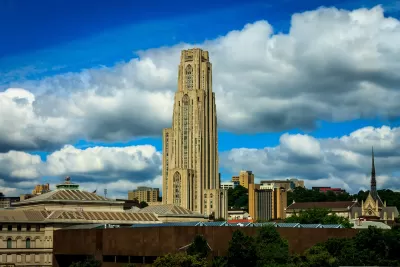
University campuses may be pedestrian havens, but they're also part of the wider urban fabric. For the Pittsburgh Post-Gazette, Ed Blazina writes, "The University of Pittsburgh would prefer to make Bigelow Boulevard a pedestrian plaza between Forbes and Fifth avenues, but if that's not possible it's on board with City of Pittsburgh recommendations to improve safety by rebuilding the street."
The city's $4 million proposal involves installing planters in the road, relocating the crosswalk, and adding protected bike lanes. "With the plans ready to go, the remaining issue is funding the project. The university has agreed to contribute $2 million, but the city applied for the other half through the Commonwealth Financing Authority and [...] was notified it would receive $500,000."
According to Karina Ricks, director of Pittsburgh's Office of Mobility and Infrastructure, the city isn't ready to close the street to vehicles. But "rebuilding part of Bigelow is part of an overall city strategy for making Oakland more pedestrian friendly, Ms. Ricks said."
Read the full story: City, Pitt have plan to rebuild part of Bigelow Boulevard to improve safety
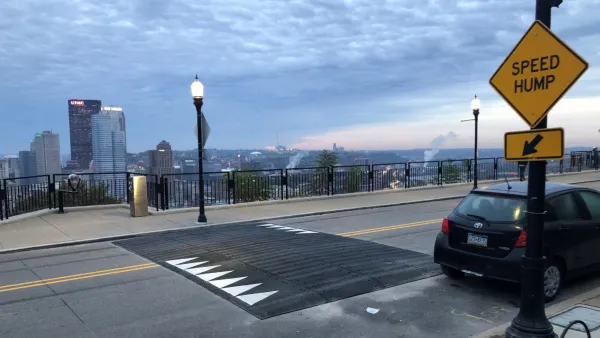
Pittsburgh Excels at Low-Cost, Quick-Build Traffic Calming
The city’s traffic calming initiative has led to a 6 percent average reduction in speeds on corridors with recent interventions.
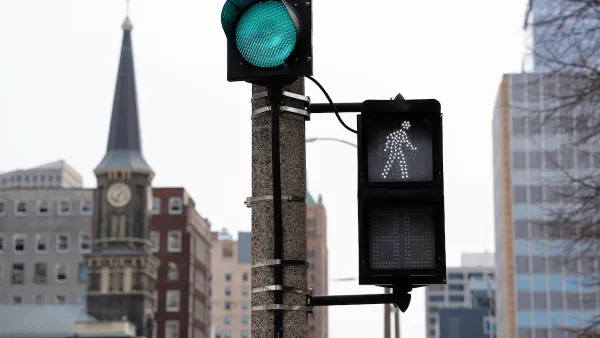
Milwaukee Announces 60 Traffic Calming Projects for 2025
The city has successfully reduced traffic deaths and aims to eliminate them completely within the next decade.
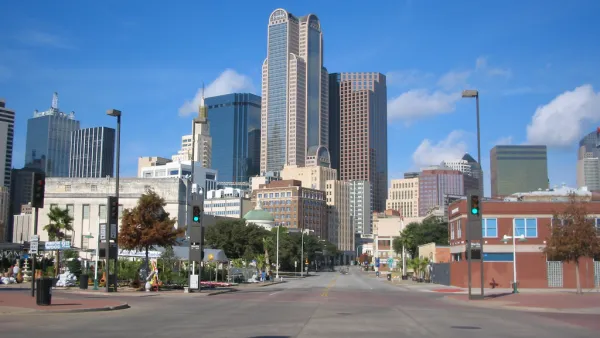
East Dallas Delays Complete Street Project
A controversial traffic calming and safety overhaul of some East Dallas streets won't be completed until 2025, but will include improved crosswalks and signals.

Planetizen Federal Action Tracker
A weekly monitor of how Trump’s orders and actions are impacting planners and planning in America.

California plans to bury El Niño’s downpour
If the state plays its cards right, it may be able to store a billion acre-feet of El Niño’s water in aquifers.

Desperate measures: Advocates weigh draining Lake Powell to fill Colorado River
Draining the reservoir could reduce evaporation losses by a couple hundred thousand acre-feet.

Mamdani’s pied-à-terre tax survives legal challenge
A panel of judges found that the plaintiffs failed to demonstrate injury as a result of New York City's implementation of the tax.

Eastern Nebraska is running out of electricity
Data centers and electrification are straining eastern Nebraska’s grid, throttling economic development.

Seattle passes record-breaking transit services expansion
Proposition 1 will double the city’s transit tax to add 95,000 more bus trips and preserve 180,000 bus trips annually.

FREE Course: Walkable City 1: Why Walkability?
After describing his path towards focusing on walkability as the essence of good planning, Jeff Speck marches through his five principal reasons for making more walkable places.
Reinventing Malls: Planning Alchemy—Turning Gray Fields Into Gold
The course focuses on the opportunities and imperatives that shape reinvention of mall sites.

City of Rosemead
Rutgers University, Edward J. Bloustein School of Planning and Public Policy
One Hundred Miles
University of Michigan School for Environment and Sustainability (SEAS)
Hunter College, City University of New York (CUNY)
The Architects Foundation
City of Cambridge
Montrose County
The Pocatello Development Authority