The political support for an expanded set of tenant protections emerged in response to the program of rezonings underway as part of the de Blasio Administration's housing plan.



Sally Goldenberg reports: "The [New York] City Council and Mayor Bill de Blasio have reached a deal on legislation that would expand protections for rent-regulated tenants who are being harassed by landlords eager to move them out, renovate and charge much higher rents."
The bill establishes a pilot program, according to Goldenberg, that requires property owners of buildings with recurring housing code violations or recently changed ownership, "acquire a 'certificate of no harassment' in neighborhoods undergoing rezonings as well as targeted low-income neighborhoods."
According to Goldenberg, the bill enacting the pilot program spent a year working its way through negotiations in City Hall. "Council member Brad Lander, a Brooklyn Democrat, pushed the administration to commit to expanding the law as part of the Council's approval of an affordable housing policy in 2016," reports Goldenberg.
The article includes more detail about the challenges the bill responds to—especially in context of the rezoning processes ongoing around the city in neighborhoods like East Harlem. Neighborhoods with recent rezonings, like East New York and Far Rockaway, would also gain the new tenant protections enabled by the new law.
Read the full story: Mayor, Council reach deal to expand protections for rent-regulated tenants

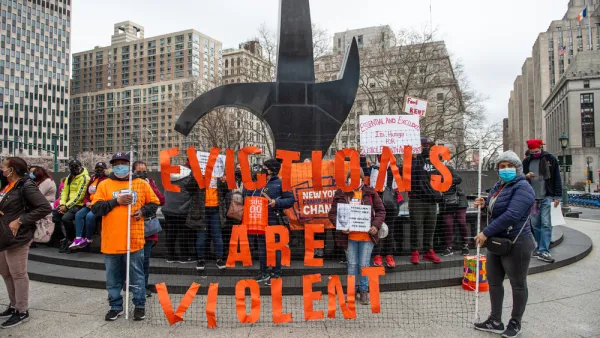
New York's 'Good Cause Eviction' Bill, Explained
Here's a slightly humorous approach to a serious topic: the Good Cause Eviction law making its way through the New York State Legislature.

No Evictions for Less Than $600, Says New D.C. Law
As part of a bill that made many COVID-era tenant protections permanent, the District voted to ban eviction filings for households owing less than $600 in back rent.
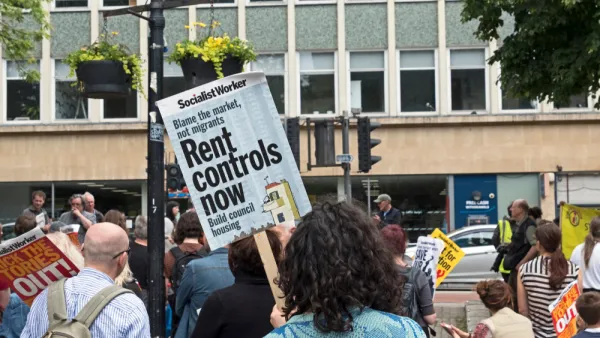
Rent Control Challenged as an Illegal Taking of Property
A potential precedent setting case against rent control is underway in New York. A Next City article takes an in-depth look at the legal argument made by landlords against the state of New York's new rent control law.

‘Going backwards:’ Baltimore mayor, students rally against state's transit funding plan
Maryland's proposed six-year plan provides no funding for Baltimore’s BMORE bus program and reduces its road maintenance funding.

Detroit to transform waterfront with $2.2 billion investment
Developers will convert about 18 acres of unused parking lot space into civic spaces.

HUD modernizes 50-year-old manufactured housing framework
The Next Generation Manufactured Housing Action Plan establishes new energy-efficiency standards for manufactured homes, and new guidelines for anchoring them.

After $600,000 wasted, CA high-speed rail board limits CEO’s power
Ian Choudri will no longer be able to sign, change or manage contracts.

Lithium mines leech water from surrounding communities. Soon, they’ll run dry
Researchers concluded that most lithium mines won't have enough water to meet industry demands by 2050.

El Niño takes lives, infrastructure as U.S. storm systems prove ill-prepared
About two-thirds of America's culverts are in states with outdated design standards.

FREE Course: Walkable City 1: Why Walkability?
After describing his path towards focusing on walkability as the essence of good planning, Jeff Speck marches through his five principal reasons for making more walkable places.
Reinventing Malls: Planning Alchemy—Turning Gray Fields Into Gold
The course focuses on the opportunities and imperatives that shape reinvention of mall sites.

One Hundred Miles
County of Mendocino
planning NEXT
The Architects Foundation
University of Cincinnati Online
Montrose County
Northern Illinois Transit Authority (NITA)
The Pocatello Development Authority