New Orleans could create the largest stretch of public riverfront in the U.S., thanks to a public land swap.


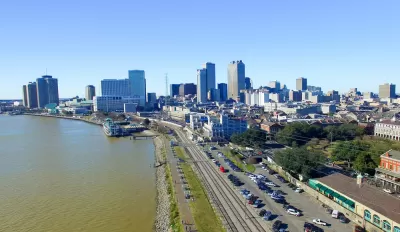
A vision to develop a contiguous public parkway along the New Orleans riverfront originated in the 2008 Reinventing the Crescent plan. Now, a missing piece of the proposed stretch of land has become available through an agreement between the Port of New Orleans and the Public Belt Railroad to trade riverfront properties. Jackson Rollings writes in the Architect's Newspaper:
In the swap, PNO took ownership of a stretch of railroad along the Mississippi River and PBR took ownership of two large wharves–Esplanade Avenue and Governor Nicholls Street Wharves. PBR is owned by the City of New Orleans, which now plans to redevelop both wharves as public space (à la Mandeville Wharf). This redevelopment will connect two existing riverfront parks, Bywater’s Crescent Park and the French Quarter’s Woldenburg Park.
The new park is one of several major redevelopments slated for the Mississippi River waterfront, coming to hundreds of millions of dollars. The city began a resurgence of park-building activity in 2014.
Read the full story: New Orleans property swap may yield largest public riverfront in the U.S.

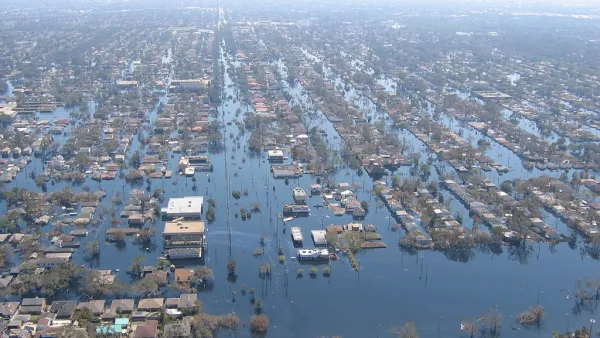
Louisiana Coast Will Disappear, Study Says. The Only Question Is How Soon.
Sea-level rise has passed a tipping point in the Gulf of Mexico.
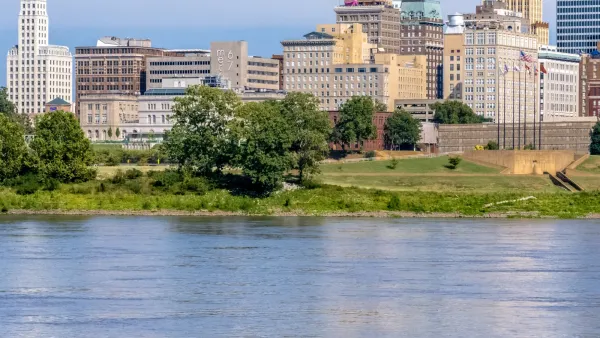
Ensuring Equity in Memphis Riverfront Development
One of the city’s biggest assets is its riverfront, but equity and inclusion need to be an important part of what development brings to residents and communities.
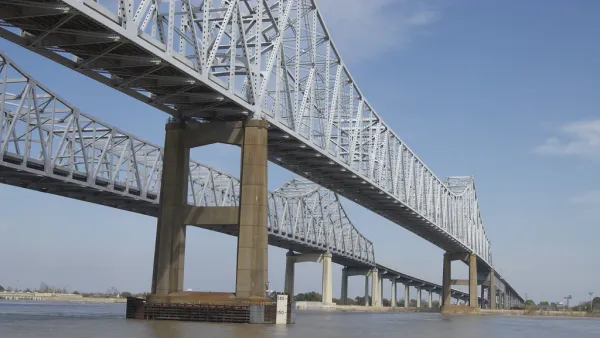
As the Mississippi River Rises, So Does the Threat to New Orleans
Climate change and channelization have made high water levels the norm along the river. But low-lying New Orleans lies in its path, and the consequences could be monumental.

Planetizen Federal Action Tracker
A weekly monitor of how Trump’s orders and actions are impacting planners and planning in America.

California plans to bury El Niño’s downpour
If the state plays its cards right, it may be able to store a billion acre-feet of El Niño’s water in aquifers.

Chicago breaks ground on $3 billion megadevelopment
The new neighborhood, titled Foundry Park, will one day host 3,700 residences.

California High-Speed Rail Authority CEO resigns after $600,000 scandal
Under Ian Choudri, the authority used taxpayer dollars to fund first class flights and trips to nightclubs.

Want to study the Missouri River? Soon, you may need unanimous approval from 10 states
Legislation would require 10 governors’ permission to study or build projects moving water outside the basin.

Desperate measures: Advocates weigh draining Lake Powell to fill Colorado River
Draining the reservoir could reduce evaporation losses by a couple hundred thousand acre-feet.

FREE Course: Walkable City 1: Why Walkability?
After describing his path towards focusing on walkability as the essence of good planning, Jeff Speck marches through his five principal reasons for making more walkable places.
Reinventing Malls: Planning Alchemy—Turning Gray Fields Into Gold
The course focuses on the opportunities and imperatives that shape reinvention of mall sites.

City of Rosemead
Rutgers University, Edward J. Bloustein School of Planning and Public Policy
One Hundred Miles
Hunter College, City University of New York (CUNY)
The Architects Foundation
University of Cincinnati Online
City of Cambridge
Montrose County
The Pocatello Development Authority