Plans to redevelop a section of the Mississippi Riverfront in New Orleans have been approved and construction could begin by the end of 2009.


"The City Council recently approved the expenditure of $30 million in Community Development Block Grant funds for the public park, clearing the way for construction of the landmark project to begin before the end of the year."
"The first phase will transform the area between Esplanade Avenue and Mazant Street. Now a gritty industrial zone marred by burned-out cargo docks, the area is set to become verdant green space replete with bike paths, pavilions, two piers and even electricity-generating windmills. If everything goes according to plan, the park will open in 2011."
"The designs reveal transformations of several decrepit wharves that now block pedestrian access to the waterfront. The fire-ravaged Mandeville Street Wharf will be replaced by a covered pavilion that could be used for outdoor concerts or other events. A wharf at Gallier Street would be rebuilt as a pier, allowing pedestrians to walk on a deck over the river. A second pier is planned at the foot of Press Street. A pavilion planned for Piety Street will have a musical theme, with plaques embedded in the ground to give facts about famous New Orleans musicians."
"In a city that has been slow to build affordable housing and other infrastructure since the 2005 storm, some have questioned whether a riverfront promenade is a necessary endeavor. Dubbed Reinventing the Crescent, the development would have additional phases that would extend the riverfront park from the Industrial Canal to Jackson Avenue. The entire project is slated to be complete in 2018."
Read the full story: Architects present concept for redeveloping New Orleans riverfront

At Long Last, A Park on the Passaic?
A park proposed for Newark's Passaic River waterfront has been an unfulfilled vision for at least a decade. But city officials say the Trust for Public Land will help radically speed up plans for a park.

Philly Waterfront Park Breaks Ground
Penn’s Landing is an ambitious redesign of 11.5 waterfront acres.
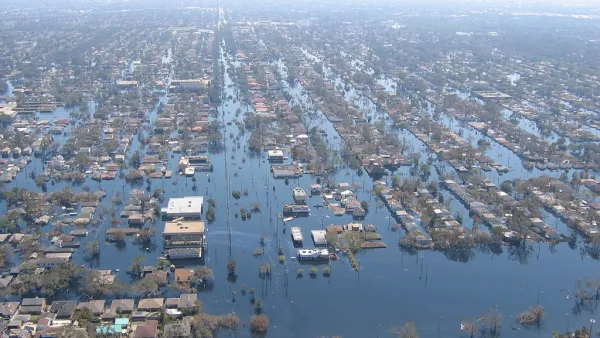
Louisiana Coast Will Disappear, Study Says. The Only Question Is How Soon.
Sea-level rise has passed a tipping point in the Gulf of Mexico.

Planetizen Federal Action Tracker
A weekly monitor of how Trump’s orders and actions are impacting planners and planning in America.

Chicago breaks ground on $3 billion megadevelopment
The new neighborhood, titled Foundry Park, will one day host 3,700 residences.

This MA town is drowning in its own sewage — and residents like it that way
Susan Murcott, a waste water expert, said if Carlisle didn't address their leaking sewage, the problem could turn “deadly.”

Iowa taxpayers are paying thousands to clean manure out of their water
While the Clean Water Act makes states responsible for regulating factory farms that discharge pollutants, Iowa has turned a blind eye to the polluting farms.

Amtrak cuts ribbon on Seattle Airo maintenance facility
The $250 million, nearly 100,000-square-foot building can house an entire Cascades Airo trainset.

To power data centers, Google seeks autonomous control of thousands of homes’ electricity
The tech company has signed a deal to indirectly pay Mid-Atlantic residents to reduce their power demand when the grid is strained.

FREE Course: Walkable City 1: Why Walkability?
After describing his path towards focusing on walkability as the essence of good planning, Jeff Speck marches through his five principal reasons for making more walkable places.
Reinventing Malls: Planning Alchemy—Turning Gray Fields Into Gold
The course focuses on the opportunities and imperatives that shape reinvention of mall sites.

City of Rosemead
Rutgers University, Edward J. Bloustein School of Planning and Public Policy
One Hundred Miles
The Architects Foundation
University of Cincinnati Online
Montrose County
The Pocatello Development Authority
The Urban Renewal Agency of the City of Pocatello