The company that pays to build and maintain bus shelters in Miami-Dade County isn't happy about plans to bring in another company to build wi-fi kiosks at transit stops.


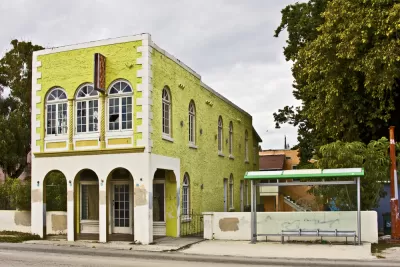
"A cutting-edge network of interactive digital kiosks for Miami-Dade’s transit system may cost passengers an old-fashioned perk: shelter from the rain and the sun," reports Douglas Hanks.
The unfortunate either/or scenario is the result of an ongoing dispute with Outfront Media, the outdoor media company that builds county bus shelters in exchange for ad space. Outfront media "recently warned it may have to abandon the venture if a rival company installs as many as 300 Wi-Fi-enabled kiosks at bus stops across the county."
Another company, called Civiq, already won a deal to install Wi-Fi kiosks back in January. More details on that deal are available in article from January 2017 by Josh Baumgard.
Hanks also notes that Civiq is already in hot water with Miami-Dade after missing milestones in the agreement: "It has yet to turn in requested locations for 150 kiosks, or installed Wi-Fi equipment in 10 county buses, as required under its deal." The article also includes in-depth discussion, with multiple sources, about the relative importance of Wi-Fi and bus shelters to the transit user experience.
Read the full story: Stay dry or stay online? At bus stops, it’s free Wi-Fi versus shelters.
Miami-Dade budget proposes draining rail fund, bus service cuts
The county mayor says the diversion of rail funds is necessary to prevent deeper service cuts.
Miami-Dade County Suspends Transit Fares for Rest of 2023
Starting November 13, bus and rail rides will be free as the county rolls out its ‘Better Bus’ system redesign.
The Case for Better Bus System Design in Miami-Dade
The Miami-Dade Transit system includes only five routes with headways at 15 minutes or less during midday and only six percent of residents live near frequent bus service, according to a recent study.

Planetizen Federal Action Tracker
A weekly monitor of how Trump’s orders and actions are impacting planners and planning in America.

California plans to bury El Niño’s downpour
If the state plays its cards right, it may be able to store a billion acre-feet of El Niño’s water in aquifers.

Desperate measures: Advocates weigh draining Lake Powell to fill Colorado River
Draining the reservoir could reduce evaporation losses by a couple hundred thousand acre-feet.

Post election, Texas is no longer Musk’s 'AI oasis'
Elon Musk dolled out $446 million on the 2026 midterms, the most ever spent by a non-canidate.

Chicago voters approve permanent festival grounds, penalty for vacant property owners
Currently, major summer and fall festivals take over public parks for weeks at a time, drawing criticism from nearby residents

NYC votes to cut outdoor dining red tape, speed up permitting
New York City also voted to allow the Department of Transportation to begin work on urgent projects before notifying elected officials.

FREE Course: Walkable City 1: Why Walkability?
After describing his path towards focusing on walkability as the essence of good planning, Jeff Speck marches through his five principal reasons for making more walkable places.
Reinventing Malls: Planning Alchemy—Turning Gray Fields Into Gold
The course focuses on the opportunities and imperatives that shape reinvention of mall sites.

City of Rosemead
Rutgers University, Edward J. Bloustein School of Planning and Public Policy
One Hundred Miles
Hunter College, City University of New York (CUNY)
The Architects Foundation
University of Cincinnati Online
City of Cambridge
Montrose County
The Pocatello Development Authority