Public meetings to learn more about TOD will be hosted in November by MARTA and the DeKalb County government


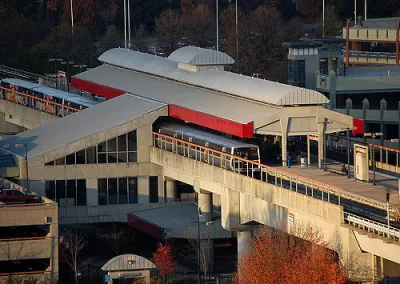
In Atlanta, the potential for transit-oriented development around five proposed new MARTA stations will be presented to the public in November. The regional transit operator, MARTA, and the DeKalb County government will host public meetings and gather input for the type of development that will occur at station areas on the proposed 12-mile heavy rail extension in the eastern Atlanta metro.
MARTA authorized a market study as part of creating a vision for development. The project fact sheet states the following:
Using this vision, along with data from a market analysis and outputs from recent and ongoing planning efforts, the project will craft a corridor-wide approach to encourage affordable, attractive, and transit-supportive development. The process will also help to identify economic programs and policies that promote increased and equitable opportunity for DeKalb residents and businesses.
The TOD analysis is partially funded by a $1.6 million FTA grant to analyze potential development. The rail line extension was first proposed in 1997.
FULL STORY: MARTA’s proposed rail line in East DeKalb County: Public input sought on TODs


Transit Oriented Development Spreads to the Suburbs
The Metropolitan Atlanta Rapid Transit Authority (MARTA) is working on mixed-use development plans for a location near Kensington Station, in DeKalb County.

Atlanta’s Five Points Station Overhaul Enters Public Review Phase
The project is part of MARTA’s effort to support more transit-oriented development in downtown Atlanta.

New TOD Breaks Ground in Atlanta Area
The project will include over 500 housing units, commercial and retail space, and park spaces.

The state-sanctioned urbicide of Austin
People don’t kill cities. Freeways do.

US to reduce Colorado River water deliveries to Mexico
A new Colorado Treaty amendment reduces Mexico’s Colorado River water allocation by 250,000 acre feet.

New Jersey’s second-largest city bans standalone data centers
Jersey City will continue to allow co-location facilities, such as those meant for research institutions that store their own data.

Amtrak not solely to blame for New Jersey commuter rail's unreliability, report finds
A new study from the Garden State Initiative found that NJ Transit’s budget grew 20% across a 4 year period, but reliability declined significantly over the same period.

EPA erases limits on planet-warming pollution from power plants
Under Monday’s plan, power plants would still have some limits on how much mercury, arsenic and other contaminants they can emit.

Phoenix announces new on-demand transit service, more frequent RAPID buses
Both new services will launch in October, and are part of Phoenix's Project Effective Access Solutions for Easing Congestion.

FREE Course: Walkable City 1: Why Walkability?
After describing his path towards focusing on walkability as the essence of good planning, Jeff Speck marches through his five principal reasons for making more walkable places.
Reinventing Malls: Planning Alchemy—Turning Gray Fields Into Gold
The course focuses on the opportunities and imperatives that shape reinvention of mall sites.

Eagle County Government
Harvard University Graduate School of Design
Nashville Planning Department
The Architects Foundation
University of Cincinnati Online
The Pocatello Development Authority
The Urban Renewal Agency of the City of Pocatello
Journal of the American Planning Association