Researchers at the University of Texas at Arlington have produced a scathing report on the inadequacies of public transit in Dallas.


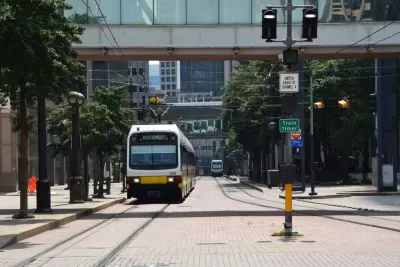
Peter Simek reports on a new report released by researchers from the University of Texas at Arlington’s Institute of Urban Studies that "comprehensively reveals the failures of Dallas Area Rapid Transit to provide adequate public transit to its member cities."
"The analysis exposes a failure that is contributing greatly to lingering issues of poverty, inequality, and a lack of upward mobility in the region."
Among the key statistics in the report presented at the October 23 meeting [pdf] of the Dallas City Council's Mobility Solutions, Infrastructure and Sustainability committee:
- "More than 65 percent of residents who are dependent on transit have access to less than 4 percent of regional jobs."
- "On average, just 18 to 22 percent of the population has access to high frequency service during morning and afternoon peak hours; but during off peak hours, that number drops to just 9 percent of the population."
- "About a third of Dallas residents and transit-dependent residents do not have walking access to a transit station."
Simek pulls no punches in summarizing a deeply critical indictment of the Dallas Area Rapid Transit system: "In one fell swoop, the report illustrates how Dallas’ income inequality and lack of upward mobility are directly related to the failures of its public transit agency."
FULL STORY: Bombshell Report Reveals DART’s System-Wide Inadequacy


Dallas area transit prepares for World Cup, asks locals to drive
DART is adding a special shuttle service and creating back-up mechanisms to ensure it can serve all of this summer's World Cup attendees.
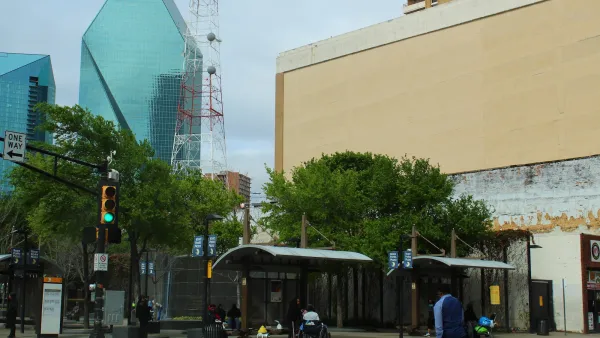
Dallas transit to invest up to $71.5M in upgraded bus shelters
The new shelters will feature solar-powered lighting and materials designed to protect riders from extreme weather.
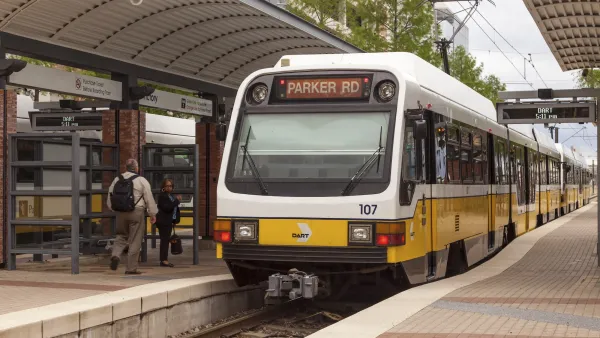
Dallas Sacrifices DART Majority Control in Bid to Keep Suburbs in Transit System
The city would give up majority control of the regional transit system for the first time in its 40-year history.

Planetizen Federal Action Tracker
A weekly monitor of how Trump’s orders and actions are impacting planners and planning in America.

The state-sanctioned urbicide of Austin
People don’t kill cities. Freeways do.

US to reduce Colorado River water deliveries to Mexico
A new Colorado Treaty amendment reduces Mexico’s Colorado River water allocation by 250,000 acre feet.

5 New England states march closer to 800 megawatt wind energy project
Securing federal approval for the project may be complicated under the Trump administration, which has historically been hostile towards domestic wind power.

Baltimore to break ground on $50 million Transit Priority Project
The project will bring faster bus trips, safer streets and better bike connections to Baltimore.

Airbnb launches $250 million 'last-dollar financing' housing accelerator, makes first investment in Austin
The company will put $6.4 million towards affordable housing development in Texas’ capital.

FREE Course: Walkable City 1: Why Walkability?
After describing his path towards focusing on walkability as the essence of good planning, Jeff Speck marches through his five principal reasons for making more walkable places.
Reinventing Malls: Planning Alchemy—Turning Gray Fields Into Gold
The course focuses on the opportunities and imperatives that shape reinvention of mall sites.

Eagle County Government
Harvard University Graduate School of Design
Nashville Planning Department
The Architects Foundation
University of Cincinnati Online
The Pocatello Development Authority
The Urban Renewal Agency of the City of Pocatello
Journal of the American Planning Association