Despite the presence of a formidable (and expensive) underground flood control system, Tokyo may confront floods and rainfall that will challenge the city's capacity to protect itself.


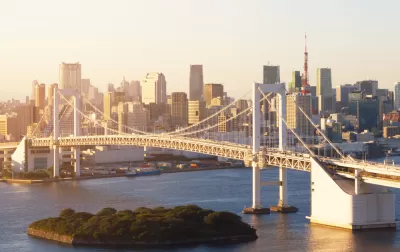
As the threat of flooding remains on the minds of many here in the United States, citizens of Tokyo face their own set of worries. Hiroko Tabuchi discusses the city's Metropolitan Area Outer Underground Discharge Channel, a "$2 billion underground anti-flood system, completed in 2006, [that] is an extraordinary example of the defenses that global cities are readying as they face an era of extreme weather brought on by climate change."
While the system is impressive, concrete infrastructure may not be enough to hold back what climate change has in store. Leading up to the 2020 Olympic Games, concerns are mounting. Tabuchi writes, "But now, with a government debt more than twice the size of its economy and spiraling costs of caring for an aging population, the country is less able to muster the resources to fund such ambitious projects."
Some experts also argue that more extensive protections, if built, "only encourage development in regions that could still be vulnerable to future flooding. [...] Investment in infrastructure need[s] to be paired with more public education in disaster survival skills, like familiarity with local flood hazard maps or evacuation protocols."
FULL STORY: Tokyo Is Preparing for Floods ‘Beyond Anything We’ve Seen'

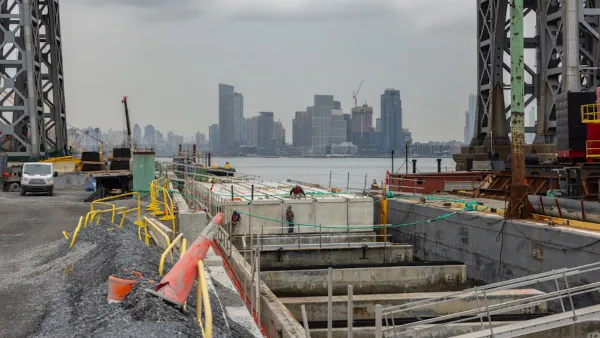
New York Flood Control Plan Takes Lessons From the Dutch
The Netherlands has a long history of flood mitigation. U.S. cities, threatened by coastal flooding and erosion, are taking note.
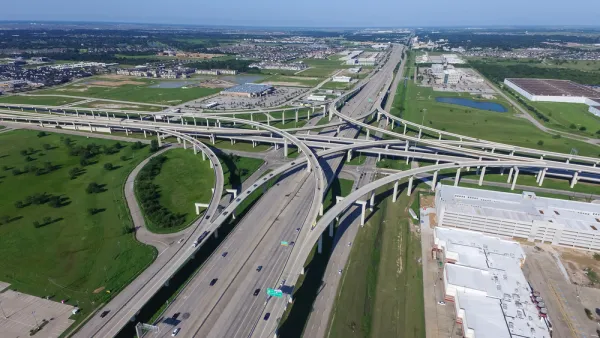
A Houston Columnist Celebrates Japan's Transit Infrastructure
The paper of record in a Texas oil town is a surprising place to find an article singing the praises of a society built on public transit instead of the automobile.

As Temperatures Increase, Maps Show Sea-Level Rise Will Devastate Cities
Data visualizations illustrate the catastrophic consequences of single-digit global temperature increases.

Planetizen Federal Action Tracker
A weekly monitor of how Trump’s orders and actions are impacting planners and planning in America.

The state-sanctioned urbicide of Austin
People don’t kill cities. Freeways do.

US to reduce Colorado River water deliveries to Mexico
A new Colorado Treaty amendment reduces Mexico’s Colorado River water allocation by 250,000 acre feet.

Amtrak not solely to blame for New Jersey commuter rail's unreliability, report finds
A new study from the Garden State Initiative found that NJ Transit’s budget grew 20% across a 4 year period, but reliability declined significantly over the same period.

EPA erases limits on planet-warming pollution from power plants
Under Monday’s plan, power plants would still have some limits on how much mercury, arsenic and other contaminants they can emit.

Phoenix announces new on-demand transit service, more frequent RAPID buses
Both new services will launch in October, and are part of Phoenix's Project Effective Access Solutions for Easing Congestion.

FREE Course: Walkable City 1: Why Walkability?
After describing his path towards focusing on walkability as the essence of good planning, Jeff Speck marches through his five principal reasons for making more walkable places.
Reinventing Malls: Planning Alchemy—Turning Gray Fields Into Gold
The course focuses on the opportunities and imperatives that shape reinvention of mall sites.

Eagle County Government
Harvard University Graduate School of Design
Nashville Planning Department
The Architects Foundation
University of Cincinnati Online
The Pocatello Development Authority
The Urban Renewal Agency of the City of Pocatello
Journal of the American Planning Association