The paper of record in a Texas oil town is a surprising place to find an article singing the praises of a society built on public transit instead of the automobile.


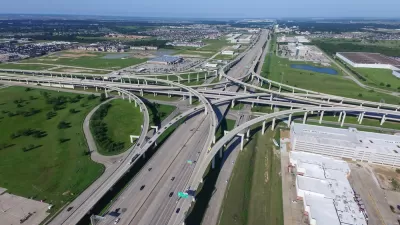
Chris Tomlinson writes for the Houston Chronicle:
International travel always makes me think about the choices we’ve made in America, and spending time in Japan made me think about which forms of transportation our government subsidizes and to what end.
Comparing Japan’s emphasis on shared, electric railroads to America’s focus on personal, fossil fuel vehicles is especially relevant as the world confronts climate change.
According to Tomlinson, only one of these two divergent paths, set upon after World War II, has paid off, and that's the public transit orientation of Japan. Both governments spent trillions to build out their vision of the future, and many places are continuing to sink more money into the status quo. Tomlinson cites a plan by the Texas Department of Transportation to widen I-45 in Houston as an example to back up that claim.
FULL STORY: Trains and rail make more sense than cars and roads

Infrastructure and its Discontents
The significance of the Biden administration's expansive view of infrastructure is reflected in the flood of commentary published in the week since the public's first look at the American Jobs Plan.
TxDOT Approves I-45 Widening Despite Local Opposition
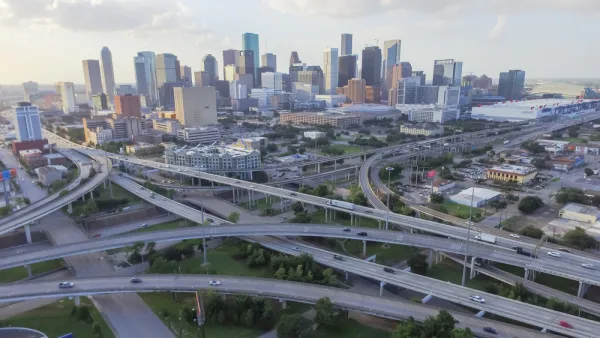
Despite every manner of local opposition, the Texas Department of Transportation is pushing forward with a plan to widen Interstate 45 north of the city of Houston, demolishing and displacing thousands of homes, businesses, and community facilities.
Best Ideas of the Week
Another week has passed, and some more exciting and interesting ideas have taken root in the world of urban planning.

Planetizen Federal Action Tracker
A weekly monitor of how Trump’s orders and actions are impacting planners and planning in America.

The state-sanctioned urbicide of Austin
People don’t kill cities. Freeways do.

US to reduce Colorado River water deliveries to Mexico
A new Colorado Treaty amendment reduces Mexico’s Colorado River water allocation by 250,000 acre feet.

5 New England states march closer to 800 megawatt wind energy project
Securing federal approval for the project may be complicated under the Trump administration, which has historically been hostile towards domestic wind power.

Baltimore to break ground on $50 million Transit Priority Project
The project will bring faster bus trips, safer streets and better bike connections to Baltimore.

Airbnb launches $250 million 'last-dollar financing' housing accelerator, makes first investment in Austin
The company will put $6.4 million towards affordable housing development in Texas’ capital.

FREE Course: Walkable City 1: Why Walkability?
After describing his path towards focusing on walkability as the essence of good planning, Jeff Speck marches through his five principal reasons for making more walkable places.
Reinventing Malls: Planning Alchemy—Turning Gray Fields Into Gold
The course focuses on the opportunities and imperatives that shape reinvention of mall sites.

Eagle County Government
Harvard University Graduate School of Design
Nashville Planning Department
The Architects Foundation
University of Cincinnati Online
The Pocatello Development Authority
The Urban Renewal Agency of the City of Pocatello
Journal of the American Planning Association