A large amount of new rental units have come online in recent months in Washington, D.C., and the housing market has seen a surprising amount of upheaval as a result.


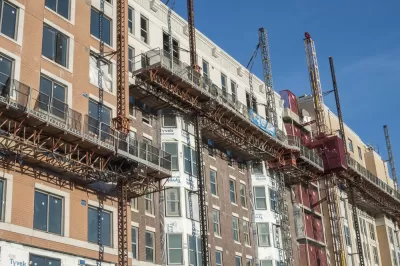
Rents have been dropping in Washington, D.C., and in surprising neighborhoods.
Joe Banister reports that it wasn't necessarily a surprise that rents have dropped, given a large amount of new supply hitting the market this year, but there was still an element of surprise when analysis looked at "the submarkets where that rent drop was concentrated."
Banister is sharing analysis from Delta Associates, which found that "District-wide rents for Class-A apartment buildings decreased by 1.3% year-over-year to an average monthly rate of $2,585, according to research firm Delta Associates, and Class-B rents experienced a drop of 0.6%."
However, established multi-family neighborhoods with high rental prices and slow delivery of new supply also saw new rent decreases—submarkets like Columbia Heights/Shaw and Central D.C., which includes neighborhoods like Dupont Circle, Logan Circle, and Mount Vernon Triangle.
One the flip side of these decreased rents in slowly developing neighborhoods were increased rents in neighborhoods that saw an influx of new developments. According to Banister, "In the Capitol Hill/Capitol Riverfront/Southwest D.C. submarket, Class-A rents grew by 3.2% to an average of $2,410. That submarket absorbed 1,655 units during the 12 months ending Sept. 30, comprising nearly half of D.C.'s total absorption over that period."
Delta Associates President Will Rich is quoted in the article explaining the rent trends in D.C. as a result of shifting preferences among renters.
FULL STORY: D.C. Apartment Rents Continue To Decline, But Not Where Experts Predicted

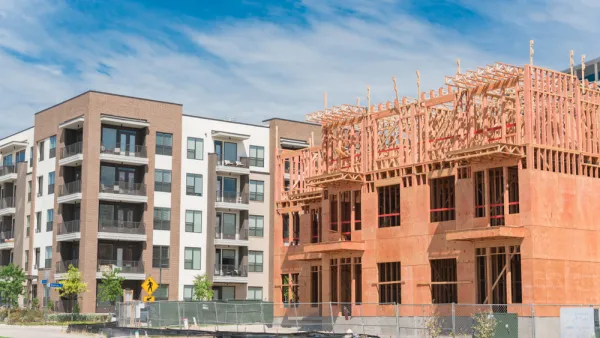
Apartment Construction Ramps Up to Meet New Demand
It's unclear if or when the supply of entry level rental housing options will catch up with the demand, but some cities are building quickly.
How the ‘Housing Trap’ Keeps Housing Unaffordable
The financialization of housing uncouples housing prices from local supply and demand. Fixing this requires a new approach.
How Financing Restricts the Rental Housing Market
The way apartment buildings are financed has a major impact on supply and costs.

Planetizen Federal Action Tracker
A weekly monitor of how Trump’s orders and actions are impacting planners and planning in America.

The state-sanctioned urbicide of Austin
People don’t kill cities. Freeways do.

US to reduce Colorado River water deliveries to Mexico
A new Colorado Treaty amendment reduces Mexico’s Colorado River water allocation by 250,000 acre feet.

5 New England states march closer to 800 megawatt wind energy project
Securing federal approval for the project may be complicated under the Trump administration, which has historically been hostile towards domestic wind power.

Baltimore to break ground on $50 million Transit Priority Project
The project will bring faster bus trips, safer streets and better bike connections to Baltimore.

Airbnb launches $250 million 'last-dollar financing' housing accelerator, makes first investment in Austin
The company will put $6.4 million towards affordable housing development in Texas’ capital.

FREE Course: Walkable City 1: Why Walkability?
After describing his path towards focusing on walkability as the essence of good planning, Jeff Speck marches through his five principal reasons for making more walkable places.
Reinventing Malls: Planning Alchemy—Turning Gray Fields Into Gold
The course focuses on the opportunities and imperatives that shape reinvention of mall sites.

Eagle County Government
Harvard University Graduate School of Design
Nashville Planning Department
The Architects Foundation
University of Cincinnati Online
The Pocatello Development Authority
The Urban Renewal Agency of the City of Pocatello
Journal of the American Planning Association