The algae bloom in Lake Erie has spread to cover much of the edge of Lake Eerie near Toledo, but toxins remain low where local communities draw drinking water supply.


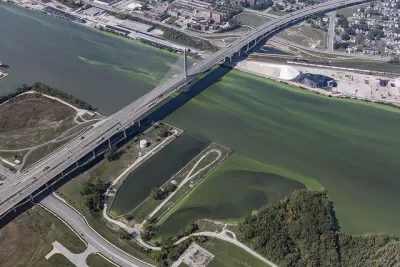
Jugal K. Patel and Yuliya Parshina-Kottas provide in-depth, feature coverage of the infamous Lake Erie algae bloom, which made news in 2014, but has recently been turning Lake Erie and the Maumee River green and potentially toxic again.
The risk of algae blooms comes from the likelihood that they produce toxins like microcystis. "Dangerous levels of the toxin caused Toledo, Ohio, to shut down the drinking water supply of a half-million residents for three days in 2014," according to the article. Some 3 million residents rely on the Central Basin of Lake Eerie for drinking water, so there's a very essential risk, but tourism for recreation like fishing and beach-going are also at risk when algae blooms grow.
And the algae blooms have grown in recent decades, due to the impact of the regional agricultural industry. "According to one study by the Carnegie Institute for Science and Stanford University , most of the increase in the size of the blooms can be attributed to a rise in the amount of dissolved phosphorus flowing into the lake," write Patel and Parshina-Kottas.
The article is supplemented with lots of images and infographics to illustrate the scale of the environmental disaster persisting around Lake Erie.
Read the full story: Miles of Algae Covering Lake Erie

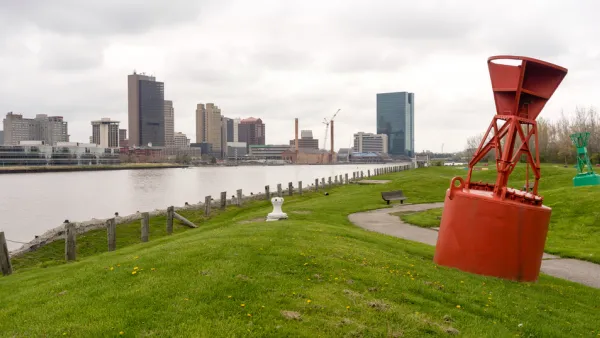
Lake Erie Granted Legal Rights by Voters
Toledo, Ohio held a special election for voters to decide on the Lake Erie Bill of Rights.
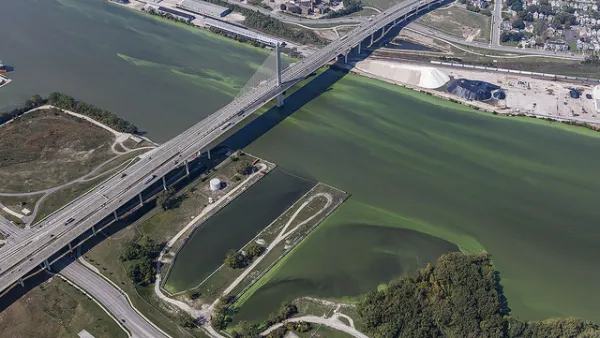
Voters to Decide the Legal Status of Lake Erie
Voters in Toledo, Ohio could grant personhood status to the polluted and abused Lake Erie.
Great Lakes Leaders Call for Drinking Water Protections
In light of August's drinking water catastrophe in Toledo, Ohio, Great Lakes mayors gathered this week to call for policy action to protect water resources round the Great Lakes.

Planetizen Federal Action Tracker
A weekly monitor of how Trump’s orders and actions are impacting planners and planning in America.

The state-sanctioned urbicide of Austin
People don’t kill cities. Freeways do.

US to reduce Colorado River water deliveries to Mexico
A new Colorado Treaty amendment reduces Mexico’s Colorado River water allocation by 250,000 acre feet.

Nation's most wind-powered state turns to coal as data centers increase energy demand
For the first time in decades, Iowa has increased its generation of coal power.

NYC cools commuters with city's first rain garden above a bus stop
New York City officials say the plants in the rain garden can absorb 16 gallons of rainwater during heavy storms.

Brightline West’s future may rely on $6 billion federal loan
The company has until Nov. 2 to make a $400 million equity investment into its proposed high-speed rail line.

FREE Course: Walkable City 1: Why Walkability?
After describing his path towards focusing on walkability as the essence of good planning, Jeff Speck marches through his five principal reasons for making more walkable places.
Reinventing Malls: Planning Alchemy—Turning Gray Fields Into Gold
The course focuses on the opportunities and imperatives that shape reinvention of mall sites.

Greater Baltimore Committee
Eagle County Government
Harvard University Graduate School of Design
The Architects Foundation
University of Cincinnati Online
The Pocatello Development Authority
The Urban Renewal Agency of the City of Pocatello
Journal of the American Planning Association