The electric car market is about to have a new entrant as Sir James Dyson plans to spend upwards of £2 billion to develop a car that he describes as "radical and different."


Sir James Dyson, of vacuum cleaner fame, has announced plans to enter the electric vehicle market by 2020, although details remain scarce. Ian Pollock of the BBC reports that Dyson plans to invest £2 billion—with one billion spent on development and another billion spent on production of the vehicle's battery. Pollock notes that Dyson is entering the electric car market at time when it's becoming increasingly crowded.
Within the next few years, many new models are due to come on to the market, including Jaguar's Ipace, Porsche's Mission E, Volkswagen's I.D. family and Mercedes' EQ range. Tesla also has big plans for its recently launched Model 3.
They will be joining established models such as the Nissan Leaf, the BMW i3, the Renault Zoe and the Tesla Model S.
Dyson clearly sees an opportunity here. As new designs become available, and prices come down, more consumers will be willing to try electric vehicles.
Policymakers, concerned about air pollution, want them to do just that.
Read the full story: Dyson to make electric cars from 2020


Swapping your gas car for an EV is greener than keeping it, research shows
An EV repays the 'carbon debt' caused by building it after 4,400 miles.
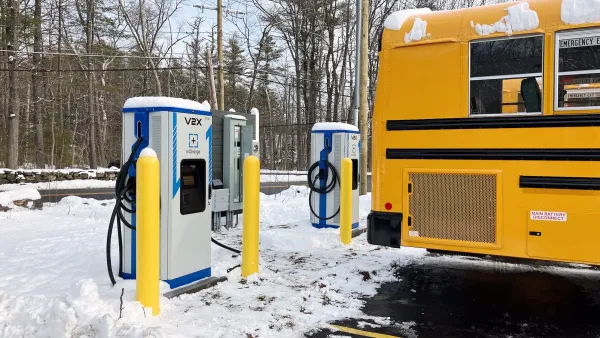
Massachusetts program pays EV owners to put power back into the grid
A pilot program could pave the way for more vehicle-to-grid installations in the United States.
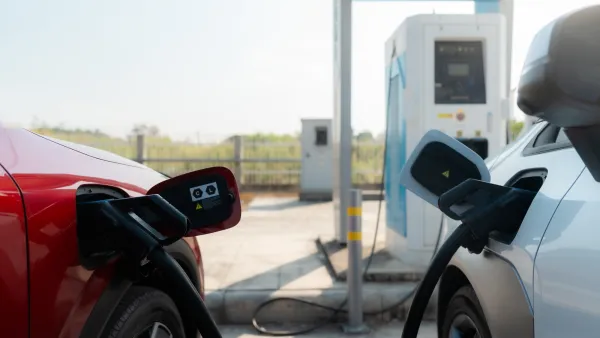
California launches $3,500 EV rebate
A new rebate program aims to maintain momentum for EV adoption as the federal government eliminates other incentives.

Planetizen Federal Action Tracker
A weekly monitor of how Trump’s orders and actions are impacting planners and planning in America.

The state-sanctioned urbicide of Austin
People don’t kill cities. Freeways do.

US to reduce Colorado River water deliveries to Mexico
A new Colorado Treaty amendment reduces Mexico’s Colorado River water allocation by 250,000 acre feet.

Nation's most wind-powered state turns to coal as data centers increase energy demand
For the first time in decades, Iowa has increased its generation of coal power.

NYC cools commuters with city's first rain garden above a bus stop
New York City officials say the plants in the rain garden can absorb 16 gallons of rainwater during heavy storms.

Brightline West’s future may rely on $6 billion federal loan
The company has until Nov. 2 to make a $400 million equity investment into its proposed high-speed rail line.

FREE Course: Walkable City 1: Why Walkability?
After describing his path towards focusing on walkability as the essence of good planning, Jeff Speck marches through his five principal reasons for making more walkable places.
Reinventing Malls: Planning Alchemy—Turning Gray Fields Into Gold
The course focuses on the opportunities and imperatives that shape reinvention of mall sites.

Greater Baltimore Committee
Eagle County Government
Harvard University Graduate School of Design
The Architects Foundation
University of Cincinnati Online
The Pocatello Development Authority
The Urban Renewal Agency of the City of Pocatello
Journal of the American Planning Association