Seemingly esoteric matters of crossing safety and gate activation times are presenting a major obstacle for RTD's commuter rail expansion projects in the Denver area.


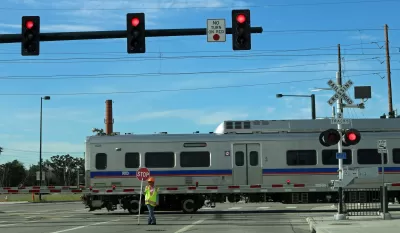
John Aguilar reports on a major setback for the Regional Transportation District (RTD) in the Denver region, after the Colorado Public Utilities Commission denied a commuter rail safety plan affecting the A, B, and G lines.
According to Aguilar, the Public Utilities Commission denied a "request to change the timing of crossing gates on several of the metro area’s commuter rail lines, as well as turning down a planned resumption of full testing on the as yet unopened G-Line."
The request was essential to the RTD's plan to set an opening date for the G Line. "The rulings also leave in question when flaggers, who at substantial cost have been stationed at the crossings along two rail lines for more than a year, will no longer be needed," according to Aguilar. Aguilar led coverage by The Denver Post of the extra costs incurred to pay flaggers at 11 at-grade crossings on Denver's airport train.
FULL STORY: RTD’s A, B and G lines remain in limbo after state regulators reject commuter rail safety plan

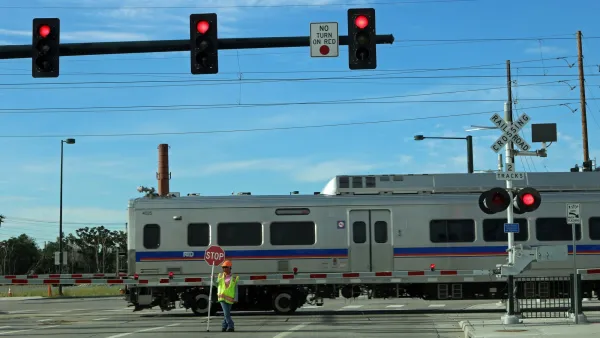
Train to Denver Airport Threatened with Closure over Crossing Gate Woes
The Federal Railroad Administration is threatening to revoke the waiver that allows the A-Line to operate with flaggers at grade crossings unless the Regional Transit District presents a plan by mid-month to fix the crossing gate problems.
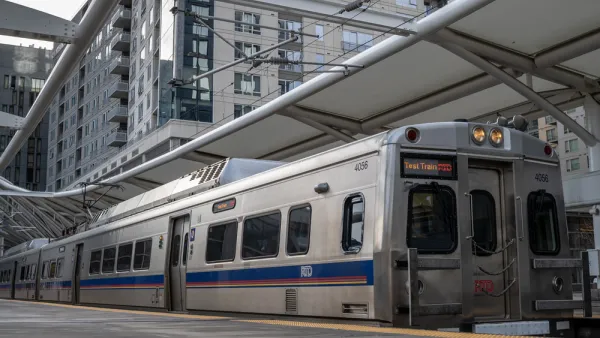
G-Line Commuter Rail Opens Today, Connecting Denver to Suburbs
A new commuter line is open today in Denver, after facing challenges and delays that continue to plague other previously opened rail lines in the region.
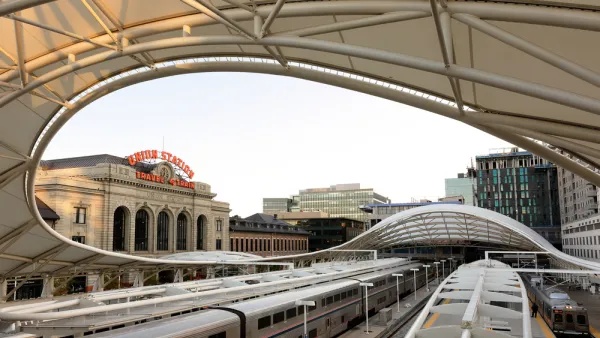
B Line Commuter Rail Extension Gets a Green Light in Colorado
The Board of Directors for the Regional Transportation District has given a preliminary green light to accelerate planning work on the B Line extension from Denver to Boulder and Longmont.

Planetizen Federal Action Tracker
A weekly monitor of how Trump’s orders and actions are impacting planners and planning in America.

The state-sanctioned urbicide of Austin
People don’t kill cities. Freeways do.

US to reduce Colorado River water deliveries to Mexico
A new Colorado Treaty amendment reduces Mexico’s Colorado River water allocation by 250,000 acre feet.

5 New England states march closer to 800 megawatt wind energy project
Securing federal approval for the project may be complicated under the Trump administration, which has historically been hostile towards domestic wind power.

Baltimore to break ground on $50 million Transit Priority Project
The project will bring faster bus trips, safer streets and better bike connections to Baltimore.

Airbnb launches $250 million 'last-dollar financing' housing accelerator, makes first investment in Austin
The company will put $6.4 million towards affordable housing development in Texas’ capital.

FREE Course: Walkable City 1: Why Walkability?
After describing his path towards focusing on walkability as the essence of good planning, Jeff Speck marches through his five principal reasons for making more walkable places.
Reinventing Malls: Planning Alchemy—Turning Gray Fields Into Gold
The course focuses on the opportunities and imperatives that shape reinvention of mall sites.

Eagle County Government
Harvard University Graduate School of Design
Nashville Planning Department
The Architects Foundation
University of Cincinnati Online
The Pocatello Development Authority
The Urban Renewal Agency of the City of Pocatello
Journal of the American Planning Association