Voice of San Diego reports in detail about the months of warning San Diego officials had about the spread of Hepatitis A in public areas around the city. Still, prevention measures took a back seat to bureaucracy.



Lisa Halverstadt provides in-depth, behind-the-scenes reporting on a massive public health scare that finally came to national attention this month in San Diego, after hundreds were infected with Hepatitis A. (Hepatitis A is a viral liver disease transmitted through ingestion of contaminated food and water or through direct contact with an infectious person, according to the World Health Organization's definition.)
Halverstadt reports on the disparate experience on the citizens who contracted Hepatitis A, while officials from the city and the country of San Diego delayed in a response. An initial email alert about a growing number of Hep A cases, sent in March, didn’t draw much attention, according to Halverstadt. That initial alert reported 19 cases, but by mid-April that number had climbed to 42, and two had died. "By early May, the situation worsened. Three patients were dead, and there were 80 documented cases," adds Halverstadt. By June that number reached 160 cases, with the death toll rising to four.
Halverstadt tracks the response of city and county officials alongside the growing number of documented cases. Of concern to planners and anyone interested in the relationship between public health and the built environment were the city's lack of sanitation stations, and its inability to roll out more facilities. "On July 13, two hand-washing stations went up outside a quiet county health complex in Midway, miles from downtown streets considered ground zero of the outbreak," according to Halverstadt. "County health officials said they believed poor hygiene fueled the spread of the virus, yet efforts to deploy more hand-washing stations stalled for weeks." Another story by James deHaven reports that San Diego officials were repeatedly warned about a lack of public bathrooms in the city's downtown. Paul Sisson reports that commuters are now afraid to take public transit.
In September, the story of San Diego's Hepatitis A outbreak went national, punctuated by the story of the city bleaching its streets in response to the spread of the virus, and the Los Angeles Times began to wonder if the outbreak could be coming to the larger city to the north, with its massive homeless population and similar lack of sanitation resources.
FULL STORY: Months of Emails, Then a Mad Scramble: How the Hepatitis A Crisis Unfolded Behind the Scenes

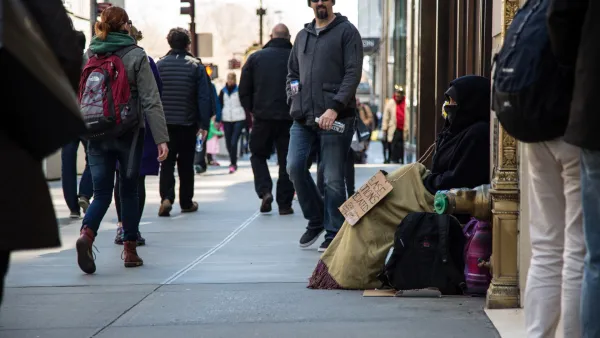
Hepatitis A Outbreak Spurring Cities to New Actions on Homelessness
A series of articles from around the Internet in recent weeks highlights the need for more services and support for the homeless. The location of this story is set in California, but all communities should heed these warnings.

Cities Need More Public Bathrooms–Well Beyond the Pandemic
COVID-19 laid bare the dismal state of public bathrooms in America, and some cities stepped up to add more facilities. But why remove them while the need remains?
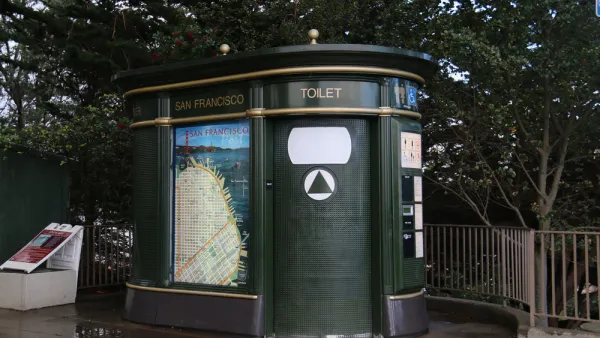
Opinion: Keep Public Toilets at L.A. Homeless Encampments
The city is planning to remove the hundreds of public toilets and hand-washing stations installed during the pandemic. But the need for them isn't going away.

The state-sanctioned urbicide of Austin
People don’t kill cities. Freeways do.

US to reduce Colorado River water deliveries to Mexico
A new Colorado Treaty amendment reduces Mexico’s Colorado River water allocation by 250,000 acre feet.

New Jersey’s second-largest city bans standalone data centers
Jersey City will continue to allow co-location facilities, such as those meant for research institutions that store their own data.

Amtrak not solely to blame for New Jersey commuter rail's unreliability, report finds
A new study from the Garden State Initiative found that NJ Transit’s budget grew 20% across a 4 year period, but reliability declined significantly over the same period.

EPA erases limits on planet-warming pollution from power plants
Under Monday’s plan, power plants would still have some limits on how much mercury, arsenic and other contaminants they can emit.

Phoenix announces new on-demand transit service, more frequent RAPID buses
Both new services will launch in October, and are part of Phoenix's Project Effective Access Solutions for Easing Congestion.

FREE Course: Walkable City 1: Why Walkability?
After describing his path towards focusing on walkability as the essence of good planning, Jeff Speck marches through his five principal reasons for making more walkable places.
Reinventing Malls: Planning Alchemy—Turning Gray Fields Into Gold
The course focuses on the opportunities and imperatives that shape reinvention of mall sites.

Eagle County Government
Harvard University Graduate School of Design
Nashville Planning Department
The Architects Foundation
University of Cincinnati Online
The Pocatello Development Authority
The Urban Renewal Agency of the City of Pocatello
Journal of the American Planning Association