At least this story is about what might have been if we hadn't passed environmental regulations, instead of what will happen if we don't.


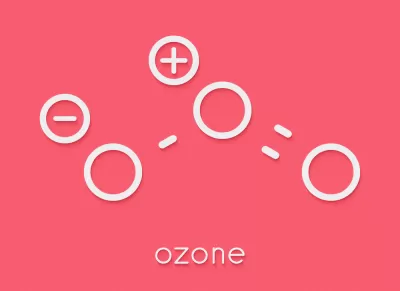
The Montreal Protocol turned 30 years old this month. According to Stephen Leahy, the international agreement is "a landmark environmental success that serves as a model for addressing other problems.
According to Leahy:
The Earth’s ozone layer would have collapsed by 2050 with catastrophic consequences without the Montreal Protocol, studies have shown. In the world we avoided thanks to the Protocol the UV Index measure during a Washington, DC or Los Angles mid-summer day would be at least 30 by 2070. Anything over 11 is considered extreme. There would have been an additional 280 million cases [pdf] of skin cancer, 1.5 million skin cancer deaths, and 45 million cataracts in the United States, according to the U.S. EPA.
There's a lot more scary data than just the preceding included in the article before the article turns to lessons of the politics that allowed the international agreement to proceed. The not-so-subtle subtext is the efforts of the fossil fuel industry to suppress and resist climate change legislation today.
Finally, the article notes that the Montreal Protocol still has unfinished business, and threats (i.e., the Trump Administration) to the ongoing process that protects the planet from ozone-damaging chemicals.
Read the full story: Without the Ozone Treaty You’d Get Sunburned in 5 Minutes

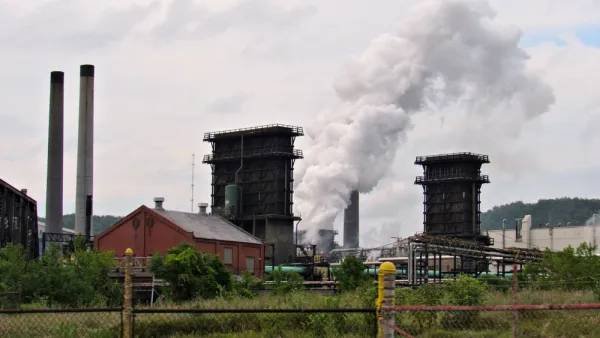
U.S. EPA To Reclassify Thousands of Major Polluters
The U.S. Environmental Protection Agency estimated its new rule change will result in up to 1,258 tons of additional emissions of hazardous materials every year.
Trump's Latest Deregulatory Itch: The National Environmental Policy Act
In a move called "one of the biggest — and most audacious — deregulatory actions of the Trump administration," President Trump yesterday announced plans to weaken the National Environmental Policy Act for federal infrastructure projects.
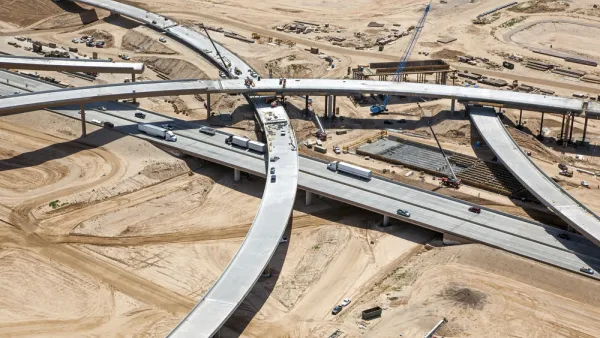
Trump to Suspend Environmental Regulation for Economic Emergency
Reports from the White House indicate that the Trump administration is planning to rollback federal environmental protections to expedite highway and other projects.

Planetizen Federal Action Tracker
A weekly monitor of how Trump’s orders and actions are impacting planners and planning in America.

The state-sanctioned urbicide of Austin
People don’t kill cities. Freeways do.

US to reduce Colorado River water deliveries to Mexico
A new Colorado Treaty amendment reduces Mexico’s Colorado River water allocation by 250,000 acre feet.

Nation's most wind-powered state turns to coal as data centers increase energy demand
For the first time in decades, Iowa has increased its generation of coal power.

NYC cools commuters with city's first rain garden above a bus stop
New York City officials say the plants in the rain garden can absorb 16 gallons of rainwater during heavy storms.

Brightline West’s future may rely on $6 billion federal loan
The company has until Nov. 2 to make a $400 million equity investment into its proposed high-speed rail line.

FREE Course: Walkable City 1: Why Walkability?
After describing his path towards focusing on walkability as the essence of good planning, Jeff Speck marches through his five principal reasons for making more walkable places.
Reinventing Malls: Planning Alchemy—Turning Gray Fields Into Gold
The course focuses on the opportunities and imperatives that shape reinvention of mall sites.

Greater Baltimore Committee
Eagle County Government
Harvard University Graduate School of Design
The Architects Foundation
University of Cincinnati Online
The Pocatello Development Authority
The Urban Renewal Agency of the City of Pocatello
Journal of the American Planning Association