Some college campuses need more parking than others, depending on commuting rates and walkable housing supply. Some campus planners are hoping, however, that soon all universities will need a lot less parking.


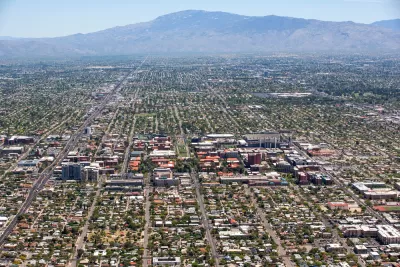
"With just one parking space for every five people, on a campus of roughly 65,000, the University of Wisconsin-Madison has one of the lowest parking ratios of any major university in the country," according to an article by Lisa Prevost.
"Because visitors to the 936-acre campus often have a hard time finding parking, the university’s latest master plan, nearing completion, recommends an additional 2,200 spaces over the next 20 to 40 years," adds Prevost.
But Gary A. Brown, the director of campus planning, is hoping none of that will be necessary. "When Mr. Brown looks into the future, he sees a campus even more reliant on ride-hailing services like Uber and car-sharing services like Zipcar, as well as the likely emergence of autonomous vehicles, trends that could substantially decrease parking demand," according to Prevost.
Prevost surveys the opinion of designers, research, and parking consultants, to see if Brown's predictions could come to fruition.
Read the full story: On the College Campus of the Future, Parking May Be a Relic

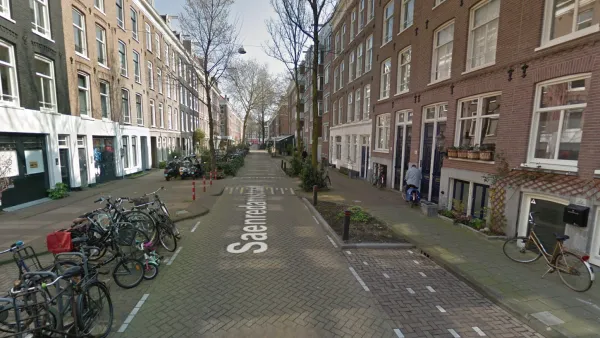
Watch: How to Remove Thousands of Parking Spaces
What the city of Amsterdam will gain by removing cars from on-street parking space.
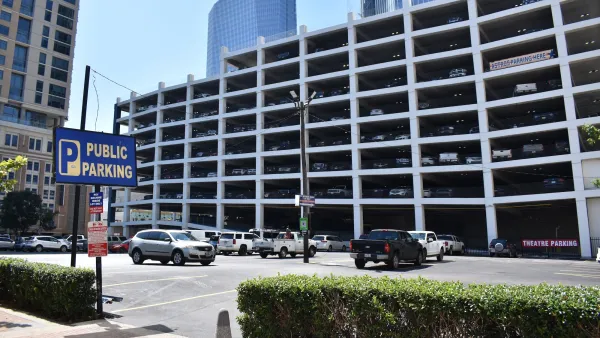
Downtown Houston parking garage will take up an entire block
The garage will connect to the Houston Center retail complex, a 4.6-million square foot office and commercial site.
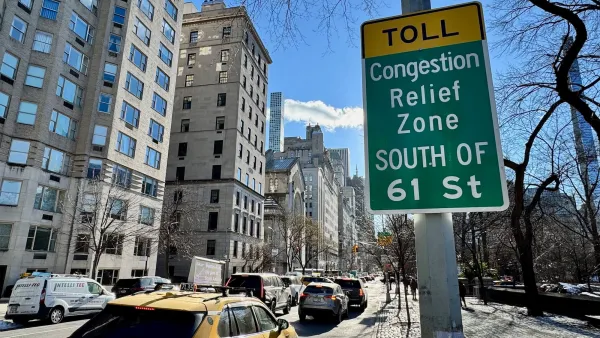
Study: NYC congestion pricing didn't impact parking demand
A city report shows that free parking, not congestion pricing, is the main driver of limited parking demand in the city.

Planetizen Federal Action Tracker
A weekly monitor of how Trump’s orders and actions are impacting planners and planning in America.

Amtrak, CN end decades-long dispute with eight-year agreement
The new operating agreement establishes an updated framework for the companies to work together, including processes to resolve disputes.

Judges permit Denver to divert 77,000 acre feet from the Colorado River for reservoir expansion
Overuse and climate change have caused the Colorado River’s water levels to plummet.

'Something we’ve never seen before:' rising utility rates could strain city finances nationwide
Data centers, climate change and other factors have caused utility rates in the United States to increase by 38% since 2020.

Trump to overrule local leaders, lease millions of acres of America’s Pacific Island territories’ seafloors to mining companies
International law says that the Indigenous people of America’s territories have a right to prior and informed consent regarding projects that impact their countries.

A ‘shady’ deal: Chicagoans rally against planned Amtrak maintenance facility
The $900 million facility would allow Amtrak to maintain entire trains in one building, which the company says will reduce delays.

FREE Course: Walkable City 1: Why Walkability?
After describing his path towards focusing on walkability as the essence of good planning, Jeff Speck marches through his five principal reasons for making more walkable places.
Reinventing Malls: Planning Alchemy—Turning Gray Fields Into Gold
The course focuses on the opportunities and imperatives that shape reinvention of mall sites.

KFH Group Inc.
Greater Baltimore Committee
Eagle County Government
The Architects Foundation
University of Cincinnati Online
The Pocatello Development Authority
The Urban Renewal Agency of the City of Pocatello