According to a new study, richer borrowers drove the economy off the cliff in the housing crash of the Great Recession.


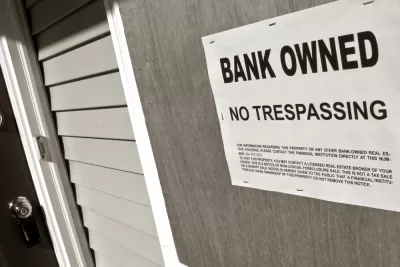
"Mounting evidence suggests that the notion that the 2007 crash happened because people with shoddy credit borrowed to buy houses they couldn’t afford is just plain wrong," writes Gwynn Guilford. "The latest comes in a new NBER working paper [pdf] arguing that it was wealthy or middle-class house-flipping speculators who blew up the bubble to cataclysmic proportions, and then wrecked local housing markets when they defaulted en masse."
"Analyzing a huge dataset of anonymous credit scores from Equifax, a credit reporting bureau, the economists—Stefania Albanesi of the University of Pittsburgh, the University of Geneva’s Giacomo De Giorgi, and Jaromir Nosal of Boston College—found that the biggest growth of mortgage debt during the housing boom came from those with credit scores in the middle and top of the credit score distribution—and that these borrowers accounted for a disproportionate share of defaults," according to Guilford.
(Note: this article relying on evidence supplied by anonymous data from Equifax was published several days before the news broke about hackers gaining access Equifax's records of confidential information pertaining to about 143 million Americans.)
According to this analysis, at least, the borrowing of those with low credit scores—the 'subprime' borrowers who supposedly caused the crisis—"stayed virtually constant throughout the boom."
As Guilford hinted at the top of the article, there is another study by Antoinette Schoar, a finance professor at MIT Sloan, that also backs the emerging narrative about how wealthier market players, with better credit, drove the rise in delinquencies in the market at the time of the crash.
FULL STORY: House flippers triggered the US housing market crash, not poor subprime borrowers

Lessons from the Last Housing Crisis: How to Get Control of Properties
How to keep affordable apartments and single-family homes out of the hands of institutional investors if the coronavirus pandemic leads to a giant wave of evictions and foreclosures.
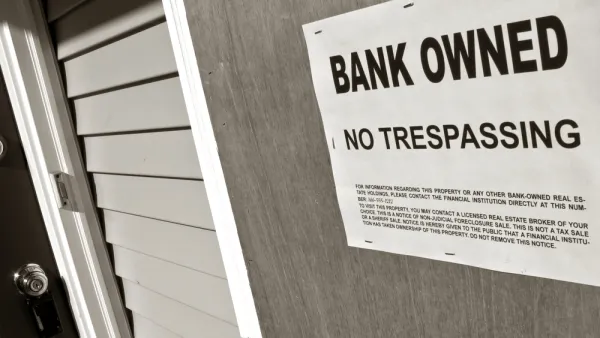
Wall Street Wagering on a Permanent Suburban Renter Class
Expectations that the economic downturn of the COVID-19 pandemic will create a wave of homeowners leaving the market, whether by choice or necessity, are driving big acquisitions by private equity firms and Wall Street investors.
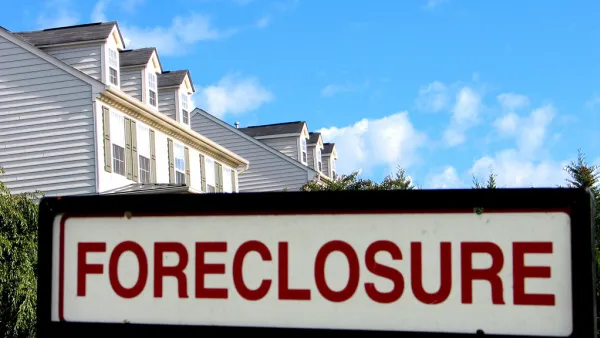
Protecting Distressed Real Estate From Private Equity
Elizabeth Warren and Carroll Fife warn about the potential for the worst housing market outcomes of the real estate and financial crisis of 2008 to repeat without action from federal and state lawmakers.

The state-sanctioned urbicide of Austin
People don’t kill cities. Freeways do.

US to reduce Colorado River water deliveries to Mexico
A new Colorado Treaty amendment reduces Mexico’s Colorado River water allocation by 250,000 acre feet.

New Jersey’s second-largest city bans standalone data centers
Jersey City will continue to allow co-location facilities, such as those meant for research institutions that store their own data.

Amtrak not solely to blame for New Jersey commuter rail's unreliability, report finds
A new study from the Garden State Initiative found that NJ Transit’s budget grew 20% across a 4 year period, but reliability declined significantly over the same period.

EPA erases limits on planet-warming pollution from power plants
Under Monday’s plan, power plants would still have some limits on how much mercury, arsenic and other contaminants they can emit.

Phoenix announces new on-demand transit service, more frequent RAPID buses
Both new services will launch in October, and are part of Phoenix's Project Effective Access Solutions for Easing Congestion.

FREE Course: Walkable City 1: Why Walkability?
After describing his path towards focusing on walkability as the essence of good planning, Jeff Speck marches through his five principal reasons for making more walkable places.
Reinventing Malls: Planning Alchemy—Turning Gray Fields Into Gold
The course focuses on the opportunities and imperatives that shape reinvention of mall sites.

Eagle County Government
Harvard University Graduate School of Design
Nashville Planning Department
The Architects Foundation
University of Cincinnati Online
The Pocatello Development Authority
The Urban Renewal Agency of the City of Pocatello
Journal of the American Planning Association