The city of Walnut Creek, located in the East San Francisco Bay Area, will soon gain 600 new, transit-adjacent apartments and a whole lot of parking.


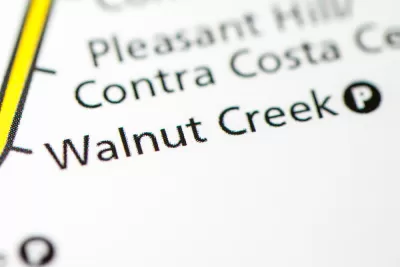
Earlier this week, BART and Walnut Creek officials "helped kick off a long-planned 'transit village' project that will include not only the added [900-stall BART] parking and [600 new] apartments but 12,000 square feet of retail space," reports Sam Richards.
The premise of the article is whether the new development will be a help or a hindrance to the city's congestion. BART officials and the developer of the project say transit oriented development will reduce traffic.
The article includes more details about the project, which was first presented in draft form by Walnut Creek planners in 2005.
The Walnut Creek transit village isn't the only transit oriented development coming soon to the suburban reaches of the BART system. "BART board member [Rebecca] Saltzman said the Walnut Creek Transit Village will be the newest of several others either already online (Pleasant Hill/Contra Costa Centre, BART Coliseum) or farther along in planning or construction (San Leandro, El Cerrito). BART’s formal goal, she said, is for 20,000 new housing units near its stations by 2040," according to Richards.
FULL STORY: After almost 20 years, Walnut Creek transit village kicks off


Phoenix Could Ease Parking Requirements to Support Transit, Affordable Housing
In addition to lower citywide parking requirements on residential properties, a proposed law in Phoenix would lower minimum parking requirements even further for affordable housing developments near the city’s light rail system.
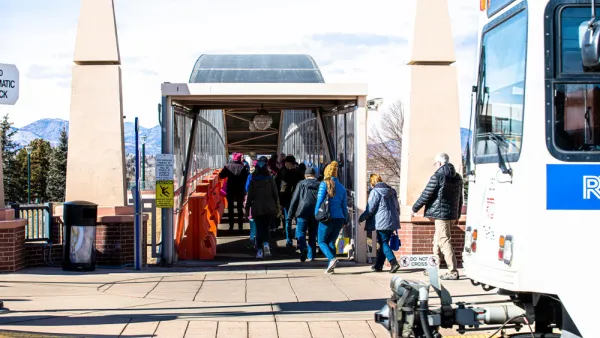
Transit Oriented Development to Rise on Denver-Area Park-and-Ride Facilities
The Regional Transportation District sees an opportunity for affordable housing to be located on its under-utilized parking lots.
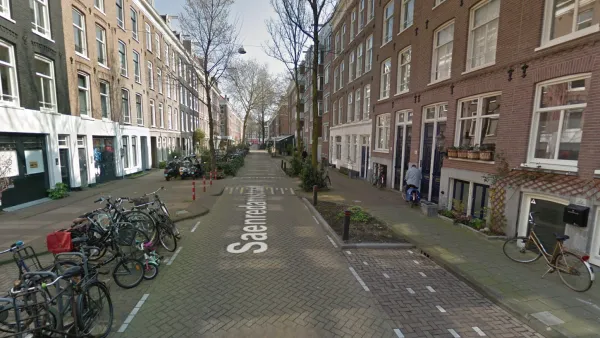
Watch: How to Remove Thousands of Parking Spaces
What the city of Amsterdam will gain by removing cars from on-street parking space.

Planetizen Federal Action Tracker
A weekly monitor of how Trump’s orders and actions are impacting planners and planning in America.

The state-sanctioned urbicide of Austin
People don’t kill cities. Freeways do.

US to reduce Colorado River water deliveries to Mexico
A new Colorado Treaty amendment reduces Mexico’s Colorado River water allocation by 250,000 acre feet.

5 New England states march closer to 800 megawatt wind energy project
Securing federal approval for the project may be complicated under the Trump administration, which has historically been hostile towards domestic wind power.

Baltimore to break ground on $50 million Transit Priority Project
The project will bring faster bus trips, safer streets and better bike connections to Baltimore.

Airbnb launches $250 million 'last-dollar financing' housing accelerator, makes first investment in Austin
The company will put $6.4 million towards affordable housing development in Texas’ capital.

FREE Course: Walkable City 1: Why Walkability?
After describing his path towards focusing on walkability as the essence of good planning, Jeff Speck marches through his five principal reasons for making more walkable places.
Reinventing Malls: Planning Alchemy—Turning Gray Fields Into Gold
The course focuses on the opportunities and imperatives that shape reinvention of mall sites.

Eagle County Government
Harvard University Graduate School of Design
Nashville Planning Department
The Architects Foundation
University of Cincinnati Online
The Pocatello Development Authority
The Urban Renewal Agency of the City of Pocatello
Journal of the American Planning Association