The Governors Highway Safety Association, in partnership with State Farm Insurance, has released surprising data about bike safety.


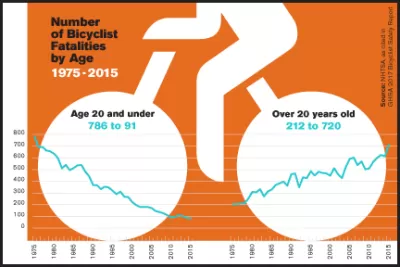
Lizz Giordano reports: "After hitting an all-time low in 2010, bicycle deaths have risen 12 percent nationwide, the largest increase in two decades and outpacing the overall rise all traffic fatalities, according to a new report by the Governors Highway Safety Association."
A big change in bike fatality data between 1975, when the report starts its analysis, and 2015, is that adults have become much more likely to die in a bicyclist-vehicle crash.
According to the report, which received funding from State Farm Insurance, in 1975 younger bicyclists accounted for almost 80 percent of fatalities, but in 2015 that number dropped to 11 percent. In 2015, 720 adults were killed bicycling, up from 212 in 1975. After steadily rising over the past four decades, today the average age of a bicyclist killed in traffic is now 45.
Among other data points found in the report, more evidence that separated bike lanes "are up to 89 percent safer than streets with parked cars and no cycling facilities."
Read the full story: Bicyclist Deaths are on the Rise


San Diego Bike Advocates Demand Safer Infrastructure
After 12 people were killed this year biking on San Diego County roads, local advocates are calling for more protected bike lanes and safer bike facilities.
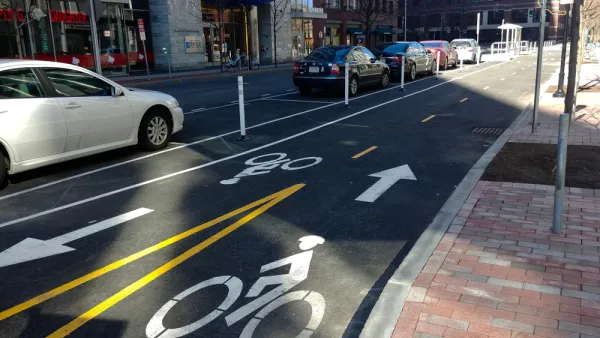
Nation's Top Safety Board Recommends Protected Bike Lanes
The NTSB chair issued a stark warning on Nov. 5: "If we do not improve roadway infrastructure for bicyclists, bicyclists will die who otherwise would not," stated Robert Sumwalt in introducing their first report in 47 years devoted to bike safety.
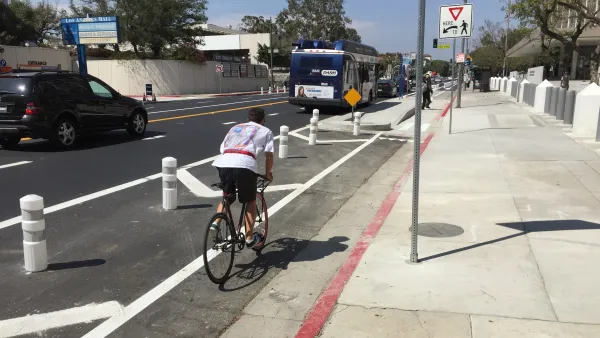
Less Paint, More Barriers, Make for Better Urban Cycling
New research from the University of Colorado Denver and the University of New Mexico sheds light on how to make cities safer for cyclists and other road users and refutes some assumptions about bike safety, such as "safety-in-numbers."

Planetizen Federal Action Tracker
A weekly monitor of how Trump’s orders and actions are impacting planners and planning in America.

Amtrak, CN end decades-long dispute with eight-year agreement
The new operating agreement establishes an updated framework for the companies to work together, including processes to resolve disputes.

Northwest rail fans eager for Sept. 30 debut of Amtrak’s Airo fleet
Get ready for that new train smell and more seats. But they won’t go faster or run more frequently on the Cascades route in Washington and Oregon.

Brightline Florida files for bankruptcy
The transit company is over $5 billion in debt.

St. Louis Metro to test if single-car trains can reduce operating costs, maintain rider satisfaction
The pilot program will run from October to spring 2027, and begin with one single-car train operating on Metrolink’s Red and Blue lines.

Pennsylvania is building data centers in abandoned mines
Housing data centers in mines provides an alternative to destroying local forests and may spare residents from data centers’ noise and air pollution.

FREE Course: Walkable City 1: Why Walkability?
After describing his path towards focusing on walkability as the essence of good planning, Jeff Speck marches through his five principal reasons for making more walkable places.
Reinventing Malls: Planning Alchemy—Turning Gray Fields Into Gold
The course focuses on the opportunities and imperatives that shape reinvention of mall sites.

City of Thousand Oaks
City of Wisconsin Rapids
Harvard University Graduate School of Design
The Architects Foundation
University of Cincinnati Online
The Pocatello Development Authority
The Urban Renewal Agency of the City of Pocatello