While any one event can not be attributed to global warming, climate scientists have long acknowledged a connection to extreme weather. Pruitt, a climate denier, dismisses any such connection with the amount of rainfall from Hurricane Harvey.


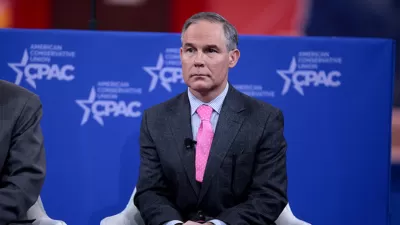
In an interview [Aug. 28] with Pruitt, Breitbart News' Alex Marlow asked if he had seen the "left-wing media's" attempts "to make this seem like it’s climate change, that climate change is responsible, it’s actually America’s fossil fuel consumption that’s caused this tropical storm," reports Matt Shuham for TPM.
Pruitt said that he hadn’t, given how “focused” he was on the agency’s response to Harvey. Pruitt is known as a close ally of the fossil fuel industry and a skeptic...of climate science.
However, as Planetizen's James Brasuell posted Sunday, the Environmental Protection Agency's "focus" hadn't included a physical presence at any of the 13 of the Houston region's 41 Superfund sites "experiencing possible damage" due to flooding.
After some goading from Marlow, Pruitt responded:
“So, I think for opportunistic media to use events like this to, without basis or support, just to simply engage in a cause and effect type of discussion, and not focus upon the needs of people, I think is misplaced.”
Are outlets, be they right, left, or center, being opportunistic if they link climate change and Houston's "third “500-year flood” in three years?"
Global warming "is increasing rainfall rates," reported John P. Abraham, professor of thermal sciences at the University of Minnesota, back in March for the Guardian.
It’s a well-known scientific principle that warmer air holds more water vapor. In fact, the amount of moisture that can be held in air grows very rapidly as temperatures increase. So, it’s expected that in general, air will get moister as the Earth warms – provided there is a moisture source. This may cause more intense rainfalls and snow events, which lead to increased risk of flooding.
However, he adds that "it’s likely that some regions will experience both more drought and more flooding in the future (just not at the same time!). The dry spells are longer and with faster evaporation causing dryness in soils. But, when the rains fall, they come in heavy downpours potentially leading to more floods. The recent flooding in California – which followed a very intense and prolonged drought – provides a great example."
Monsoon deaths top 1,400
Rainfall rates are increasing worldwide.
"Monsoon rains and heavy flooding in South Asia [India, Nepal, Bangladesh] have killed upwards of 1,400 people in the past month, affecting 40 million people across the region as communities brace for at least another month of storms," reports Larisa Epatko for the PBS Newshour. By contrast, the death toll on Sept. 1 caused by Hurricane Harvey stood at 45.
“While some flooding is normal during the monsoon season, for most of the communities hit this level of flooding is unusual and unheard of,” [the global charity] Oxfam said in a statement.
Update on Superfund sites
Michael Biesecker, one of the two reporters who broke the story for The Associated Press on the pollution fears caused by the flooded superfund sites in the Houston region, appeared on the PBS Newshour on Sunday night, and was asked to defend their reporting.
"The EPA is defensive about your reporting, and today, they put out a statement saying that the article is misleading, they say that they have conducted assessments at 41 sites — that 28 have not been damaged, 13 have been damaged, " stated Megan Thompson, PBS Newshour weekend anchor. "They say they worked to secure the sites before Harvey hit."
Biesecker acknowledged that EPA had conducted aerial surveillance.
But we asked EPA why our reporters were able to make it to these sites and EPA said it was still too dangerous for them to send crews out to assess the damage or to collect samples to monitor whether pollution has spread. They hope to get there next week. Why we were able to make it there and why they weren’t, you would have to ask them.
A good read on the climate change – Hurricane Harvey connection can be found on Politico by Eric Holthaus, a meteorologist and contributing writer for Grist.
FULL STORY: Pruitt: ‘Opportunistic’ And ‘Misplaced’ To Tie Harvey To Climate Change

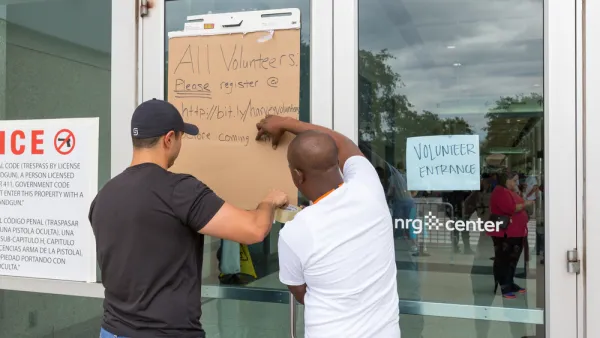
When Coastal States Kill Building Codes, FEMA Pays
Despite the increasing number and intensity of natural disasters, some vulnerable states are relaxing building regulations and leaving the federal government to pick up the tab when tragedy strikes again.
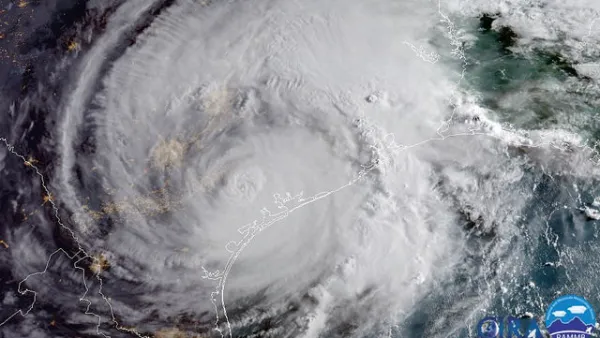
It's Now Safe to Link Hurricane Precipitation and Climate Change
A new study from MIT makes a clear connection between the intensity of rainfall caused by Hurricane Harvey last August in Texas and climate change, concluding that the likelihood of stronger downpours is greatly increasing.
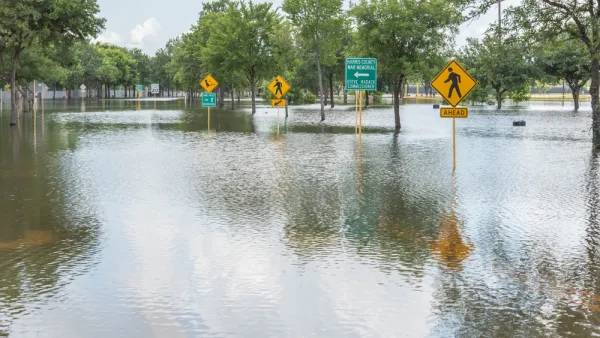
Houston Flooding: Climate Change or Development Patterns to Blame?
The Guardian's former environmental editor asks if urban sprawl is as much to blame as climate change for the flooding caused by Hurricane Harvey in Houston.

The state-sanctioned urbicide of Austin
People don’t kill cities. Freeways do.

US to reduce Colorado River water deliveries to Mexico
A new Colorado Treaty amendment reduces Mexico’s Colorado River water allocation by 250,000 acre feet.

New Jersey’s second-largest city bans standalone data centers
Jersey City will continue to allow co-location facilities, such as those meant for research institutions that store their own data.

Amtrak not solely to blame for New Jersey commuter rail's unreliability, report finds
A new study from the Garden State Initiative found that NJ Transit’s budget grew 20% across a 4 year period, but reliability declined significantly over the same period.

EPA erases limits on planet-warming pollution from power plants
Under Monday’s plan, power plants would still have some limits on how much mercury, arsenic and other contaminants they can emit.

Phoenix announces new on-demand transit service, more frequent RAPID buses
Both new services will launch in October, and are part of Phoenix's Project Effective Access Solutions for Easing Congestion.

FREE Course: Walkable City 1: Why Walkability?
After describing his path towards focusing on walkability as the essence of good planning, Jeff Speck marches through his five principal reasons for making more walkable places.
Reinventing Malls: Planning Alchemy—Turning Gray Fields Into Gold
The course focuses on the opportunities and imperatives that shape reinvention of mall sites.

Eagle County Government
Harvard University Graduate School of Design
Nashville Planning Department
The Architects Foundation
University of Cincinnati Online
The Pocatello Development Authority
The Urban Renewal Agency of the City of Pocatello
Journal of the American Planning Association