A recent study lends new specificity of the human cost and economic damage wreaked by climate change in the coming decades.


"A study published in the journal Science in June is the most extensive model available of what climate change could cost the United States, county by county," according to an article by Natalie Delgadillo. "The study is the first of its kind, linking climate projections with economic effects like mortality, labor productivity, energy demand and crop yields."
By far, the largest economic cost across the U.S. is loss of human life to heat-related injuries. Huge swaths of the South could see these kinds of deaths spike to more than 20 people out of every 100,000. In addition, energy costs will increase as people use air conditioning more often, labor productivity will suffer for those who work outdoors, crop yields will decrease and rising seas will swallow up valuable coastal properties.
The article includes some of the county-level details described in the study, noting that counties in Florida and other Gulf-coast states are particularly vulnerable. The article also includes an interactive map illustrating the study's findings.
Read the full story: MAP: How Much Climate Change Will Cost Each U.S. County
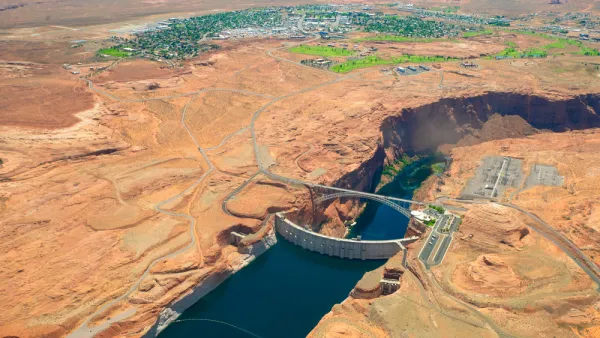
Drought Contingency Plan Triggered for the Colorado River
Signs of worsening drought conditions in the American West are triggering early actions for states that depend on water from the Colorado River.

Climate Change Already Obvious in California
We've all seen the maps that show the water rising around the edges of costal and waterfront communities as sea-level rise and climate change take effect. A new report shows the effects that have already changed the state of California.

Planning Year in Review 2024: An Ongoing Housing Crisis, the Fight for Climate Resilience, and a Mixed Bag for Transportation
A pedestrian safety crisis, rising housing instability, and destructive extreme weather events set the stage for an eventful year.

Planetizen Federal Action Tracker
A weekly monitor of how Trump’s orders and actions are impacting planners and planning in America.

California plans to bury El Niño’s downpour
If the state plays its cards right, it may be able to store a billion acre-feet of El Niño’s water in aquifers.

Desperate measures: Advocates weigh draining Lake Powell to fill Colorado River
Draining the reservoir could reduce evaporation losses by a couple hundred thousand acre-feet.

Chicago voters approve permanent festival grounds, penalty for vacant property owners
Currently, major summer and fall festivals take over public parks for weeks at a time, drawing criticism from nearby residents

NYC votes to cut outdoor dining red tape, speed up permitting
New York City also voted to allow the Department of Transportation to begin work on urgent projects before notifying elected officials.

California appears to reject Prop. 45
The proposition would have expanded the projects that qualify for a streamlined environmental review, effectively paring down the California Environmental Quality Act.

FREE Course: Walkable City 1: Why Walkability?
After describing his path towards focusing on walkability as the essence of good planning, Jeff Speck marches through his five principal reasons for making more walkable places.
Reinventing Malls: Planning Alchemy—Turning Gray Fields Into Gold
The course focuses on the opportunities and imperatives that shape reinvention of mall sites.

City of Rosemead
Rutgers University, Edward J. Bloustein School of Planning and Public Policy
One Hundred Miles
Hunter College, City University of New York (CUNY)
The Architects Foundation
University of Cincinnati Online
City of Cambridge
Montrose County
The Pocatello Development Authority