San Jose officials are having a hard time finding a neighborhood that will welcome an innovative approach to housing the local homeless population.



Ramona Giwargis reports: "Amid neighborhood backlash, city leaders have pared back one of San Jose’s most creative ideas for housing its thousands of homeless — erecting shed-like 'tiny homes' for them — from 99 potential sites [pdf] to just four [pdf]."
Since the city decided to move forward with tiny homes as a housing option for its homeless population in June, "finding sites for the tiny home villages — which could house up to 25 people — proved to be a major challenge." Giwargis explains more:
The city looked for publicly owned sites that were a half-acre in size, near transit and with access to utilities. But after an outpouring of complaints, San Jose officials added even more restrictions — 100 feet away from homes and creeks and 150 feet from schools and parks, leaving just a handful of potential sites.
The article includes soundbites from city officials expressing disappointment in the setback for the program.
Read the full story: After backlash, San Jose reduces number of ‘tiny homes’ sites for homeless

Tiny Houses for the Homeless Planned for San Jose
The Bay Area's most populated city is taking a small step to house its homeless population.
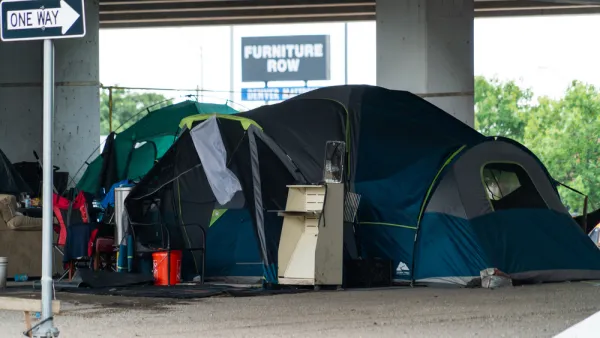
Austin Selects Two Potential Sites for Sanctioned Encampments
The city plans to install temporary housing and facilities as part of its efforts to reduce homelessness and help people move into permanent housing.

Tiny Homes Village Planned in St. Louis
St. Louis Mayor Lyda Krewson hopes to use CARES Act funding to 50 new homes for homeless living in the city.

Planetizen Federal Action Tracker
A weekly monitor of how Trump’s orders and actions are impacting planners and planning in America.

Amtrak, CN end decades-long dispute with eight-year agreement
The new operating agreement establishes an updated framework for the companies to work together, including processes to resolve disputes.

Northwest rail fans eager for Sept. 30 debut of Amtrak’s Airo fleet
Get ready for that new train smell and more seats. But they won’t go faster or run more frequently on the Cascades route in Washington and Oregon.

As El Niño approaches, Newsom vetos bill aimed at protecting California levees from flooding
Gov. Gavin Newsom said the state’s allocated $170 million was enough funding; State experts estimate it will cost $3.3 billion to repair the California Delta's levees.

Boston sues Trump administration over revoked infrastructure grant
The Trump administration withdrew the infrastructure grant because less than 1% of the money would go to electric vehicle charging infrastructure.

NYC to turn city-owned property into thousands of homes
The city has scheduled a public hearing regarding the development for October.

FREE Course: Walkable City 1: Why Walkability?
After describing his path towards focusing on walkability as the essence of good planning, Jeff Speck marches through his five principal reasons for making more walkable places.
Reinventing Malls: Planning Alchemy—Turning Gray Fields Into Gold
The course focuses on the opportunities and imperatives that shape reinvention of mall sites.

City of Thousand Oaks
City of Wisconsin Rapids
Harvard University Graduate School of Design
The Architects Foundation
University of Cincinnati Online
The Pocatello Development Authority
The Urban Renewal Agency of the City of Pocatello