By any measure, Seattle is growing at a breakneck pace. But with those new residents come cars, and all the infrastructure and land use inefficiencies they bring.


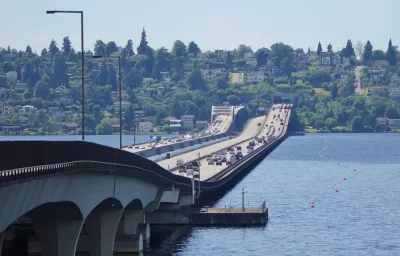
"You already know that Seattle is growing like crazy," writes Gene Balk. "What you may not know is that the city has added cars at the same rate as people."
Specifically, the city's population of humans grew by 12 percent between 2010 and 2015. The city's population of cars also grew by 12 percent over that period.
Seattle, it turns out, is much more car dependent than its reputation. "Among the 10 most densely populated big cities, Seattle easily has the most cars per capita — even more than Los Angeles," adds Balk.
Looking for causes for the city's dependency on the automobile, Balk notes the dominance of single-family zoning around the city—a symptom of its post-World War II growth. Also included in the article is a list of the consequences of Seattle's car-dependence—which expands, perhaps surprisingly, beyond concerns about congestion.
Read the full story: Booming Seattle is adding cars just as fast as people
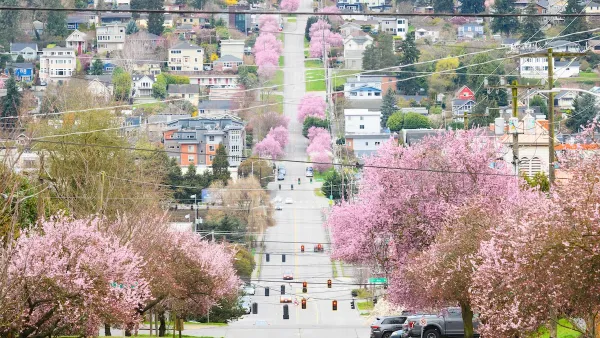
Opinion: Housing Versus Trees Is a False Choice; Swap Pavement for Trees Instead
Seattle’s goal to cover 30 percent of the city with tree canopy by 2037 doesn’t need to be sacrificed in favor of density. There’s a better way.
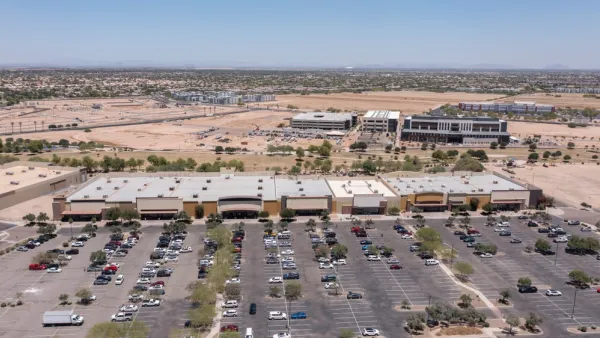
The Tragedy of Parking
Parking minimums and other zoning laws have made American cities untenable for any other type of transportation. It’s time we find a new way to zone our cities.
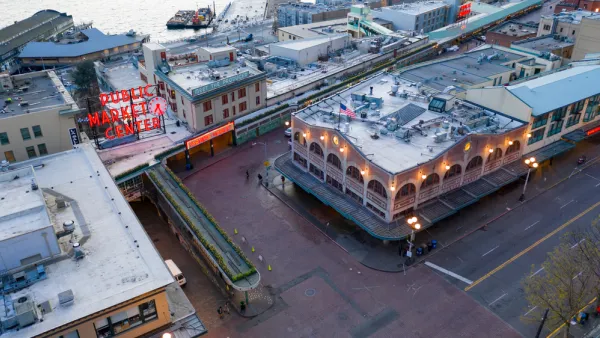
Seattle Times Editorial Board: Time for Pike Place Market to Go Car-Free
It's been more than a century since the Seattle City Council decided to remove farmstands to make space for cars at the Pike Place Market. Public and political opinion is starting to see that decision as a mistake that can be reversed.

Washington state to charge fee to drivers with fuel-efficient cars
Revenue from the fee will go towards supporting the state’s highways.

Illinois considers spending $1 billion in taxpayer money on data center
A quantum computing campus and data center are currently under construction in Chicago.

Trump to blast ‘hydrocarbon highway’ through ‘world’s longest art gallery’
Environmental and historic preservation groups are suing to stop the project.

NYC, state sue feds over mixed-immigration-status housing assistance rule
The state’s lawsuit argues that the rule change violates the Administrative Procedure Act.

Michigan to turn neighborhood into virtual power plant
Residents will soon be able to divert their excess energy to the grid in exchange for compensation.

Data center, mining project swarm to long-awaited Alaska railroad line
The state-owned railroad approved final plans for the spur line this week; the project is expected to cost $311 million, mostly funded by the federal government

FREE Course: Walkable City 1: Why Walkability?
After describing his path towards focusing on walkability as the essence of good planning, Jeff Speck marches through his five principal reasons for making more walkable places.
Reinventing Malls: Planning Alchemy—Turning Gray Fields Into Gold
The course focuses on the opportunities and imperatives that shape reinvention of mall sites.

City of Charlotte
City of Rosemead
Rutgers University, Edward J. Bloustein School of Planning and Public Policy
University of Michigan School for Environment and Sustainability (SEAS)
Hunter College, City University of New York (CUNY)
The Architects Foundation
University District Partnership