More people now bike to work in New York than in any other U.S. city.


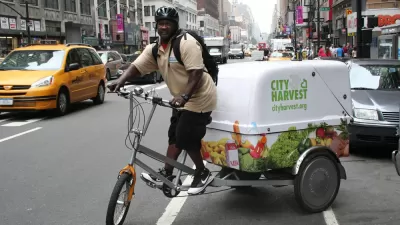
Home of the country's first bike path in 1894, New York City now boasts 1,133 miles of bike routes, with more than 46,000 people riding bikes to work as of 2015, reports the New York Times. Cyclists still account for a low percentage of commuters overall, but ridership is growing, and the city sees investment in biking infrastructure as a way to anticipate and support the transportation needs of a growing population.
Over the last decade, cyclist fatalities have also decreased, with officials pledging to build or improve bike infrastructure in the most dangerous areas deemed "priority bicycle districts."
FULL STORY: More New Yorkers Opting for Life in the Bike Lane

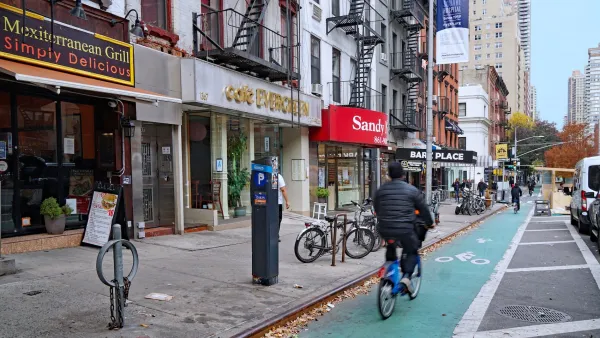
Study: Protected bike lanes increase Citi Bike rides by nearly 400 rides a month
An analysis of millions of NYC bike share rides reveals that only protected bike lanes have a 'statistically significant' increase in ridership.
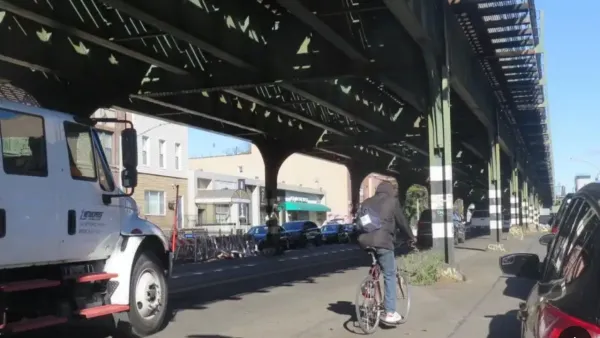
Judge Orders Removal of Queens Bike Lane on One of NYC’s Most Dangerous Corridors
A group of local businesses and a school sued the city, arguing that NYCDOT didn’t follow appropriate procedures and failed to address safety concerns before going ahead with the project.
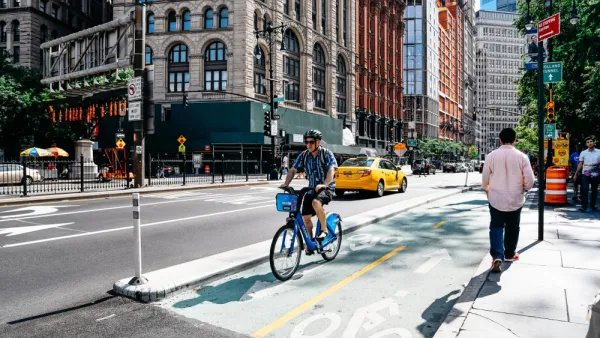
New York City Plans Street Safety Projects as Congestion Pricing Nears
With congestion pricing projected to reduce the number of cars entering Manhattan, NYCDOT plans to repurpose street space to build more pedestrian and bike infrastructure.

Planetizen Federal Action Tracker
A weekly monitor of how Trump’s orders and actions are impacting planners and planning in America.

The state-sanctioned urbicide of Austin
People don’t kill cities. Freeways do.

US to reduce Colorado River water deliveries to Mexico
A new Colorado Treaty amendment reduces Mexico’s Colorado River water allocation by 250,000 acre feet.

5 New England states march closer to 800 megawatt wind energy project
Securing federal approval for the project may be complicated under the Trump administration, which has historically been hostile towards domestic wind power.

Baltimore to break ground on $50 million Transit Priority Project
The project will bring faster bus trips, safer streets and better bike connections to Baltimore.

Airbnb launches $250 million 'last-dollar financing' housing accelerator, makes first investment in Austin
The company will put $6.4 million towards affordable housing development in Texas’ capital.

FREE Course: Walkable City 1: Why Walkability?
After describing his path towards focusing on walkability as the essence of good planning, Jeff Speck marches through his five principal reasons for making more walkable places.
Reinventing Malls: Planning Alchemy—Turning Gray Fields Into Gold
The course focuses on the opportunities and imperatives that shape reinvention of mall sites.


Eagle County Government
Harvard University Graduate School of Design
Nashville Planning Department
The Architects Foundation
University of Cincinnati Online
The Pocatello Development Authority
The Urban Renewal Agency of the City of Pocatello
Journal of the American Planning Association