Chicago's Metra has the resources to create frequent transit for a large swath of the South Side. Instead, their plan supports only the most fortunate along that train line.


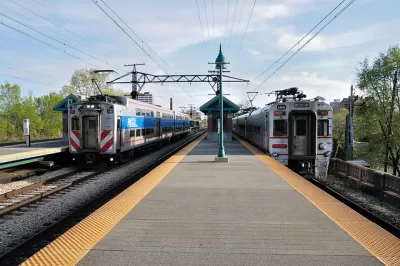
Metra's plan for service changes represents a missed opportunity, Sandy Johnston argues in an OP-ED for South Side Weekly. "The current plan would enhance service to Hyde Park—but at the expense of cutting it to neighborhoods with higher levels of poverty, disinvestment, and disadvantage, such as South Chicago, West Pullman, and Morgan Park," Johnston writes.
Adding service makes sense because the South Side line is not built with the large distance between stops that other Metra trains have. These stops mean the line already has the potential to be a more traditional transit line, Johnson argues. "Stop spacing is extremely short, around half a mile in most places within Chicago proper. The line sports high-level platforms and electrification, rapid-transit-quality features that few commuter rail lines in the U.S. boast."
All this adds up to a big opportunity for a part of the city that could use the investment, and in fact, did have this kind of service in more prosperous years. "Chicago has advantages that none of those systems can boast: existing assets such as a high-capacity four-track right of way, electrification, high platforms that allow for level boarding, and new (though not modernly-designed, and poorly suited to rapid transit service) trains," Johnston argues.
Read the full story: The Metra’s Not-So-Electric Plan
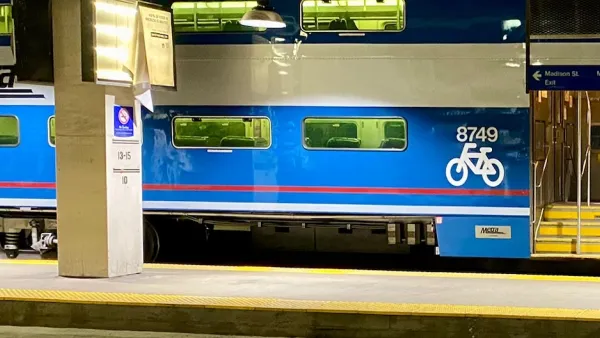
Chicago Trains Make More Room for Bikes
Since Metro launched a new bike-friendly policy in February, the number of bikes on its trains rose by 70 percent.
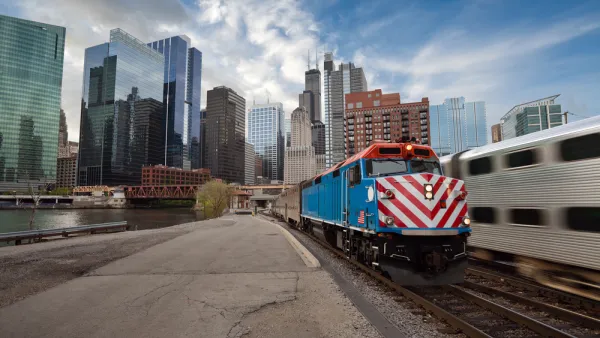
Chicago's Metra Will Try One-Day Pass
Along with a scheme to simplify fares, Metra will roll out a one-day pass and a set of federally mandated safety updates.
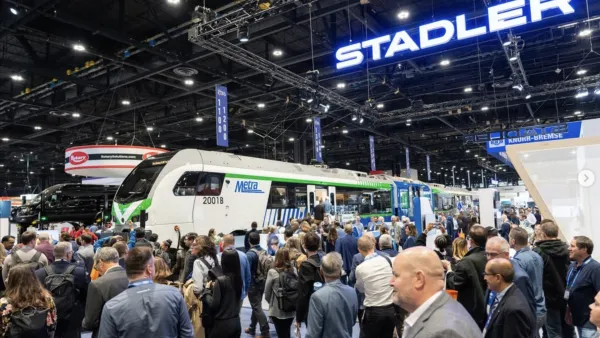
Public steps inside U.S.’s first battery-powered train
Metra’s groundbreaking train feature modern seats and a futuristic battery car.

Planetizen Federal Action Tracker
A weekly monitor of how Trump’s orders and actions are impacting planners and planning in America.

California plans to bury El Niño’s downpour
If the state plays its cards right, it may be able to store a billion acre-feet of El Niño’s water in aquifers.

Desperate measures: Advocates weigh draining Lake Powell to fill Colorado River
Draining the reservoir could reduce evaporation losses by a couple hundred thousand acre-feet.

Chicago voters approve permanent festival grounds, penalty for vacant property owners
Currently, major summer and fall festivals take over public parks for weeks at a time, drawing criticism from nearby residents

NYC votes to cut outdoor dining red tape, speed up permitting
New York City also voted to allow the Department of Transportation to begin work on urgent projects before notifying elected officials.

California appears to reject Prop. 45
The proposition would have expanded the projects that qualify for a streamlined environmental review, effectively paring down the California Environmental Quality Act.

FREE Course: Walkable City 1: Why Walkability?
After describing his path towards focusing on walkability as the essence of good planning, Jeff Speck marches through his five principal reasons for making more walkable places.
Reinventing Malls: Planning Alchemy—Turning Gray Fields Into Gold
The course focuses on the opportunities and imperatives that shape reinvention of mall sites.

City of Rosemead
Rutgers University, Edward J. Bloustein School of Planning and Public Policy
One Hundred Miles
Hunter College, City University of New York (CUNY)
The Architects Foundation
University of Cincinnati Online
City of Cambridge
Montrose County
The Pocatello Development Authority