Mayor Gimenez is citing frugality as the reason behind a decision that favors bus rapid transit over an earlier proposal for new rail lines.


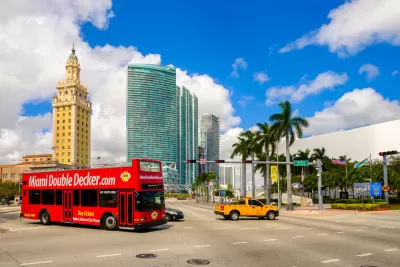
Douglas Hanks reports: "Miami-Dade can’t afford to build more rail lines and should invest millions in transit dollars creating modernized express bus systems running north and south, Mayor Carlos Gimenez said Monday."
Instead of rail lines, Mayor Gimenez is proposing a $534 million proposal for bus rapid transit routes. The proposal would "indefinitely defer the Metrorail expansion promised voters in 2002 during a referendum for a half-percent transportation tax that currently generates about $250 million a year," according to Hanks. That potentially defunct expansion, called the SMART plan (short for Strategic Miami Area Rapid Transit), is detailed in article by Michael Vasquez from April 2016.
The article by Hanks provides a lot more detail on the political debate surrounding the city of Miami's transit investments. The bus rapid transit plans are a departure from earlier statements by Mayor Gimenez, who unveiled the SMART plan during his re-election campaign last year, and aired a television ad under the headline "More Rail Lines."
Hat tip to Rachel Dovey for sharing the article and adding more context on the political cause for transit in one of the country's most congested cities.
FULL STORY: We can’t afford to build new rail lines, Miami-Dade mayor says

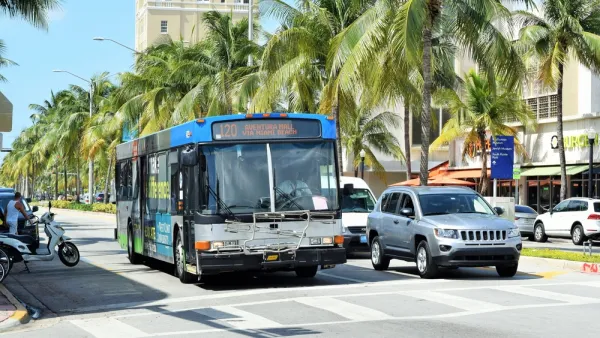
Transit Debate Coming to a Head Soon in Miami-Dade
A new network of buses, designed with the bus priority features, has been proposed in Miami. The catch: it would come at the expense of a promised rail extension program.
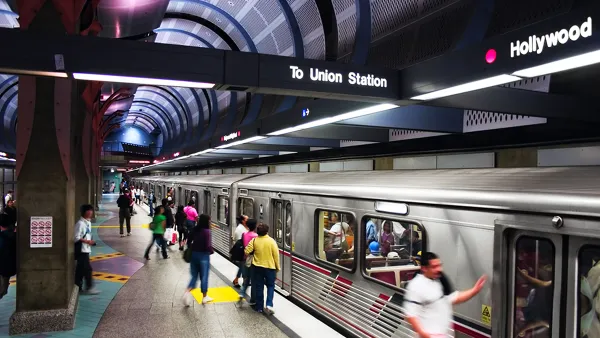
Monorail Doesn't Measure Up for Los Angeles, Says Editorial Board
The editorial board of the Los Angeles Times is unimpressed by a plan to build a monorail between the Westside and the San Fernando Valley in the city of Los Angeles.
Major Transit Openings Expected in 2021
All the heavy rail, light rail, bus rapid transit, and commuter rail projects expected to open in North American in 2021.

The state-sanctioned urbicide of Austin
People don’t kill cities. Freeways do.

US to reduce Colorado River water deliveries to Mexico
A new Colorado Treaty amendment reduces Mexico’s Colorado River water allocation by 250,000 acre feet.

New Jersey’s second-largest city bans standalone data centers
Jersey City will continue to allow co-location facilities, such as those meant for research institutions that store their own data.

Amtrak not solely to blame for New Jersey commuter rail's unreliability, report finds
A new study from the Garden State Initiative found that NJ Transit’s budget grew 20% across a 4 year period, but reliability declined significantly over the same period.

EPA erases limits on planet-warming pollution from power plants
Under Monday’s plan, power plants would still have some limits on how much mercury, arsenic and other contaminants they can emit.

Phoenix announces new on-demand transit service, more frequent RAPID buses
Both new services will launch in October, and are part of Phoenix's Project Effective Access Solutions for Easing Congestion.

FREE Course: Walkable City 1: Why Walkability?
After describing his path towards focusing on walkability as the essence of good planning, Jeff Speck marches through his five principal reasons for making more walkable places.
Reinventing Malls: Planning Alchemy—Turning Gray Fields Into Gold
The course focuses on the opportunities and imperatives that shape reinvention of mall sites.

Eagle County Government
Harvard University Graduate School of Design
Nashville Planning Department
The Architects Foundation
University of Cincinnati Online
The Pocatello Development Authority
The Urban Renewal Agency of the City of Pocatello
Journal of the American Planning Association