The Colorado legislature has been unable to agree on a transportation funding package, but the recent bill passed by Oregon has prompted one influential Republican senator to suggest that the state tax bicycle sales.


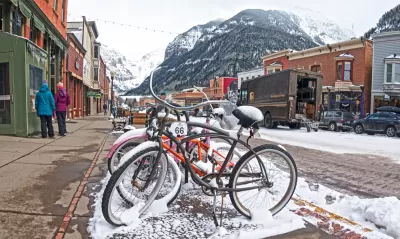
After the death of a bill last April to allow a statewide vote on a sales tax increase for transportation projects, assistant Majority Leader Ray Scott, "an influential Republican from Grand Junction," has found one tax he can embrace: taxing bicycles, reports Joey Bunch of ColoradoPolitics.com for The Gazette.
Referencing the first-of-its kind bike tax passed by the Oregon legislature on July 6, Scott, posted on his Facebook page, "We will be proposing something similar. They use the roads also.”
"Every other vehicle has a tax or sticker, but bicycles, which are ubiquitous on Colorado roads, get a free pass, even though they often have dedicated lanes, law enforcement and other taxpayer-funded public services," adds Bunch.
Unfortunately, Bunch doesn't indicate that the bike tax, while unique in the nation, is the smallest component, revenue-wise, in the comprehensive tax-and-fee package included in HB 2017, which awaits the expected signature or Democratic Gov. Kate Brown. Along with passing a $15 tax applied to adult bikes costing over $200, there are four other taxes and fees that Scott would presumably forcefully oppose:
- 10-cents per gallon gas tax applied over a 7-year period. The state gas tax is currently 31.13 cents per gallon, last increased in 2011 by six cents per gallon. Colorado's gas tax is 22 cents per gallon, last raised in 1991.
- 0.5 percent sales tax on (motorized) vehicles.
- 0.1 percent payroll tax to fund public transit statewide.
- $13 increase in vehicle title and registration fees to be applied in 2018, 2020 and 2022. Depending on their fuel efficiency, additional fees of $18 to $33 would apply, with electric vehicles paying $110.
The bike tax is expected to raise $1.2 million per year, according to BikePortland, or 0.235 percent of the total HB 2017 revenues, estimated at "$3.8 billion over 7 years," according to The Register-Guard.
Unfortunately, the Democrats quoted in The Gazette scoff at Scott's suggestion. If the senator is serious about emulating the Beaver State legislation, bike tax revenue would be used to fund bike and pedestrian infrastructure, making it safer for Coloradans to bike and walk.
Perhaps legislators would see the benefits of cyclists paying user fees to improve bicycling infrastructure, and would opt to allow residents to vote to increase the gas tax, rather than the sales tax, to improve the roads that motorists, as well as cyclists, use.
As posted in May and March, Colorado is the only state to have enacted a TABOR, short for Taxpayer Bill of Rights, which requires legislation that raises taxes be subject to a statewide plebiscite. Polling showed that a sales tax fared better than a gas tax.
Hat tip to Annie Dawid.
FULL STORY: Grand Junction's Scott: Tax bicycles, they use the roads, too

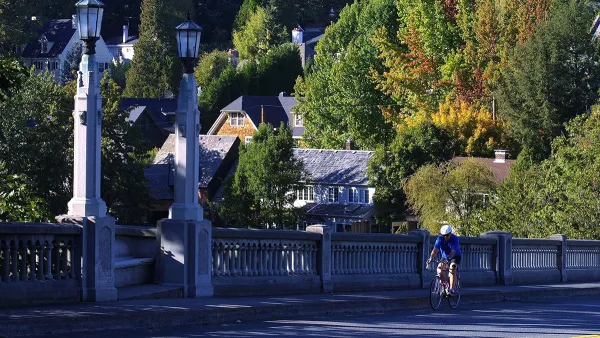
Revenue From Oregon Bike Tax Falling Short of Expectations
A tax on bikes in the state of Oregon, implemented in 2017, generated less tan half of the revenue as was expected.
Another Major Statewide Transportation Funding Loss on Election Day
Similar to Missouri voters, who rejected a 10-cents per gallon tax hike placed on the ballot by the state legislature, Colorado voters rejected two competing initiatives to finance transportation improvements placed on the ballot by citizen groups.
Priced Lane or Priced Roadway?
The Pacific Northwest's Portland-Vancouver metropolitan area is studying options to add congestion pricing to one or two interstates.

The state-sanctioned urbicide of Austin
People don’t kill cities. Freeways do.

US to reduce Colorado River water deliveries to Mexico
A new Colorado Treaty amendment reduces Mexico’s Colorado River water allocation by 250,000 acre feet.

New Jersey’s second-largest city bans standalone data centers
Jersey City will continue to allow co-location facilities, such as those meant for research institutions that store their own data.

Amtrak not solely to blame for New Jersey commuter rail's unreliability, report finds
A new study from the Garden State Initiative found that NJ Transit’s budget grew 20% across a 4 year period, but reliability declined significantly over the same period.

EPA erases limits on planet-warming pollution from power plants
Under Monday’s plan, power plants would still have some limits on how much mercury, arsenic and other contaminants they can emit.

Phoenix announces new on-demand transit service, more frequent RAPID buses
Both new services will launch in October, and are part of Phoenix's Project Effective Access Solutions for Easing Congestion.

FREE Course: Walkable City 1: Why Walkability?
After describing his path towards focusing on walkability as the essence of good planning, Jeff Speck marches through his five principal reasons for making more walkable places.
Reinventing Malls: Planning Alchemy—Turning Gray Fields Into Gold
The course focuses on the opportunities and imperatives that shape reinvention of mall sites.

Eagle County Government
Harvard University Graduate School of Design
Nashville Planning Department
The Architects Foundation
University of Cincinnati Online
The Pocatello Development Authority
The Urban Renewal Agency of the City of Pocatello
Journal of the American Planning Association