According to an article by Dan Diamond, the Cleveland Clinic is a worldwide success story, but the community surround the hospital "remains mired in poverty."


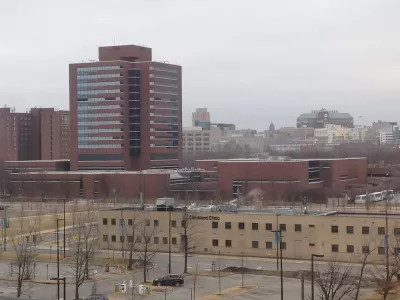
Politico has produced an in-depth investigation of the Cleveland Clinic's expanding physical footprint, and neglected community development influence, in the neighborhood of Fairfax in Cleveland.
Dan Diamond writes of the Clinic's success:
There’s an uneasy relationship between the Clinic — the second-biggest employer in Ohio and one of the greatest hospitals in the world — and the community around it. Yes, the hospital is the pride of Cleveland, and its leaders readily tout reports that the Clinic delivers billions of dollars in value to the state.
But then there's the ongoing struggles of the Fairfax in which the hospital is located:
More than one-third of residents in the census tract around the Clinic have diabetes, the worst rate in the city, according to the latest data from the Centers for Disease Control and Prevention. That’s just one of numerous chronic and preventable health conditions plaguing the area around the Clinic. Meanwhile, neighborhood residents say there are too few jobs and talk of hearing gunfire every night.
Diamond devotes feature-length attention to detail in describing the "world apart" of the Clinic, relative to the real world of neighborhoods like Fairfax and Hough. One example typifying the hospital's influence on the city includes the Opportunity Corridor. The hospital's support of that road project evokes the heyday of Urban Renewal in its approach—wrapping blight removal and congestion relief into one publicly criticized project. That the Clinic's "top tour guide" let slip some less-than-altruistic motivations behind the Clinic's support for the Opportunity Corridor did not go unnoticed by Angie Schmitt, who responded to the article on Streetsblog USA.
FULL STORY: How the Cleveland Clinic grows healthier while its neighbors stay sick


A South Dakota hospital is funding a new subdivision for its employees
Some employees see investing in housing as the only way to stem the loss of workers moving away due to high housing costs.

Baltimore Zoning Bill Seeks to Improve Unequal Healthcare Access
A zoning reform proposal would update the city’s code to ensure health clinics are more equitably distributed in all neighborhoods.
Half of Rural Texas Hospitals Could Close
Texas has lost 25 rural hospitals in the last two decades, more than any other state.

The state-sanctioned urbicide of Austin
People don’t kill cities. Freeways do.

US to reduce Colorado River water deliveries to Mexico
A new Colorado Treaty amendment reduces Mexico’s Colorado River water allocation by 250,000 acre feet.

New Jersey’s second-largest city bans standalone data centers
Jersey City will continue to allow co-location facilities, such as those meant for research institutions that store their own data.

Amtrak not solely to blame for New Jersey commuter rail's unreliability, report finds
A new study from the Garden State Initiative found that NJ Transit’s budget grew 20% across a 4 year period, but reliability declined significantly over the same period.

EPA erases limits on planet-warming pollution from power plants
Under Monday’s plan, power plants would still have some limits on how much mercury, arsenic and other contaminants they can emit.

Phoenix announces new on-demand transit service, more frequent RAPID buses
Both new services will launch in October, and are part of Phoenix's Project Effective Access Solutions for Easing Congestion.

FREE Course: Walkable City 1: Why Walkability?
After describing his path towards focusing on walkability as the essence of good planning, Jeff Speck marches through his five principal reasons for making more walkable places.
Reinventing Malls: Planning Alchemy—Turning Gray Fields Into Gold
The course focuses on the opportunities and imperatives that shape reinvention of mall sites.


Eagle County Government
Harvard University Graduate School of Design
Nashville Planning Department
The Architects Foundation
University of Cincinnati Online
The Pocatello Development Authority
The Urban Renewal Agency of the City of Pocatello
Journal of the American Planning Association