Developers, neighbors, and housing advocates are debating the fate of the Balboa Reservoir. Their visions for how many units should be built there range from 680 to 1,245.


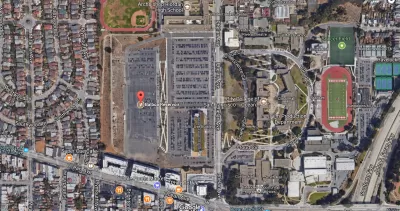
Balboa Reservoir is slated to be the site of new development, but the size of that development is the subject of some debate. Neighbors in the area are worried about the loss of a parking lot there (the site has been used as a parking lot for the City College of San Francisco) and some have argued that apartments would change the "character" of the neighborhood, which they argue would be better preserved with single-family homes.
At the same time, housing activists argue that the city is in the midst of a crisis because of a lack of housing. "Mayor Lee pledged in 2014 to build 30,000 units by 2020, and while 1100 or more on the Balboa site will come too late to meet this goal, a larger project sends a message about the city’s commitment to increasing housing," Garrett Bergthold writes for Beyond Chron.
According to the San Francisco Planning Department website, the site is the first to move forward under San Francisco's Public Land for Housing Program.
FULL STORY: WILL SF GO BIG?

Homes, Not Parking
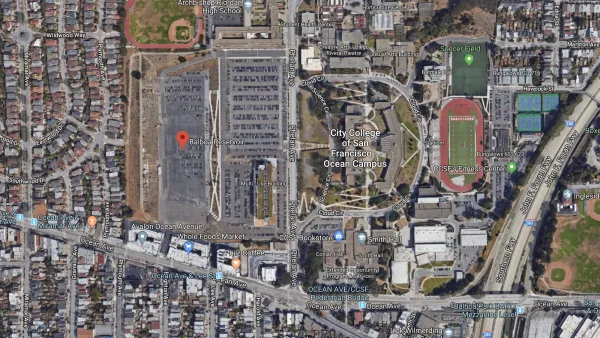
The Balboa Reservoir is the perfect spot for housing in San Francisco, Nicole Lindler argues, and the notion that it should remain a surface parking lot shows badly disordered priorities.

A Public School Teacher on Trying to Raise a Family in San Francisco
Trevor McNeil and his wife make a little too much for their family of five to be eligible for low income subsidies. If one of them were to quit their job, they fear they wouldn't be able to afford the lifestyle they want to live.
Controversial Texas housing law has 'directly facilitated' over 1,250 new homes
SB 840 allows developers to build multifamily housing by-right on lots zoned for commercial use without applying to a zoning change.

Planetizen Federal Action Tracker
A weekly monitor of how Trump’s orders and actions are impacting planners and planning in America.

The state-sanctioned urbicide of Austin
People don’t kill cities. Freeways do.

US to reduce Colorado River water deliveries to Mexico
A new Colorado Treaty amendment reduces Mexico’s Colorado River water allocation by 250,000 acre feet.

5 New England states march closer to 800 megawatt wind energy project
Securing federal approval for the project may be complicated under the Trump administration, which has historically been hostile towards domestic wind power.

Baltimore to break ground on $50 million Transit Priority Project
The project will bring faster bus trips, safer streets and better bike connections to Baltimore.

Airbnb launches $250 million 'last-dollar financing' housing accelerator, makes first investment in Austin
The company will put $6.4 million towards affordable housing development in Texas’ capital.

FREE Course: Walkable City 1: Why Walkability?
After describing his path towards focusing on walkability as the essence of good planning, Jeff Speck marches through his five principal reasons for making more walkable places.
Reinventing Malls: Planning Alchemy—Turning Gray Fields Into Gold
The course focuses on the opportunities and imperatives that shape reinvention of mall sites.

Eagle County Government
Harvard University Graduate School of Design
Nashville Planning Department
The Architects Foundation
University of Cincinnati Online
The Pocatello Development Authority
The Urban Renewal Agency of the City of Pocatello
Journal of the American Planning Association