The Tennessee Department of Transportation will close busy stretches of Interstate 24 several times this fall as workers replace bridges built in 1961 as quickly as possible.



"The Tennessee Department of Transportation (TDOT) plans to use accelerated bridge construction (ABC) techniques for replacing Interstate 24 bridges in downtown Nashville," reports Chris Hill.
"The $28.5 million project will include replacement of the bridges over Oldham Street and Spring Street on the eastern loop of downtown, deck repairs to the Silliman Evans Bridge and resurfacing of the entire area," adds Hill.
The accelerated portion of the ABC equation comes from total road closures, which according to a statement from TDOT gives crews more space and allows around-the-clock work. In this case the ABC process will require the closure of I-24 between I-40 and I-65 on at least four occasions this fall.
A separate article by Hallie Busta provides more detail on the ABC process, as used in Nashville and in other locations around the country. News Channel 5 provides local coverage of the traffic impacts of the closures.
Read the full story: Tenn. DOT using accelerated bridge construction on I-24 bridges in Nashville
Scrambling to Replace the Heavily Used West Seattle Bridge
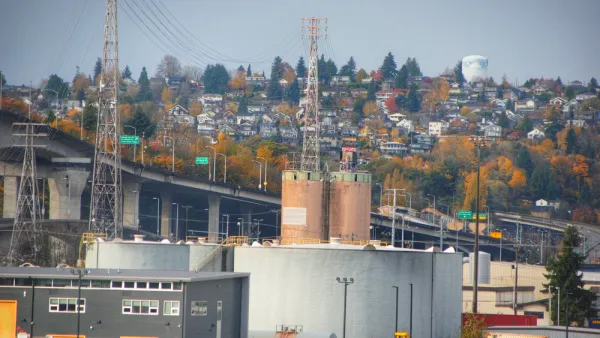
The West Seattle High-Rise Bridge Safety Project is in high gear, more than six months after the city's most heavily trafficked bridge was closed suddenly for safety risks.
With a Key Bridge Cracked and Closed, Seattle Considers Another Tunnel
The West Seattle Bridge, a key artery for car commuters in Seattle, has been closed since March, and the city has begun to consider a broad array of options for repairing or replacing the span.
Elections come and go. Universities stay
University-led innovation districts give cities growth that outlasts political cycles.

Desperate measures: Advocates weigh draining Lake Powell to fill Colorado River
Draining the reservoir could reduce evaporation losses by a couple hundred thousand acre-feet.

Eastern Nebraska is running out of electricity
Data centers and electrification are straining eastern Nebraska’s grid, throttling economic development.

Malls are becoming the midtowns of the future
Mall and office park redevelopments are a generational opportunity to create new nodes of urbanity.

NYC breaks ground on anti-flooding infrastructure project
New York City's new system will reduce stormwater flows to local sewers by 90%.

One Kentucky town’s secret to affordable housing
The Smoketown Community Land Trust has already built seven affordable homes for community members.

Houston gains petal-shaped cooling infrastructure to make streets more ‘delightful’
The city has installed the pavilions along 15 blocks in Houston.

FREE Course: Walkable City 1: Why Walkability?
After describing his path towards focusing on walkability as the essence of good planning, Jeff Speck marches through his five principal reasons for making more walkable places.
Reinventing Malls: Planning Alchemy—Turning Gray Fields Into Gold
The course focuses on the opportunities and imperatives that shape reinvention of mall sites.

City of Rosemead
Rutgers University, Edward J. Bloustein School of Planning and Public Policy
One Hundred Miles
University of Michigan School for Environment and Sustainability (SEAS)
Hunter College, City University of New York (CUNY)
The Architects Foundation
City of Cambridge
Montrose County
The Pocatello Development Authority