The U.S. Fish & Wildlife Service and the National Marine Fisheries Service gave a crucial green light for the intensely controversial and ambitious California WaterFix project, which would pump water around the Sacramento-San Joaquin Delta.


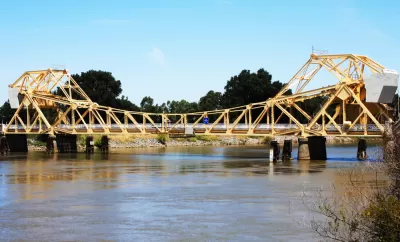
"The Delta tunnels got a crucial green light Monday from two federal agencies, whose scientists said they’ve determined that the controversial project can co-exist with the endangered fish that inhabit the waters of the Sacramento-San Joaquin Delta," report Dale Kasler and Ryan Sabalow.
More specifically, "the U.S. Fish & Wildlife Service and the National Marine Fisheries Service said the $15.5 billion tunnels aren’t likely to jeopardize the continued existence of the Delta smelt, Chinook salmon, steelhead and other threatened species," according to Kasler and Sabalow. The biological opinions, as the reports are called, reversed course somewhat in the months between draft form and final form. An op-ed by Matt Weiser, published in May, used the draft biological opinions to build an argument making just the opposite point: that the project will make life worse for fish.
2017 has long been circled on the calendar as a critical year for the so-called WaterFix project, which in previous iterations this decade has been called the peripheral canal project or the Bay Delta Conservation Plan. A peripheral canal proposal was also defeated by voters in 1982 [pdf].
The article quotes Jeff Kightlinger, general manager of the Metropolitan Water District, who says the release of the biological opinions is a "huge milestone" for the project. Ryan Sabalow reported in December that the state signed off on the project in December, and that construction could begin in 2018.
FULL STORY: ‘Huge milestone’ for Delta tunnels – feds say they won’t push fish over the brink

High-Speed Rail Not the Only Massive Public Works Project on the Chopping Block
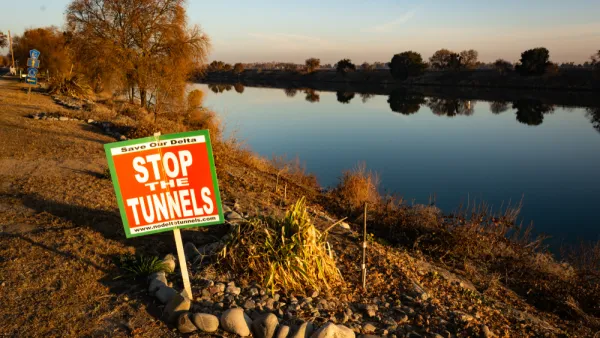
California Governor Gavin Newsom wants to reduce the size of the $17 billion WaterFix project that plans for two tunnels under the San Joaquin-Sacramento River Delta.
Lawsuits Slow Progress of California's $17 Billion WaterFix Project
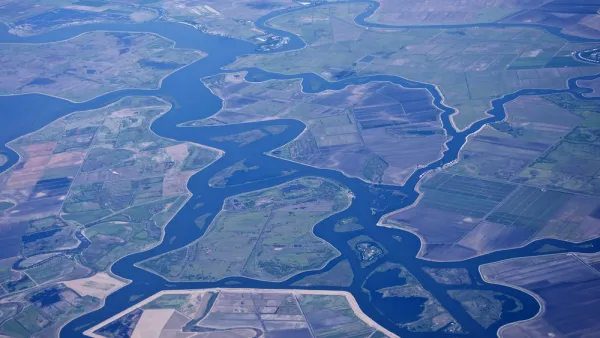
Environmentalists and the fishing industry filed lawsuits just a few days after a massive plan to build tunnels to move water under the San Joaquin-Sacramento River Delta in California received a green light from the federal government.
'Biological Assessment' Released for Big California Tunnels Project
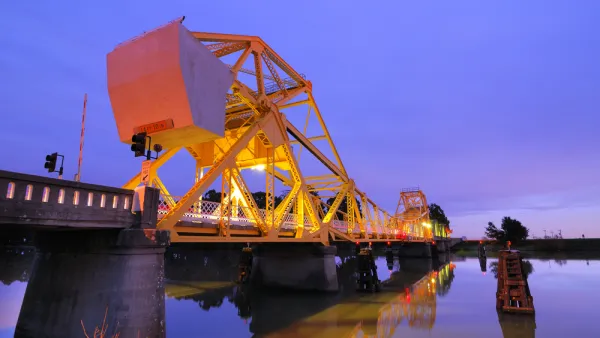
The plans for one of California's most expensive, and controversial, projects are moving forward as the clock ticks on the Obama Administration's time in power.

The state-sanctioned urbicide of Austin
People don’t kill cities. Freeways do.

US to reduce Colorado River water deliveries to Mexico
A new Colorado Treaty amendment reduces Mexico’s Colorado River water allocation by 250,000 acre feet.

New Jersey’s second-largest city bans standalone data centers
Jersey City will continue to allow co-location facilities, such as those meant for research institutions that store their own data.

Amtrak not solely to blame for New Jersey commuter rail's unreliability, report finds
A new study from the Garden State Initiative found that NJ Transit’s budget grew 20% across a 4 year period, but reliability declined significantly over the same period.

EPA erases limits on planet-warming pollution from power plants
Under Monday’s plan, power plants would still have some limits on how much mercury, arsenic and other contaminants they can emit.

Phoenix announces new on-demand transit service, more frequent RAPID buses
Both new services will launch in October, and are part of Phoenix's Project Effective Access Solutions for Easing Congestion.

FREE Course: Walkable City 1: Why Walkability?
After describing his path towards focusing on walkability as the essence of good planning, Jeff Speck marches through his five principal reasons for making more walkable places.
Reinventing Malls: Planning Alchemy—Turning Gray Fields Into Gold
The course focuses on the opportunities and imperatives that shape reinvention of mall sites.

Eagle County Government
Harvard University Graduate School of Design
Nashville Planning Department
The Architects Foundation
University of Cincinnati Online
The Pocatello Development Authority
The Urban Renewal Agency of the City of Pocatello
Journal of the American Planning Association