The Pacific Northwest has a reputation for gloomy, rainy days. One, that's not true for the whole region, and two, it isn't stopping utilities from building utility-scale solar power.


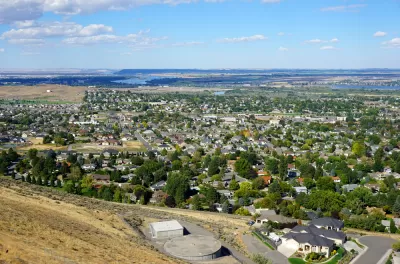
"The Tri-Cities [Richland, Kennewick, and Pasco] could soon be home to the largest utility-scale solar power project in Washington," reports Courtney Flatt. A French company called Neoen is planning to develop the 20-megawatt project on 100 acres of land that used to be part of the Hanford nuclear reservation. The region is considered a desert, and local economic development efforts, led by the Tri-City Development Council (TRIDEC) is working to position the Tri-Cities as a hub for energy companies in the Pacific Northwest.
Energy Northwest, which operates the Northwest’s only nuclear power plant, has a 38.7-kilowatt demonstration solar project 10 miles north of Richland. Last year, Energy Northwest also announced its plans to develop a 4-megawatt solar power generating and battery storage system.
Another project is in the works just to the south in Boardman, Oregon, as well.
Read the full story: Washington's Largest Solar Project Coming To Tri-Cities
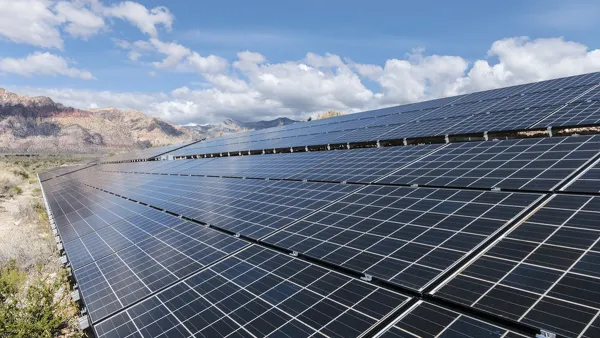
Solar Power Beats DOE Cost Targets Three Years Early
With a set of 2020 affordability targets met three years early, the DOE can turn its attention to reliability, resilience, and storage.
Record Year Concludes for Utility-Scale Solar
With the energy generating business in upheaval, utility-scale solar energy projects have done well since 2009, culminating in a record year for installation in 2013.
Trump administration unlawfully slashed $7 billion in clean energy grants, judge rules
The Environmental Protection Agency ended the Solar For All program, which provided the grants, after President Donald Trump’s inauguration.

Desperate measures: Advocates weigh draining Lake Powell to fill Colorado River
Draining the reservoir could reduce evaporation losses by a couple hundred thousand acre-feet.

Eastern Nebraska is running out of electricity
Data centers and electrification are straining eastern Nebraska’s grid, throttling economic development.

Malls are becoming the midtowns of the future
Mall and office park redevelopments are a generational opportunity to create new nodes of urbanity.

NYC breaks ground on anti-flooding infrastructure project
New York City's new system will reduce stormwater flows to local sewers by 90%.

One Kentucky town’s secret to affordable housing
The Smoketown Community Land Trust has already built seven affordable homes for community members.

Houston gains petal-shaped cooling infrastructure to make streets more ‘delightful’
The city has installed the pavilions along 15 blocks in Houston.

FREE Course: Walkable City 1: Why Walkability?
After describing his path towards focusing on walkability as the essence of good planning, Jeff Speck marches through his five principal reasons for making more walkable places.
Reinventing Malls: Planning Alchemy—Turning Gray Fields Into Gold
The course focuses on the opportunities and imperatives that shape reinvention of mall sites.

City of Rosemead
Rutgers University, Edward J. Bloustein School of Planning and Public Policy
One Hundred Miles
University of Michigan School for Environment and Sustainability (SEAS)
Hunter College, City University of New York (CUNY)
The Architects Foundation
City of Cambridge
Montrose County
The Pocatello Development Authority