Another reason European placemaking has North American applications: it wasn't always perfect. Hazel Borys looks to simple town planning lessons from a village in Normandy.


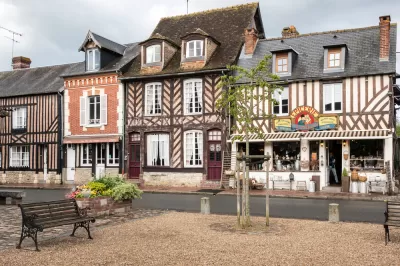
"Every month or so, we add to our collection of lessons from livable places. These are the neighbourhoods where walking the streets and looking carefully at the urban forms provide insights into what makes for lovability over time. Today, I’d like to consider Beuvron-en-Auge, deemed one of the most beautiful villages in France by Les Plus Beaux Villages de France. In the heart of cider country, the half-timber construction and picturesque Norman streets suggest a timeless beauty that belies the recent struggle for historic preservation and restoration."
"In the early 1970’s, many of the village buildings had been 'updated' and cloaked in modern concrete. 15th through 17th century structures had been turned into a 'sea of blurred shabby architecture.' Fortunately, Mayor Michel Vermughe turned it all around, with vision, passion, and heritage funds to restore village character."
Borys shares a photo journal from this village in Normandy, drawing parallels with North American placemaking challenges of the 1970's.
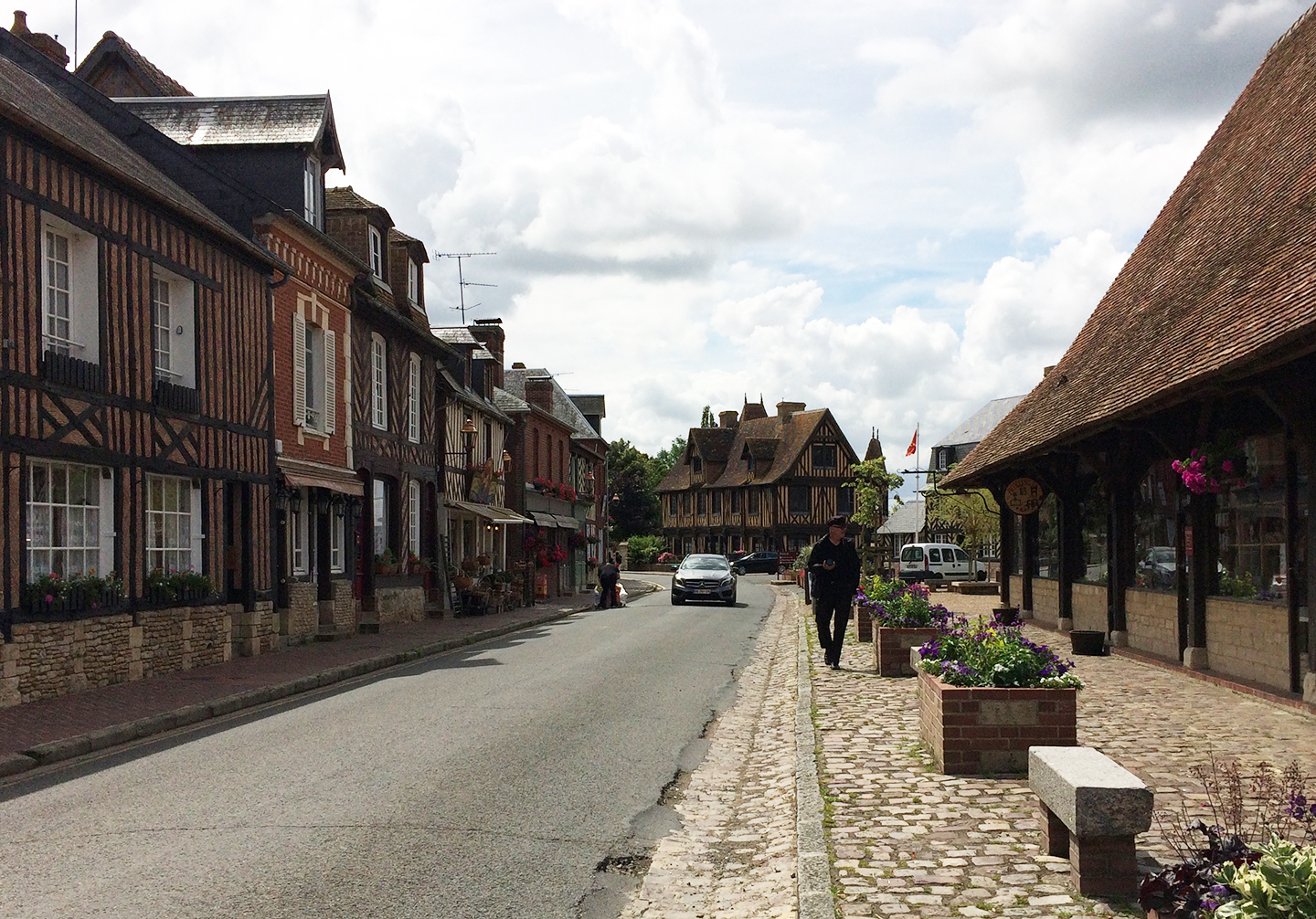
Beuvron-en-Auge, Normandy, France. Image credit: CreativeCommons ShareAlike License with Attribution to Hazel Borys
Read the full story: Beuvron-en-Auge: 15th century town planning stands the test of time
How Placemaking Lost its Way — And How it Can Get Back on Track
The term has often become diluted, getting attached to projects that don’t live up to its lofty aspirations.

String Lights are Secular! The Holiday Case for Year-round Placemaking
The holidays make streets and spaces warm, cozy, and welcoming. Why don’t we do that year round?
From SoHo to SoDoSoPa
How zoning made great neighborhoods illegal to build, and preordained gentrification.

Washington state to charge fee to drivers with fuel-efficient cars
Revenue from the fee will go towards supporting the state’s highways.

Illinois considers spending $1 billion in taxpayer money on data center
A quantum computing campus and data center are currently under construction in Chicago.

Trump to blast ‘hydrocarbon highway’ through ‘world’s longest art gallery’
Environmental and historic preservation groups are suing to stop the project.

NYC, state sue feds over mixed-immigration-status housing assistance rule
The state’s lawsuit argues that the rule change violates the Administrative Procedure Act.

Michigan to turn neighborhood into virtual power plant
Residents will soon be able to divert their excess energy to the grid in exchange for compensation.

Data center, mining project swarm to long-awaited Alaska railroad line
The state-owned railroad approved final plans for the spur line this week; the project is expected to cost $311 million, mostly funded by the federal government

FREE Course: Walkable City 1: Why Walkability?
After describing his path towards focusing on walkability as the essence of good planning, Jeff Speck marches through his five principal reasons for making more walkable places.
Reinventing Malls: Planning Alchemy—Turning Gray Fields Into Gold
The course focuses on the opportunities and imperatives that shape reinvention of mall sites.

City of Charlotte
City of Rosemead
Rutgers University, Edward J. Bloustein School of Planning and Public Policy
University of Michigan School for Environment and Sustainability (SEAS)
Hunter College, City University of New York (CUNY)
The Architects Foundation
University District Partnership